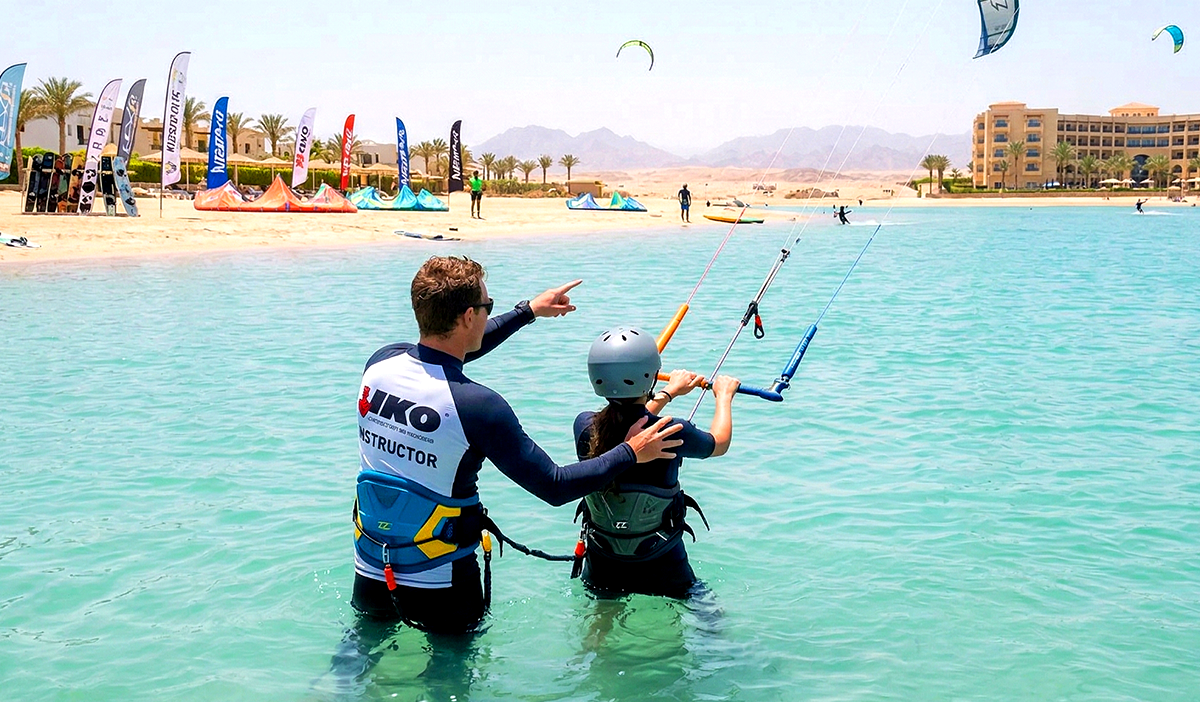
Hurghada has earned a reputation as one of the world’s premier destinations for learning kitesurfing in Egypt. Hurghada year-round sunshine, predictable wind patterns, and warm, shallow lagoons creates the ideal learning environment.
choosing Masters Surf School IKO-certified school, offer lesson progression from beginner to independent rider, and detail the essential safety equipment and protocols you can expect.
What Are Kitesurfing Lessons in Hurghada?
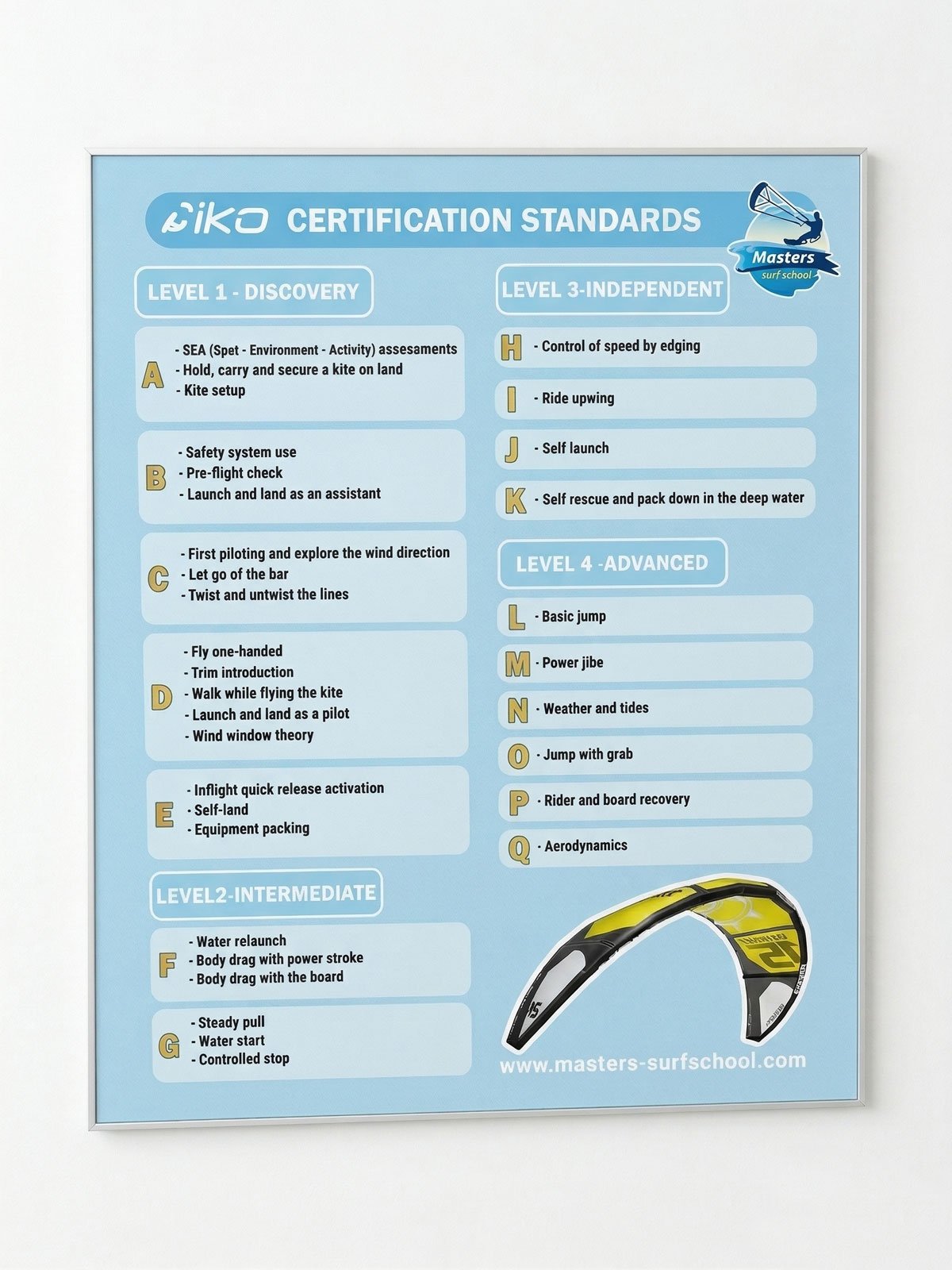
Kitesurfing lessons in Hurghada are structured, progressive training programs designed to teach individuals how to safely and confidently ride a kiteboard. Unlike unstructured practice, these lessons follow a standardized curriculum, typically set by the International Kiteboarding Organization (IKO), which ensures that every student learns in a logical sequence from basic theory on land to independent riding on water.
The Core Components of a Standard Lesson
A typical lesson in Hurghada is divided into three main phases to build skills systematically and safely.
☀️ Theory and Safety Briefing (Land)
The first phase focuses on building a solid foundation of knowledge. Students learn to read the wind (direction and strength), identify hazards at the spot, and understand the crucial international communication signals used between kiters.
🪁 Kite Control and Body Dragging (Water)
This practical phase moves to the water. Students practice flying a trainer kite to master the “wind window” – the area where the kite generates power. They then learn to launch and land the kite and perform “body dragging,” using the kite’s pull to move through the water without a board, a critical skill for recovering lost equipment.
🏄♂️ Board Skills and Water Start (Riding)
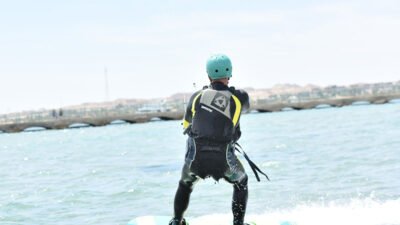
The final phase introduces the board. Students learn the correct body position for a water start, practice putting the board on their feet, and then attempt their first rides. The goal is to ride a short distance in both directions, come to a controlled stop, and eventually ride upwind to return to the starting point.
Why Hurghada Is an Ideal Location for Beginners
Hurghada’s specific geography and climate create a natural classroom for kitesurfing, making the learning process faster and safer than in many other global spots. The primary factor is the Al Ahyaa Lagoon.

The Al Ahyaa Lagoon: A Natural Classroom
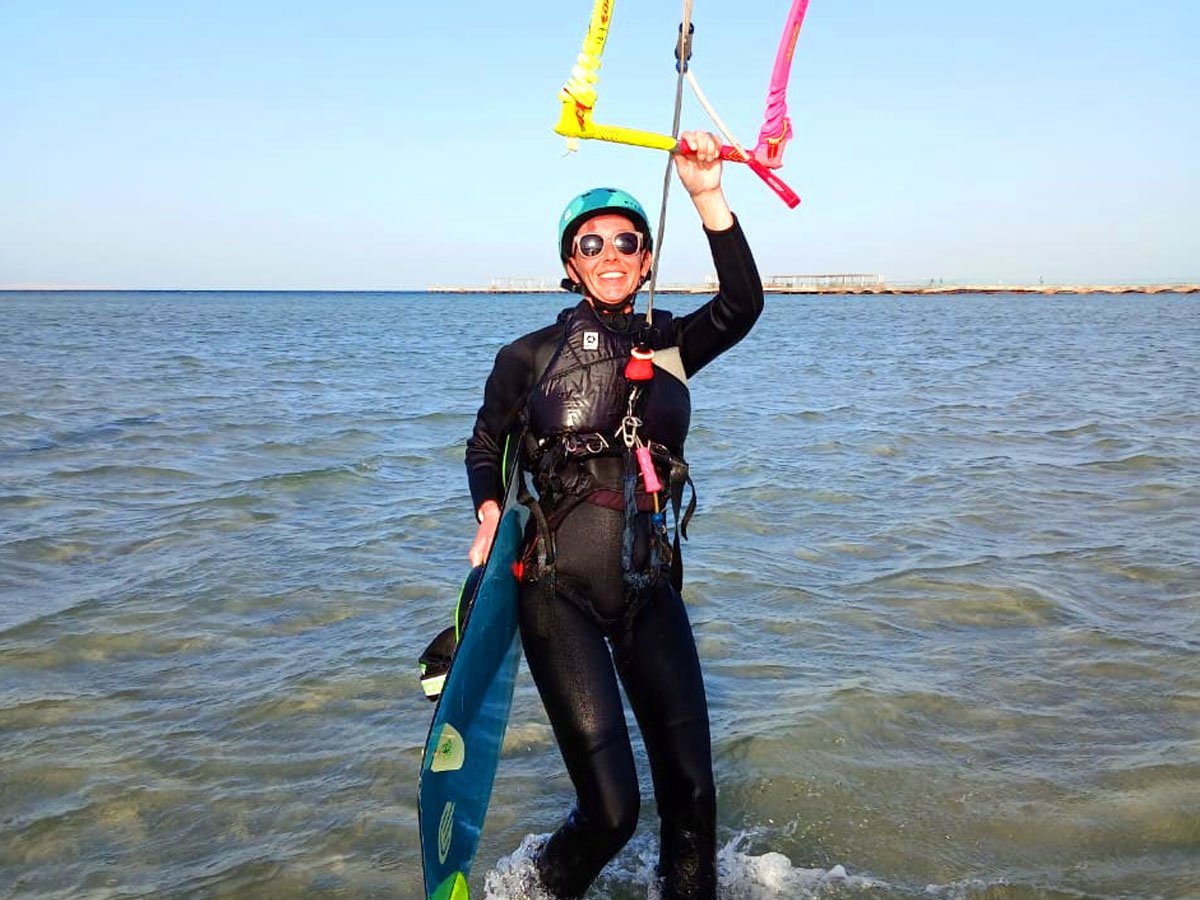
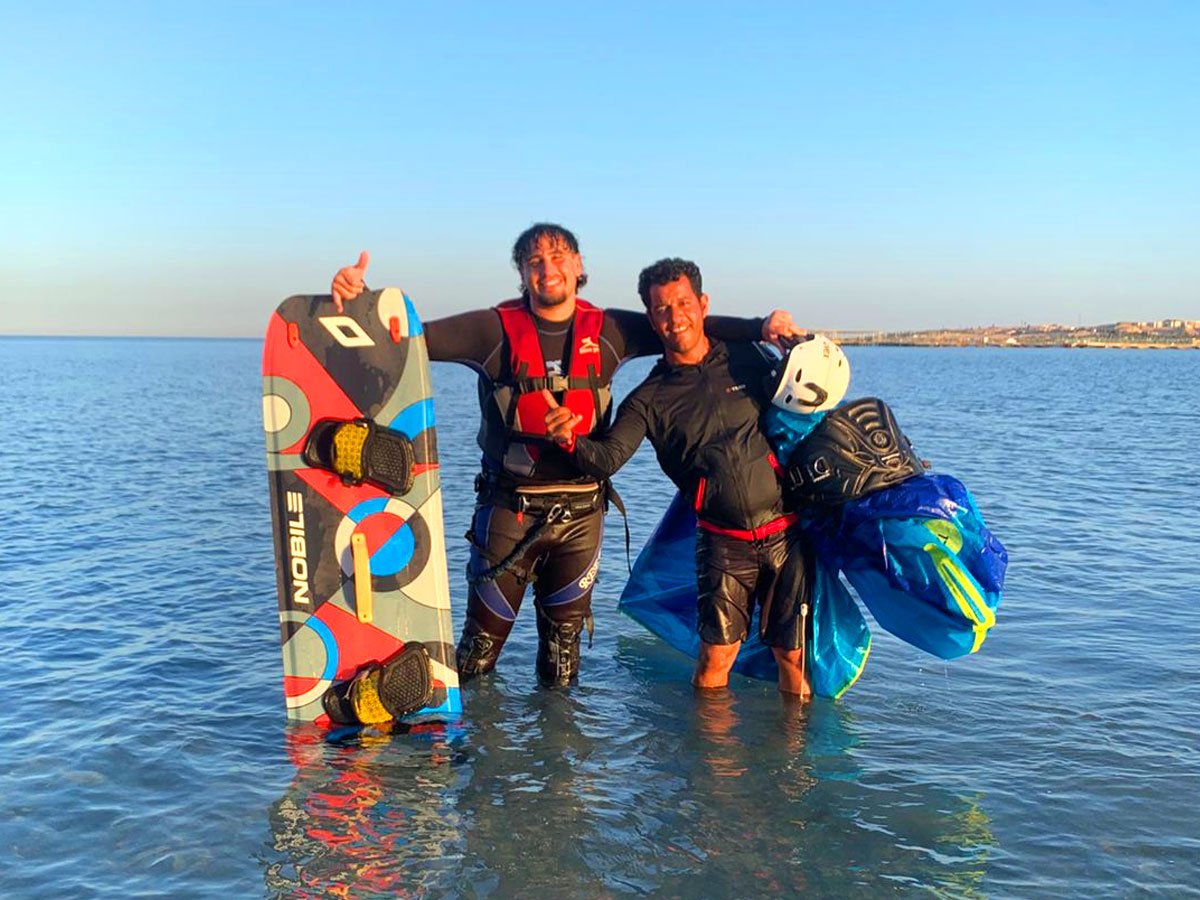
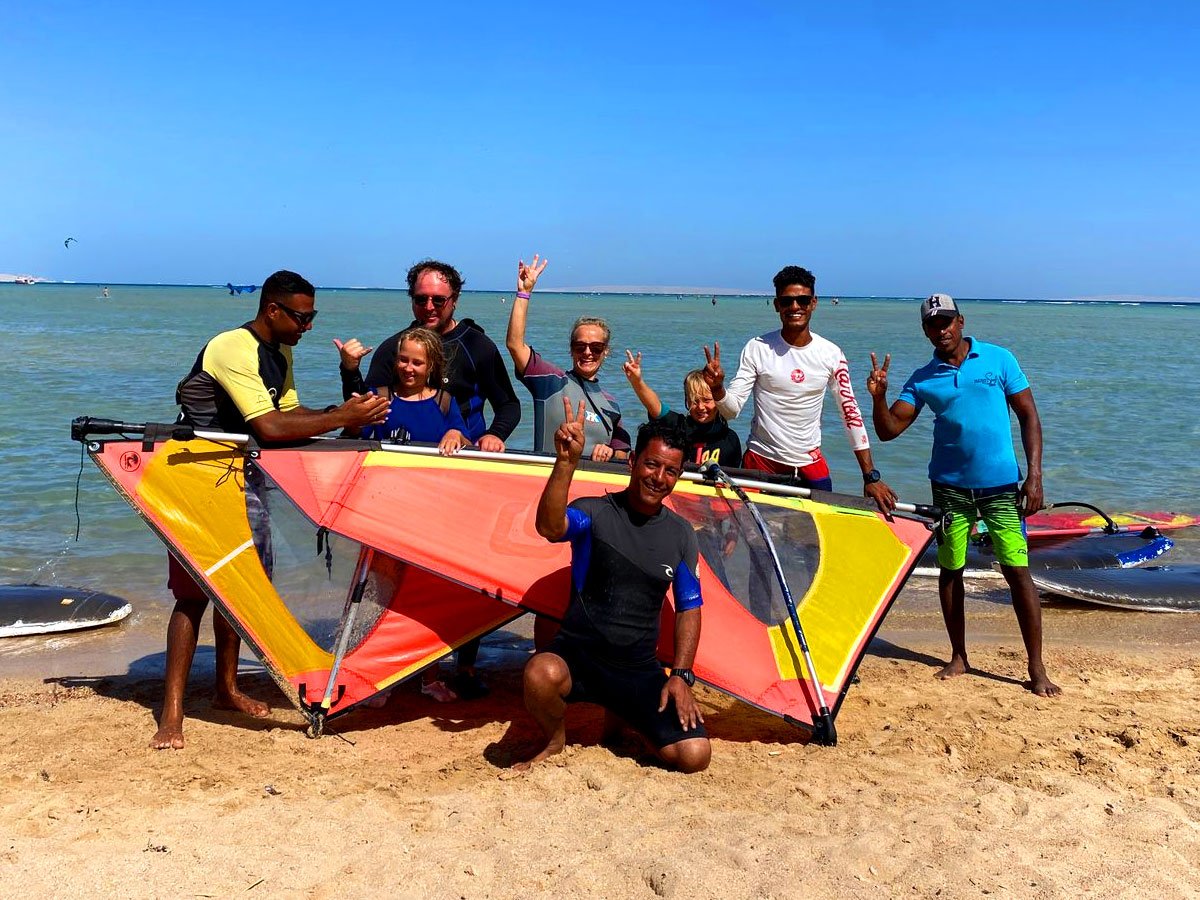
The Al Ahyaa Lagoon, located just north of Hurghada city, is a large, sheltered body of water separated from the open Red Sea by a coral reef. This reef acts as a natural breakwater, knocking down waves and creating a massive area of flat, waist-deep water with a sandy bottom. For a beginner, this environment is invaluable: you are not fighting waves while trying to control the kite, you can stand up easily, and you don’t have to worry about deep water or strong currents.
Consistent Wind and Warm Water
The wind in Hurghada is remarkably predictable. The thermal wind effect, where the desert heats up and pulls in cool air from the sea, results in steady winds averaging 15 to 25 knots during the peak season (May to October). This consistency means you can book a week-long course with confidence that you will have rideable wind each day. Additionally, the water temperature from May to October is a comfortable 26–30°C (79–86°F), allowing you to train in board shorts and a rash guard without the restriction of a thick wetsuit.
What Is an IKO Certification and Why Does It Matter?
An IKO (International Kiteboarding Organization) certification is a globally recognized credential that verifies a kitesurfer’s skill level. It is issued by an IKO-certified instructor upon successful completion of a course that adheres to the organization’s strict safety and teaching standards.
The Three Beginner Levels (1, 2, and 3)
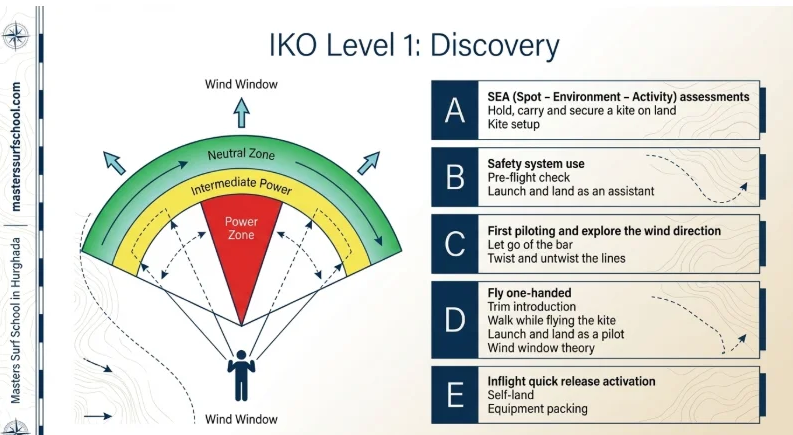
The IKO’s training path is divided into levels, with the first three designed to take a student from complete novice to an independent rider.
- Level 1 – Discovery (2-4 hours): Focuses entirely on land-based skills. Students learn about wind, safety systems, equipment setup, and basic kite flying with a small trainer kite.
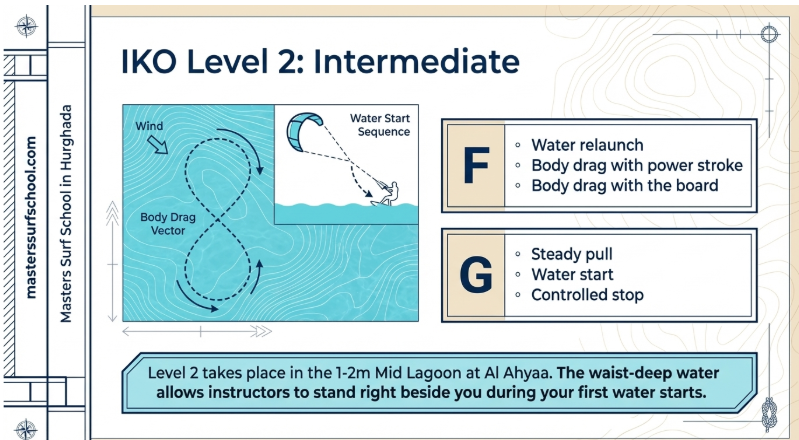
- Level 2 – Intermediate (9-12 hours): Moves into the water. Skills include water re-launching the kite, body dragging (downwind and upwind), and learning the theory for the water start.
- Level 3 – Independent (6-8 hours): Focuses on board riding. Students learn to water start, ride in both directions, control their speed, and eventually ride upwind.
The Benefits of Choosing an IKO-Certified School
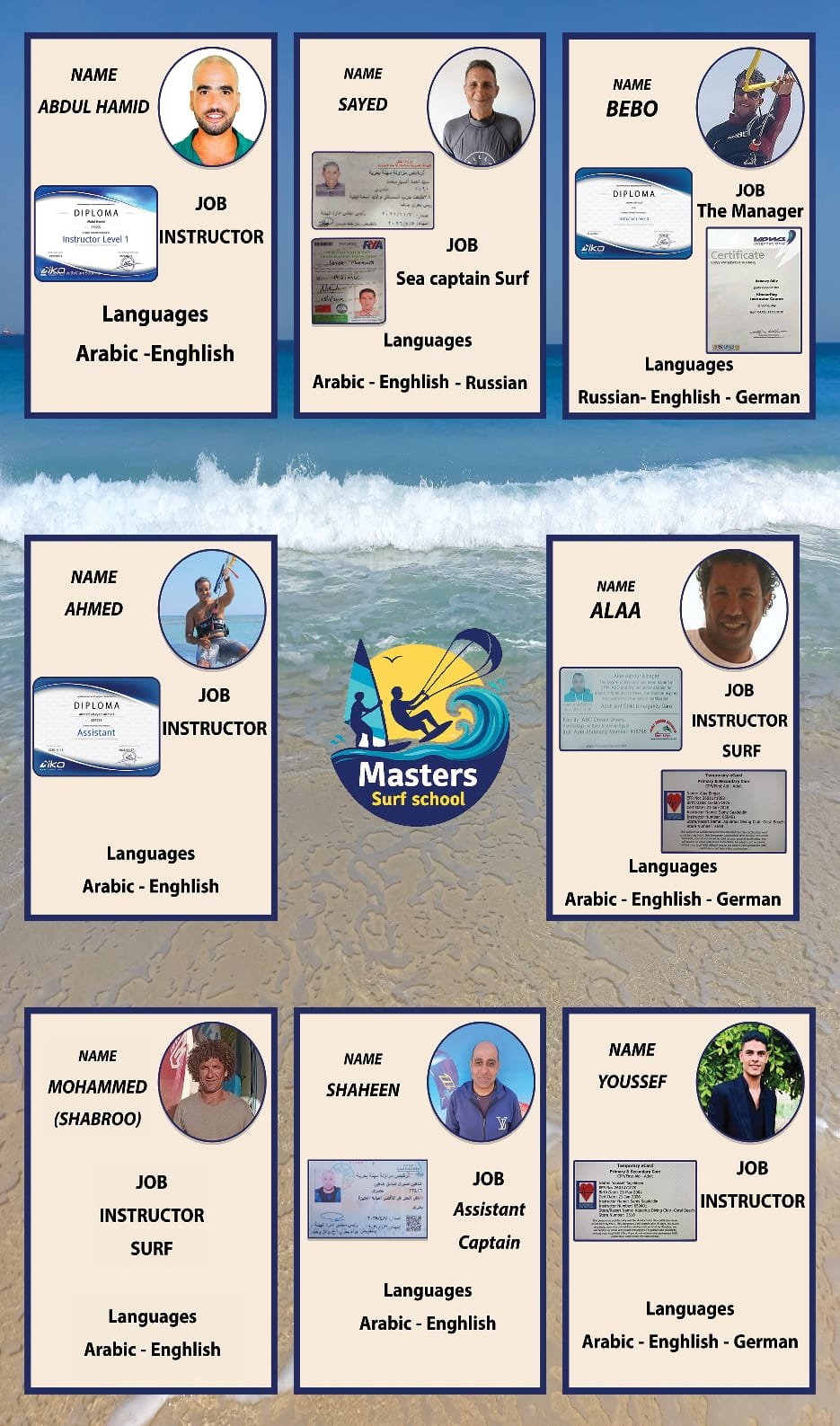
Choosing an IKO school guarantees that your instructor has undergone rigorous training and follows a globally standardized, safety-first teaching methodology. This certification allows you to rent equipment at any IKO-affiliated center worldwide, as your skill card provides documented proof of your abilities. Furthermore, IKO schools provide professional liability and recreational insurance for their students, adding an extra layer of security.
What to Expect in Your First Kitesurfing Lesson
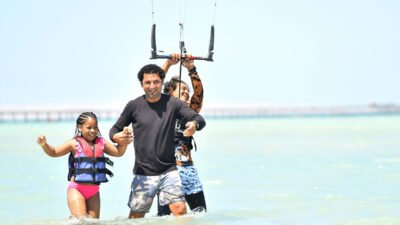
Your first lesson in Hurghada is designed to be a safe, confidence-building introduction. You will not be expected to ride a board immediately; the priority is developing kite control and safety reflexes.
From Sand to Shallow Water
Your session will begin on the beach with a trainer kite. This small kite helps you understand the “wind window” – the area in the sky where the kite generates power – without the risk of being dragged. You will learn to set up the equipment, perform pre-flight checks, and practice launching and landing the kite with an assistant.
Once you are comfortable, you will move into the shallow water of the lagoon. Here, you will practice flying the kite while body dragging. This technique involves letting the kite pull you through the water, allowing you to move upwind or downwind to retrieve your board. Mastering body dragging is a critical safety skill before you ever strap on a board.
Safety Standards and Equipment in IKO Schools
Safety is the cornerstone of any reputable IKO-certified school in Hurghada. Strict protocols are in place to minimize risks, which is crucial as kitesurfing can be dangerous without proper instruction.
Mandatory Safety Gear for Students
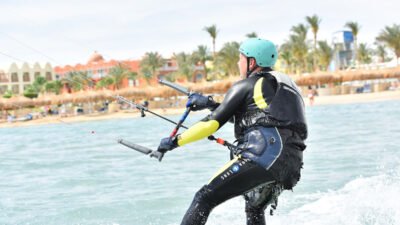
All students are required to wear specific safety gear during lessons, both on land and in the water. This includes a helmet to protect against head injuries and a life jacket or impact vest to provide buoyancy and chest protection. Even if you are a strong swimmer, a life jacket is mandatory because it can save your life if you lose consciousness after a crash.
Standardized Safety Systems and Protocols
IKO lessons use kites with a single-frontline safety system, which is the gold standard for safety. When activated, this system instantly depowers the kite, preventing it from dragging you. You will practice using this quick-release mechanism repeatedly until it becomes a reflex. Instructors also enforce “right of way” rules on the water, which are a set of navigation rules designed to prevent collisions between kiters.
Lesson Packages and Time Investment to Ride Independently
The time required to become an independent kitesurfer varies, but Hurghada’s ideal conditions significantly accelerate the learning curve.
How Many Hours to Become Independent?
On average, it takes between 9 and 20 hours of lessons for a beginner to become an independent rider who can set up equipment, launch, and ride upwind safely. With the consistent, daily winds and flat water of Hurghada, many students achieve this within a 3 to 6-day course, often riding independently by the end of their third lesson.
Standard Course Durations and Structures
Most schools offer structured packages that bundle hours for better progression. A typical beginner course includes 10–12 hours of instruction, spread over 3 to 5 days. Each daily session usually lasts 2-3 hours, allowing time for theory, practice, and rest. This concentrated, multi-day format is far more effective than sporadic lessons, as it allows skills to build consecutively.
Real-World Examples: Typical Student Progression
A student starting from zero in Hurghada can expect a clear and rapid progression path, thanks to the lagoon’s forgiving conditions.
Case Study: From First-Time Flyer to Independent Rider
- Day 1 (2 hours): The student learns wind theory, sets up a trainer kite, and practices launching and flying it on the beach. They move into the water to practice body dragging, successfully retrieving a floating object.
- Day 2 (2 hours): The student progresses to a full-size kite. They practice water re-launching and advanced body dragging, learning to move upwind to recover a practice board.
- Day 3 (2 hours): The student puts on a board for the first time. They practice the water start position and manage their first short rides, coming to a controlled stop.
- Day 4 (2 hours): The student consistently rides in both directions, controls their speed by edging the board, and begins to ride a short distance upwind.
- Day 5 (2 hours): The student is now an independent rider, capable of launching their kite, entering the water, riding upwind, and returning to the same spot on the beach.
How to Book and Prepare for Your Kitesurfing Adventure
To ensure you get the most out of your experience, a few simple steps of preparation and planning are essential.
Contact us via WhatsApp
The Masters Surf School team is here to help! Whether you’re curious about kitesurfing lesson packages, windsurfing rental rates, or all-inclusive safari prices, we’re just a message away. With over 25 years of experience in Hurghada, we pride ourselves on transparent pricing and expert advice.
Masters Surf School
Red Sea Governorate,
Secondary phone: +201272284800
Email: masters.surfschool@gmail.com
📩 Reach out today for current rates, availability, or personalized recommendations—we’re always happy to answer your questions.
Choosing the Right Time to Go
The best time for kitesurfing lessons in Hurghada is during the peak wind season, from May to October, when winds are strongest and most consistent, averaging 15–25 knots daily. The shoulder months of March, April, and November also offer good conditions with slightly lighter winds, while the winter months (December to February) are still workable but may require a shorty wetsuit.
What to Bring and How to Prepare
You do not need to bring your own equipment, as IKO schools provide all the necessary gear. However, you should bring sun cream, a high-SPF rash guard (lycra), sunglasses, and plenty of drinking water. It is also mandatory that you can swim comfortably in deep water, as this is a prerequisite for all lessons.
Hurghada Kitesurfing Lessons (FAQ)
No, kitesurfing lessons in Hurghada are designed for absolute beginners. The only prerequisite is that you can swim comfortably in deep water. Instructors start from the very basics on the beach.
Kitesurfing has inherent risks, but with professional IKO instruction, it is very safe. Schools use standardized safety systems, mandatory helmets and life jackets, and strict protocols to minimize risks dramatically.
On average, it takes between 9 and 20 hours of lessons to become an independent rider. In Hurghada’s ideal conditions, many beginners achieve this in a 3 to 6-day course.
The IKO (International Kiteboarding Organization) certification is a globally recognized skill card. It verifies your kitesurfing level and allows you to rent equipment at any IKO-affiliated center worldwide.
From May to October, board shorts and a lycra (rash guard) are sufficient as the water is 26–30°C. For winter months (December to February), a 3/2mm shorty wetsuit is recommended. Schools provide helmets and life jackets.
Yes, kitesurfing relies more on technique than brute strength. The structured, progressive IKO method allows people of various ages and fitness levels to learn successfully, especially in the forgiving, shallow waters of Hurghada.
Reputable schools will reschedule your lesson for a windy day or offer a partial refund for unused hours. Hurghada’s high number of windy days (over 250 per year) makes cancellations rare.
Compared to Europe, Hurghada is very affordable. Beginner courses (10–12 hours) typically cost between $300 and $500, with hourly rates around $60–$70, which is significantly cheaper than locations like Tarifa, Spain.
🌟 Final Takeaway: Start Your Kitesurfing Journey Today
Kitesurfing lessons in Hurghada at an IKO-certified school offer a unique combination of safety, speed of progression, and exceptional value. The perfect natural conditions of the Al Ahyaa Lagoon, combined with world-class instruction, provide the ideal environment to turn a complete beginner into a confident, independent rider in just a few days.
Don’t wait to harness the wind and glide across the Red Sea. Contact a certified IKO school in Hurghada today to book your first lesson and begin your journey. Your adventure on the water starts with a single message.
✅ Key Takeaways for Beginners
- Choose an IKO-certified school for guaranteed safety, professional instruction, and a globally recognized certification.
- The best time to learn is from May to October, when winds are most consistent and water is warmest.
- Hurghada’s Al Ahyaa Lagoon provides flat, waist-deep water, making learning faster and safer.
- Expect to invest 9–20 hours of lessons to become an independent rider, often achieved in a 3 to 6-day course.
- Safety is paramount: All lessons include mandatory helmets and life jackets, and standardized safety systems.
- Prices are affordable: Full beginner courses cost between $300–$500, offering excellent value compared to European destinations.
- No experience is needed, just a willingness to learn and the ability to swim.

[…] windsurfing tours and packages designed for all skill levels. Beginners can access first windsurf, kitesurfing, kayak, and catamaran experiences within the school’s well-known schooling system. […]