Kitesurfing’s allure is undeniable, but a beginner’s journey must be built on a foundation of rigorous safety. This article moves beyond generic advice to provide a data-driven, actionable framework for managing risk.
We define the sport’s true danger profile through modern injury statistics (approximately 4–10 injuries per 1,000 hours), then dismantle the “beginner’s luck” fallacy with evidence that inexperience is the primary driver of accidents. The following five must-know tips are your operational manual:
- (1) master the absolute priority of a certified pre-flight equipment check;
- (2) decode wind and weather with precision, especially in beginner havens like Hurghada;
- (3) commit the universal Right of Way rules to memory;
- (4) internalize self-rescue as a non-negotiable survival skill; and
- (5) cultivate a safety-first mindset through supervised progression and community wisdom.
5 Must-Know Kitesurf Safety Tips for Beginners: Your Definitive Guide to Riding with Confidence
- ❓ Is Kitesurfing Safe? Understanding the Real Injury Data
- 🛡️ 5 Must-Know Kitesurf Safety Tips for Beginners
- ✅ 1. Master the Pre-Flight: Your Non-Negotiable Equipment Safety Routine
- ✅ 2. Decode the Elements: Reading Wind and Weather for Kitesurf Safety
- ✅ 3. The Universal Language: Kitesurfing Right of Way (ROW) Rules
- ✅ 4. Your Escape Plan: Why Self-Rescue Is a Foundational Skill
- ✅ 5. The Safety-First Mindset: Training, Buddy System, and Continuous Learning
- ❓ (FAQ) on Kitesurf Safety
❓ Is Kitesurfing Safe? Understanding the Real Injury Data
Kitesurfing is an extreme sport with an inherent but manageable risk profile. Modern studies report an injury rate between 4.3 and 10.5 incidents per 1,000 hours of practice, which is comparable to other popular sports like football and basketball. The vast majority of these injuries—over 82%—are directly attributed to operator error and a lack of experience, making structured learning and strict safety adherence the most powerful protective factors. The question is not whether the sport is safe in absolute terms, but whether you are prepared to make it safe for yourself.
What Does the Scientific Literature Say?
A 2024 prospective observational study by van Bergen et al., published in the World Journal of Orthopedics, followed 194 kitesurfers over a full season. The results are illuminating: participants sustained 177 total injuries over 16,816 hours, yielding an injury rate of 10.5 per 1,000 hours. The foot and ankle were the most vulnerable site (31.8%), while cuts and abrasions (25.4%) topped the list of injury types. Notably, most incidents occurred during a trick or jump, underscoring the importance of progressive skill-building.
Another 2024 study from Germany tracked 66 athletes and found a lower rate of 4.3 injuries per 1,000 hours, with one key finding: experienced athletes were significantly less likely to be injured (p = 0.010). This data crystallizes a vital lesson for any beginner: your risk decreases as your competence and judgment increase.
The “Operator Error” Factor: A Critical Warning
The most sobering statistic comes from a Norwegian retrospective study spanning five years: 82% of kiteboarding accidents were caused by operator error and lack of experience. This isn’t a matter of bad luck; it’s a reflection of preventable mistakes—misjudging wind strength, choosing the wrong kite size, or failing to properly activate a safety system. Safety, therefore, is not a passive state but an active, continuous practice.
🛡️ 5 Must-Know Kitesurf Safety Tips for Beginners
✅ 1. Master the Pre-Flight: Your Non-Negotiable Equipment Safety Routine
Your safety begins with a 5-minute pre-session equipment inspection. Meticulously check your lines, canopy, bridles, kite leash, and quick-release system every single time before you launch. These few minutes are the most effective defense against catastrophic equipment failure on the water.
The Kitesurf Safety Equipment Checklist in Detail
This is not a suggestion; it’s a ritual. Work through this checklist methodically.
- 🔍 Inspect the Flying Lines: Unwind your lines and walk through them, feeling for any abrasions, knots, or frayed sections. A broken line under load can cause a violent, uncontrollable kite loop. A 2024 RNLI safety advisory explicitly recommends checking lines for wear and tear before every session.
- 🔍 Scrutinize the Kite Canopy and Bridles: Inflate your kite and listen for leaks. Visually scan the canopy for tears and check that all bridle attachment points are secure and not worn. A small tear can quickly become a massive rupture in strong winds.
- 🔍 Test Your Quick-Release System (QR): This is your primary kill switch. The quick-release mechanism allows you to instantly disconnect from the kite’s power. Before launching, physically activate the release to ensure it moves freely and isn’t jammed with sand or salt. Reconnect it, verifying it locks securely. Practice this motion on land until it’s pure muscle memory; in a crisis, hesitation can be costly.
- 🔍 Verify the Kite Leash: Your kite leash connects you to a single depowered line after you’ve activated the quick release. Ensure it’s correctly attached to the front of your harness as per IKO standards, where you can reach it with both hands. A leash attached to your back or side can spin you around and make it impossible to reach the release.
- 🔍 Don’t Forget the Line Cutter: A hook knife or line cutter attached to your harness is a last-resort tool for cutting tangled lines in an emergency. It is a small investment that could save your life.
✅ 2. Decode the Elements: Reading Wind and Weather for Kitesurf Safety
Direct Answer: For absolute beginners, safe kitesurfing conditions mean steady side-onshore winds between 12 and 20 knots, flat water, and a complete absence of storms or lightning. The wind’s direction is more critical than its strength; it dictates where you will end up if things go wrong.
Understanding the Wind Compass: Offshore, Onshore, and Side-Shore
The wind’s direction is your invisible boundary.
- 🚫 Offshore Wind (Dangerous): Wind blowing from the land toward the sea is the most dangerous scenario for any kitesurfer. It pushes you away from shore, and if you lose your board or the wind dies, you will be carried out to sea with no easy way back. The NSRI strongly advises: “Never kite in offshore wind unless you’re an expert with rescue support”.
- 🚫 Directly Onshore Wind (Risky for Beginners): Wind blowing directly onto the beach can slam you into the sand or other hard obstacles. It offers no room for error during launch and landing.
- ✅ Side-Onshore Wind (Ideal): Wind blowing at an angle toward the beach is the gold standard for learning. As one safety guide explains, “Side-onshore winds are much safer, especially for beginners, because they’ll naturally carry you back toward the beach if anything goes wrong”. This is precisely the prevailing wind condition at top beginner-friendly destinations, including Kitesurf Hurghada.
A Perfect Learning Environment: Kitesurf Hurghada
For a beginner, the learning environment is as critical as the gear. Courses for Kitesurf Hurghada are renowned for their safety-first approach, utilizing large, shallow-water lagoons like Al Ahyaa. Separated from the open sea by a reef, this lagoon provides flat, waist-deep water with a sandy bottom, eliminating the variable of large waves. The wind is predominantly a consistent side-onshore thermal, averaging 15 to 25 knots during peak season, which acts as a built-in safety net, gently pushing you back toward the beach. Trained at a reputable school, learning in these controlled, predictable conditions dramatically reduces risk and accelerates progress.
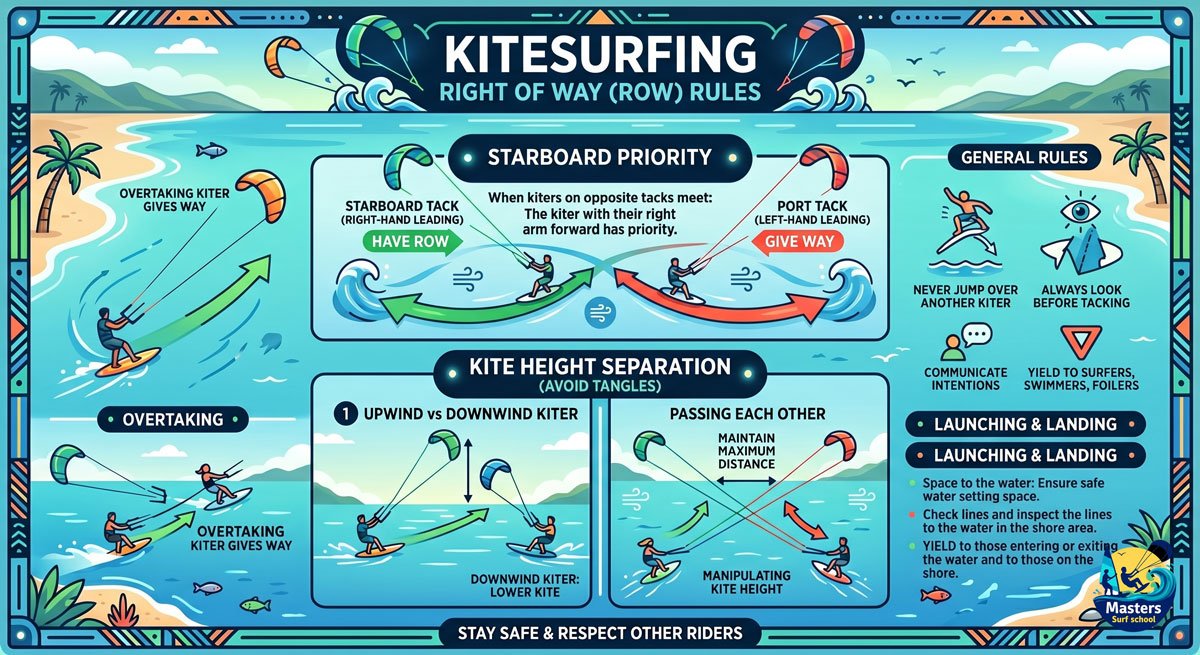
✅ 3. The Universal Language: Kitesurfing Right of Way (ROW) Rules
Direct Answer: Kitesurfing Right of Way rules are a globally recognized system of priority designed to prevent collisions on crowded water. The fundamental rule is: the rider on a starboard tack (right hand and shoulder forward) has priority over a rider on a port tack (left hand forward). These are not etiquette tips; they are critical safety protocols.
Memorize these five rules to avoid dangerous tangles and collisions:
- 🌟 Starboard Tack Has Priority: When two riders converge, the one with their right hand leading (starboard) maintains course. The port tack rider must alter their course and pass downwind of the starboard rider.
- ↕️ Upwind Kiter Raises Their Kite: The rider who is upwind keeps their kite high (toward 12 o’clock), while the downwind rider keeps their kite low. This creates vertical separation, preventing tangled lines.
- 🐢 The Slower Rider Has Right of Way: If you are overtaking a slower kiter, you are responsible for avoiding them. They may be a beginner and are less likely to react predictably.
- 🌊 The Rider on a Wave Has Priority: A kitesurfer riding a wave has right of way over those on flat water, as their balance and maneuverability are limited.
- 🏊 The Body Dragger Has Priority: A kiter being pulled through the water without a board (body dragging) has a severely limited field of vision and always has the right of way.
✅ 4. Your Escape Plan: Why Self-Rescue Is a Foundational Skill
Direct Answer: Self-rescue is the ability to safely depower your kite, pack it down in the water, and use it as a sail to propel yourself back to shore. This is not an advanced skill; it is a fundamental survival technique that every beginner must learn and practice before their first independent session.
The Three-Step Self-Rescue Logic
When you’re overpowered, injured, or equipment fails, follow this sequence:
- Activate the Quick Release (QR): Your first and most decisive action is to eject the chicken loop. This instantly flags the kite out on a single safety line, removing 90% of its power.
- Pack Down the Kite: Methodically wind your lines onto the bar as you swim toward the kite. Once at the kite, secure it. For a deep-water pack down, you may need to partially deflate it, roll it from the wingtips toward the center, and secure it with your harness or board.
- Sail to Shore: Lie on the packed kite/board assembly and use your arms or the kite’s residual windage to paddle diagonally toward the nearest safe shoreline, accounting for any current.
Knowledge of self-rescue is what allows a school to confidently send a student onto the water. Before you ever ride independently, a certified instructor should have you perform this drill at least once in a controlled, supervised setting.
✅ 5. The Safety-First Mindset: Training, Buddy System, and Continuous Learning
Direct Answer: A safety-first mindset is the conscious, ongoing practice of making risk-mitigating decisions before, during, and after every session. Its core tenets for a beginner are: always take professional lessons, never kite alone, and respect your physical and skill-based limits.
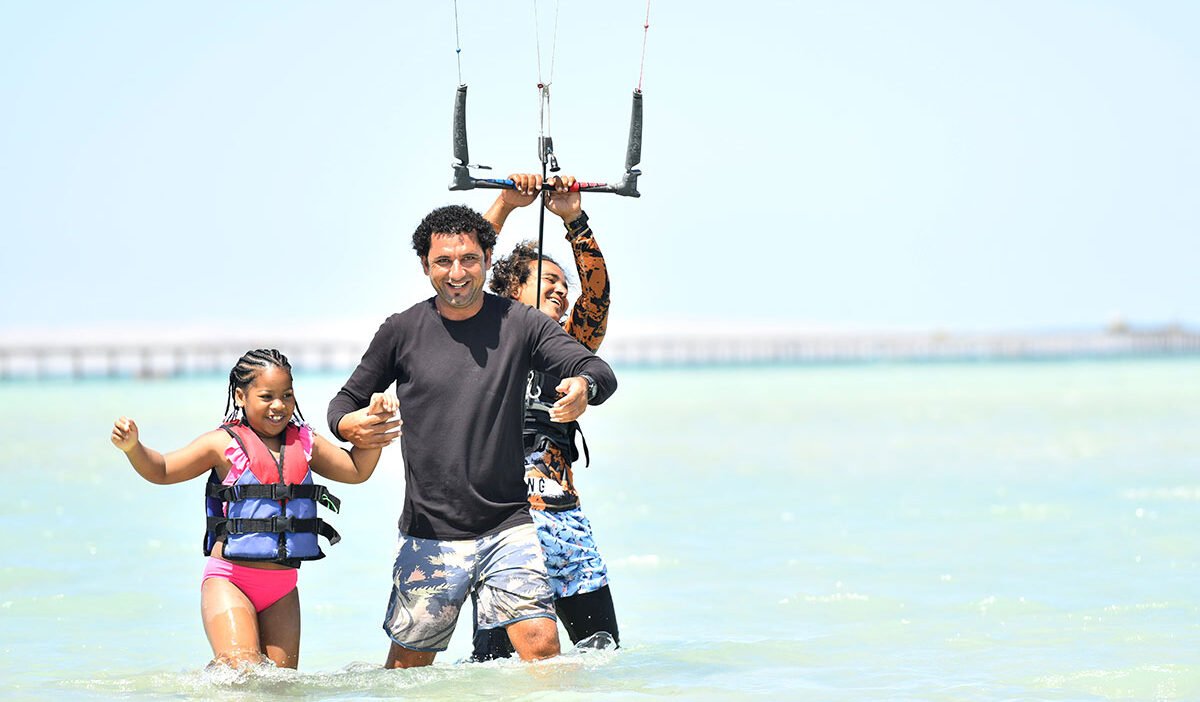
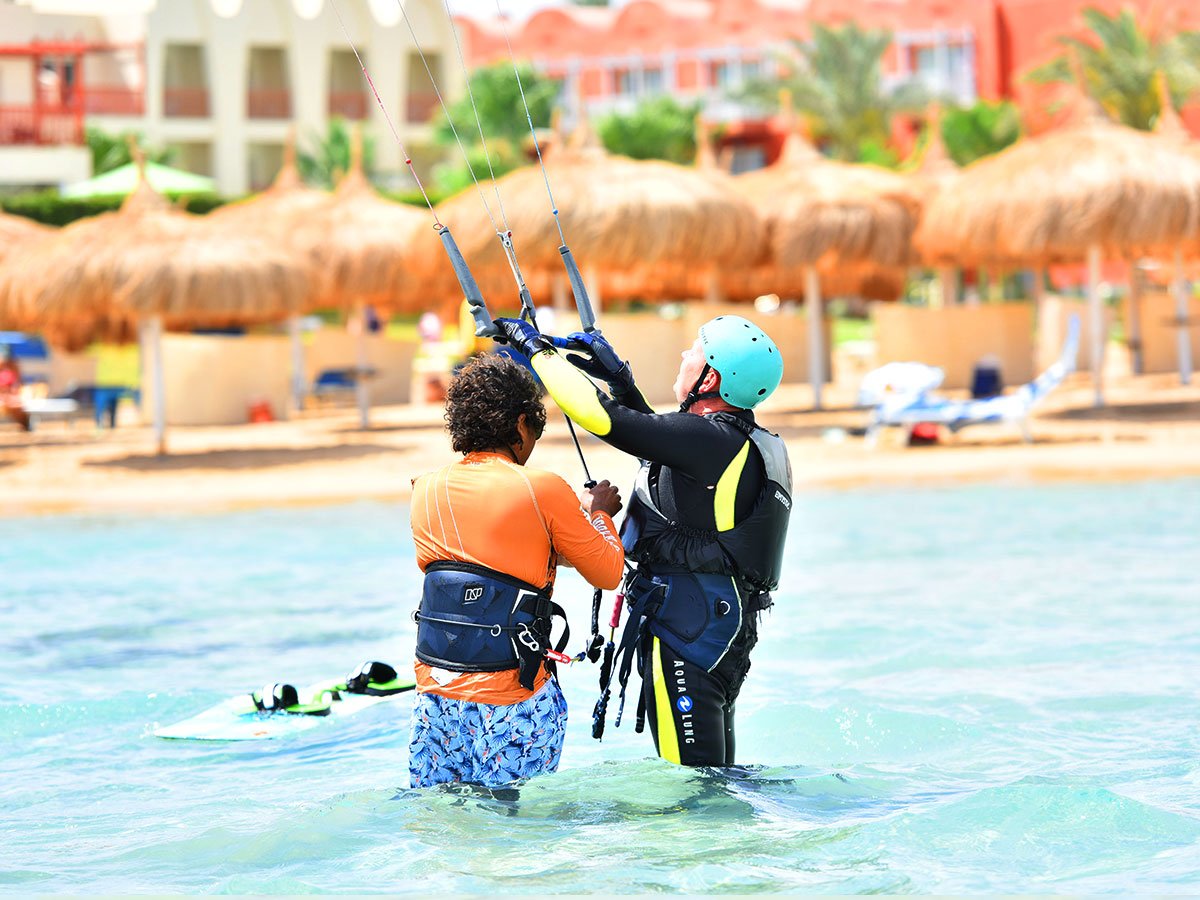
- Take Professional Kitesurf Lessons: This is non-negotiable. A certified IKO instructor teaches you the safety systems, site assessment, weather theory, and emergency procedures in a structured, progressive way. Self-teaching or learning from a friend bypasses this critical foundation, embedding dangerous habits from day one.
- Always Use the Buddy System: Kite with a partner whenever possible. A buddy can assist with launching and landing, spot you if you get into trouble, and provide immediate help in an emergency. The RNLI’s key advice is: “Always kite with another person. If you go alone, take a means of calling or signalling for help”.
- Know and Respect Your Limits: Never attempt maneuvers or conditions beyond your skill level. If you’re feeling fatigued, cold, or uncertain about the wind, call it a day. As the NSRI wisely advises, “When in doubt, rather sit it out on the beach and wait for safe, steady wind”. Progress gradually, building confidence in small, incremental steps.
❓ (FAQ) on Kitesurf Safety
A properly fitted, fully functional harness with a quick-release system. While helmets and impact vests are crucial, the quick-release mechanism is your primary emergency disconnect, allowing you to depower the kite instantly in a dangerous situation. It must be tested before every single session.
Lessons provide a structured, progressive curriculum that teaches you to assess conditions, manage equipment, understand the wind window, and perform emergency procedures like self-rescue—all under the supervision of a certified professional. This knowledge is very difficult and dangerous to acquire on your own.
Extremely dangerous. Offshore wind blows you away from the land. If your kite loses power, you malfunction, or you simply cannot relaunch, you will be carried out to open sea with no assistance. It is an absolute no-go for beginners and should be avoided by most experts without dedicated rescue boat support.
Stop riding immediately. The priority is to get to shore as quickly and safely as possible. If you are far out, perform a controlled self-rescue: depower your kite, pack it down, and paddle in. Do not attempt to outrun the storm by continuing to ride; the wind can shift or intensify without warning, creating a deadly situation.
No, it is generally not recommended due to the high risk of “snapback” injury. A board leash can cause the board to recoil and hit you in the head after a fall. Beginners should focus on mastering body dragging—using the kite to pull themselves through the water—to retrieve a lost board without a leash.
Kite size selection is based almost entirely on wind speed and your body weight. A general rule for a 75 kg (165 lb) rider in 15-20 knots of wind would be a 10-12 meter kite. In lighter wind, you need a larger kite; in stronger wind, a much smaller one. Always consult a size chart and, when in doubt, use a smaller kite. It’s safer to be a little underpowered and unable to ride than to be dangerously overpowered.
The wind window is the three-dimensional area downwind of the rider in which the kite can fly. The zones of the window generate different amounts of power. The edge of the window (zone 3) has the least power, while the power zone directly downwind is where the kite pulls the hardest. Understanding this concept allows you to control the kite’s power and avoid being lofted or dragged.
Yes, and you absolutely should. You can attach your lines to a fixed, secure anchor point in a large, open space, hook in, and practice activating your quick release while under simulated tension. The goal is to make the motion instinctive so that you don’t hesitate in a real emergency. You should also practice resetting the system correctly.
🎯 Your Call to Action: Master Kitesurf Safety in Hurghada’s Perfect Waters
Your journey from a complete beginner to a competent kitesurfer must be built on a bedrock of practical safety knowledge. Understanding the data, the equipment, and the rules is the first step; practicing them in a controlled, forgiving environment is the next.
The waist-deep, warm lagoons of Kitesurf Hurghada offer arguably the safest and most effective learning conditions on the planet. With consistent side-onshore winds and professional, IKO-certified instruction, you can internalize these critical safety skills—from pre-flight checks to self-rescue—faster and with less risk than anywhere else.
Don’t leave your safety to chance. Book your structured beginner course today with a certified school like Masters Surf School and experience the transformative confidence that comes from learning to ride safely, right from the very first moment you touch the bar.