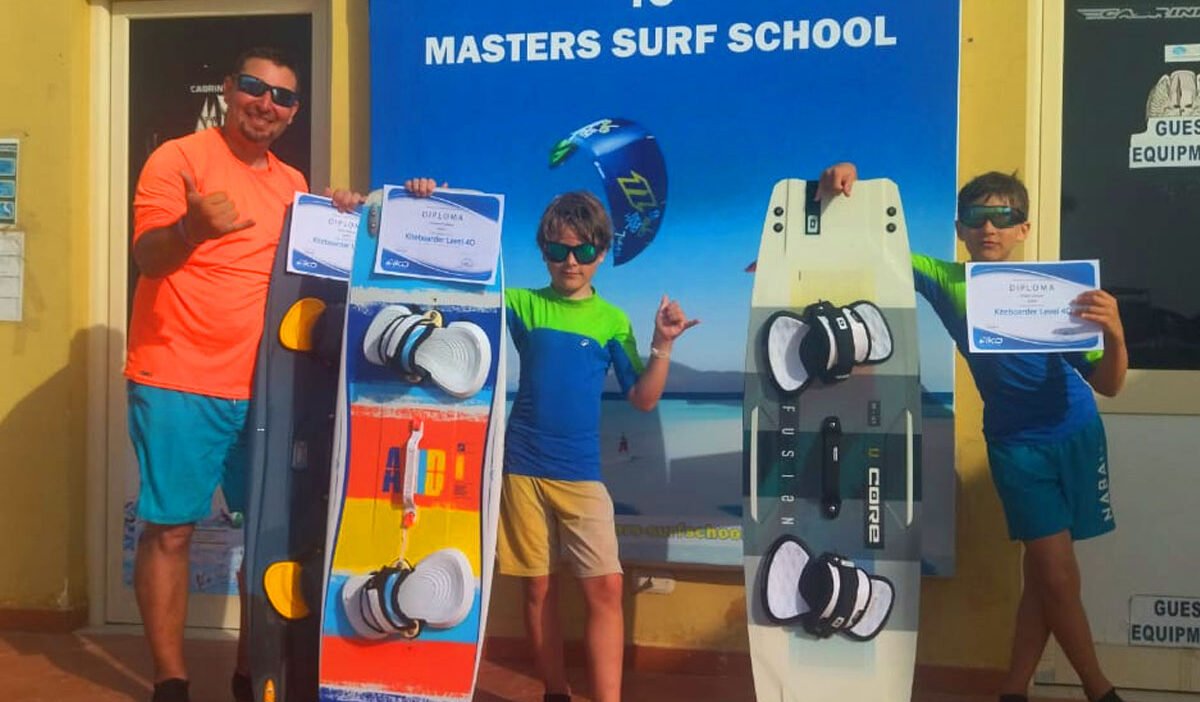
The hurghada kitesurf experience combines waist-deep, flat-water lagoons, consistent 18–25 knot thermal winds, and IKO-certified instruction at costs 30–50% below European rates. Masters Surf School, operating from four Red Sea locations, delivers a structured learning path from first kite control to independent riding in as few as 9–12 hours of instruction. Complimentary hotel transfers, premium equipment, and an immediate online booking window make this the most accessible entry point to kitesurfing worldwide.
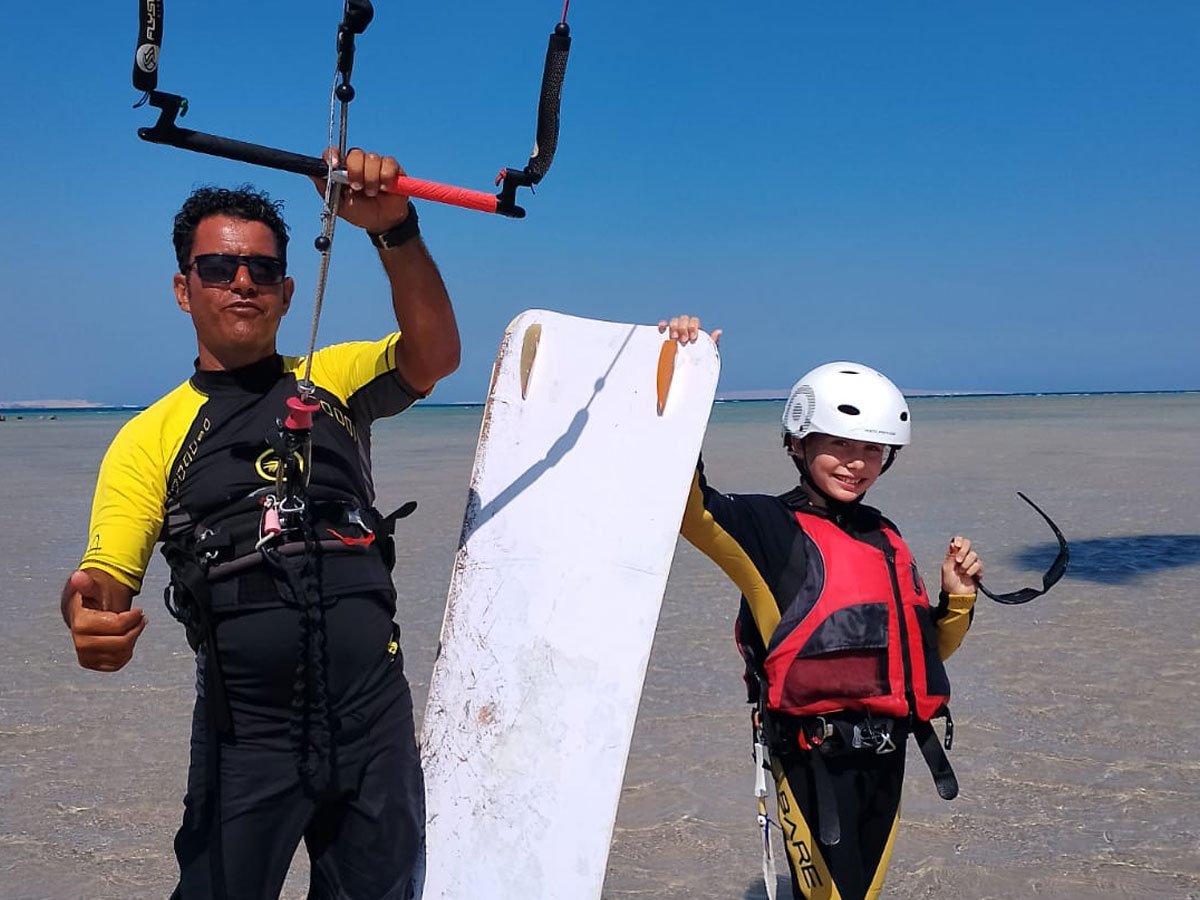
Hurghada Kitesurf Experience: The Ultimate Guide for Beginners Ready to Ride the Red Sea
- What Is a Hurghada Kitesurf Experience and Why Is It World-Renowned?
- 🏄 What Exactly Is Kitesurfing? A Beginner’s Analogy
- 📋 Hurghada Kitesurf Experience Pricing: What You‘ll Actually Pay in 2026
- 🎓 The Complete Beginner’s Journey: From Zero to Independent Rider
- 🌊 Kite School Hurghada: Why Masters Surf School Stands Above the Rest
- 📅 The Best Hurghada Kitesurf Experience: Timing Your Trip for Maximum Wind
- 🔒 Safety First: How Hurghada‘s Lagoons Protect Beginner Kitesurfers
- 📝 Hurghada Kitesurf Experience Reviews: What Past Students Actually Say
- ❓ FAQs About Hurghada Kitesurf Experience
- 🔹 Ready to Book Your Hurghada Kitesurf Experience? Act Now
What Is a Hurghada Kitesurf Experience and Why Is It World-Renowned?
A hurghada kitesurf experience is a structured water sports session in the shallow, protected lagoons of Egypt‘s Red Sea coast, where consistent thermal winds and professional IKO instruction enable complete beginners to learn kite control and board riding in a single vacation. Hurghada has hosted windsurfing centers for over three decades and now stands as one of the world‘s premier kitesurfing destinations.
How Hurghada Became the Red Sea‘s Kitesurfing Capital
Three geographical advantages converge in Hurghada to create what instructors call the “beginner’s paradise” of kitesurfing. First, the thermal wind system operates like clockwork: daytime heating of the Eastern Desert pulls air from the cooler Red Sea, generating reliable side-shore winds of 12–28 knots across 300+ kiteable days per year. Second, the coastline features extensive shallow lagoons with sandy bottoms where the water depth remains waist-high for hundreds of meters from shore. Third, the Red Sea’s elevated salinity provides additional buoyancy, reducing the physical effort required for board starts.
The peak season from May through October delivers wind conditions strongest and most consistent, making these months ideal for both beginners and experienced riders. During this period, thermal winds blow steadily at 18–25 knots daily, and water temperatures reach 26–30°C — eliminating the need for a wetsuit entirely.
The Masters Surf School Difference: 25 Years of Local Expertise
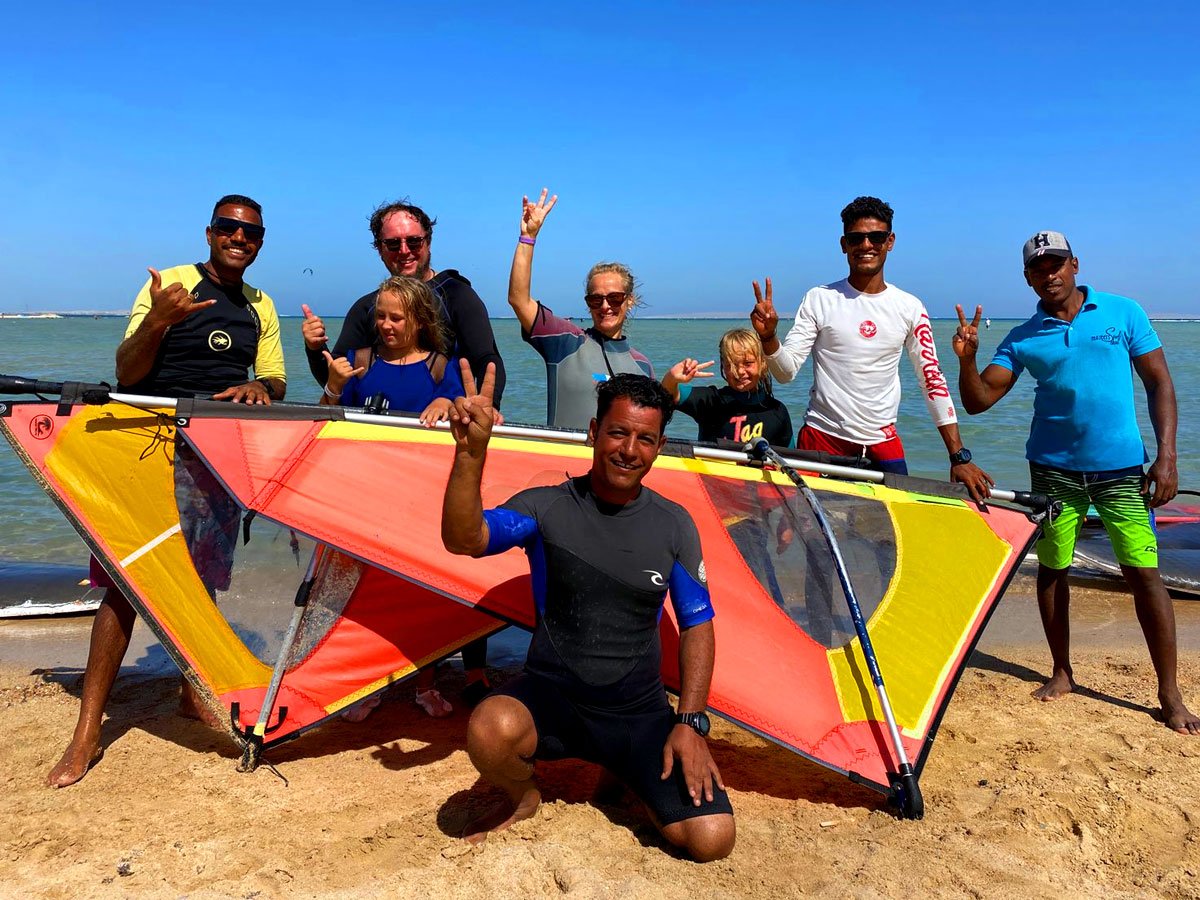
Masters Surf School operates from more than four locations along the Red Sea coast, leveraging over 25 years of continuous operation in Hurghada. This longevity translates into practical advantages for beginners: knowledge of micro-wind patterns across different lagoons, established safety protocols refined across thousands of student sessions, and relationships with hotel partners that enable complimentary transfers. The school‘s team holds International Kiteboarding Organization certification — the global standard for kitesurfing instruction — ensuring every lesson follows a proven, safety-first curriculum.
Masters Surf School
Red Sea Governorate,
Secondary phone: +201272284800
Email: masters.surfschool@gmail.com
📍 Key Fact: Masters Surf School is located at Titanic Hotel, Sahl Hashish Road, approximately 10 km from Hurghada International Airport. Operating hours are 8:30 AM to 7:00 PM daily, with telephone contact available at +20-1124823398.
| Monday | 9:00 AM - 11:30 PM |
| Tuesday | 9:00 AM - 11:30 PM |
| Wednesday | 9:00 AM - 11:30 PM |
| Thursday | 9:00 AM - 11:30 PM |
| Friday | 9:00 AM - 11:30 PM |
| Saturday | 9:00 AM - 11:30 PM |
| Sunday | 9:00 AM - 11:30 PM |
🏄 What Exactly Is Kitesurfing? A Beginner’s Analogy
Kitesurfing combines a large steerable kite (similar to a paraglider wing) with a small directional board (resembling a wakeboard or snowboard). The kite harnesses wind energy and transfers it through four lines to a control bar held by the rider.
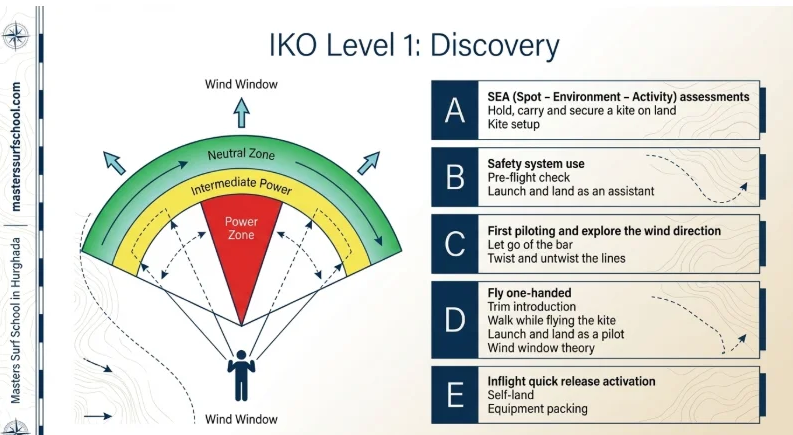
Pulling the left side of the bar steers the kite left; pulling the right side steers it right. Pushing the bar away reduces power; pulling it in increases power — a simple binary that becomes intuitive within the first hour of instruction.
The Kite-Wind-Board Relationship Explained Simply
Think of the kite as your engine, the wind as your fuel, and the board as your steering wheel. The kite does the pulling work; your body merely directs that energy. In Hurghada‘s shallow lagoons, you can stand on the sandy bottom whenever you need to reset — a safety feature that dramatically accelerates learning compared to deep-water locations where every mistake requires swimming back to position.
Why the Red Sea Lagoons Are the Safest Learning Environment
Hurghada’s lagoon setup at designated kitesurfing zones is specifically engineered for novice progression. The water is shallow enough to stand in for hundreds of meters, allowing students to walk back upwind if they drift downwind — eliminating the exhaustion and anxiety of deep-water swimming. Sandy bottoms eliminate the risk of coral cuts or rock injuries. Wide, shallow lagoons offer warm waters year-round, which are perfect for beginner kiteboarders to practice in safety.
📋 Hurghada Kitesurf Experience Pricing: What You‘ll Actually Pay in 2026
Understanding the hurghada kitesurf experience price structure helps you budget accurately before traveling. Kitesurfing lessons in Egypt cost significantly less than European destinations while maintaining identical IKO certification standards.
Beginner Course Pricing Structure
At reputable kitesurfing schools in Hurghada, beginner kiteboarding courses follow these price ranges:
| Course Type | Duration | Price Range | What’s Included |
|---|---|---|---|
| Group Lessons (2 students per instructor) | 12 hours (3 days) | €400–€560 | All kite gear, IKO certification |
| Private 1-on-1 Training | 9 hours | €400–€600 | All gear, faster progression |
| Introductory Course | 2–2.5 hours (group) | From $85 | Basic kite control, safety |
| Basic Course | 7 hours (2–3 days) | $300 | Confident kite control, board starts |
| Full Advanced Course | 12 hours (3–4 days) | $500 | Independent riding, upwind navigation |
Individual lessons start from approximately €120 per hour, while group sessions begin around €80 per person including all necessary equipment. IKO certification is included in most courses at no extra cost from certified IKO kite instructors.
Additional Costs to Factor Into Your Budget
When budgeting for a complete hurghada kitesurf experience, account for these supplementary expenses:
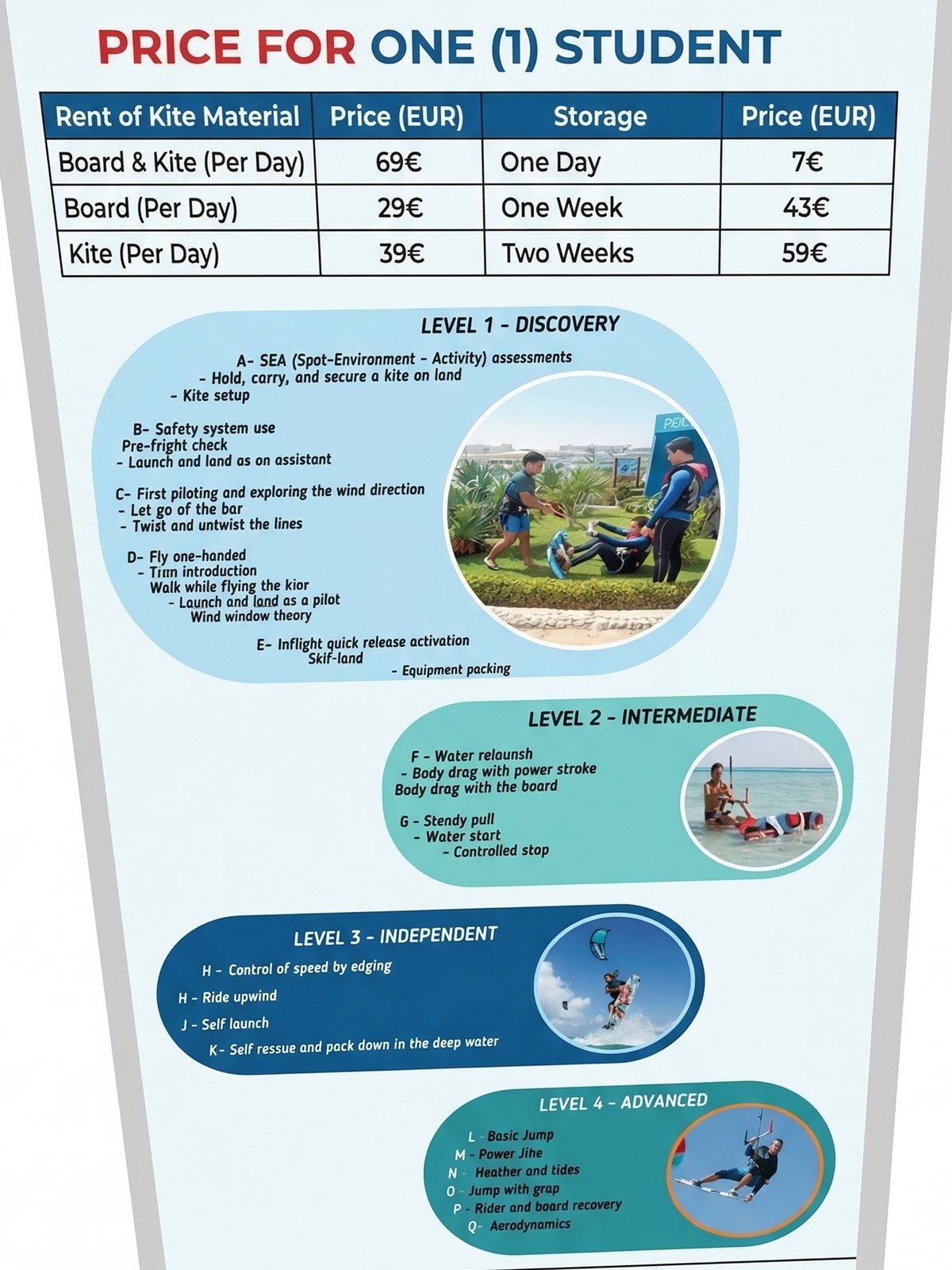
- Equipment Rental (if not using school gear): €70–€110 per day for a full kitesurfing setup, or €10–€20 daily for board-only rental.
- Damage Insurance: Some schools require €10–€20 per day coverage for equipment protection.
- Kite Safari Packages: 5-day camps range from €600–€900 including lessons and gear; week-long luxury yacht safaris cost €1,200–€1,500 for multiple exclusive Red Sea locations.
- Spot Access Fees: Approximately €50 per week grants beach access, overnight gear storage, and compressor use — eliminating the daily chore of transporting equipment to and from your hotel.
How Hurghada Prices Compare to European Kitesurfing Destinations
Egypt‘s kitesurfing hurghada price advantage is substantial. A 12-hour beginner course in Hurghada (€400–€560) costs roughly half of what identical instruction would cost in Tarifa, Spain, or Dakhla, Morocco — while delivering comparable wind reliability and warmer water temperatures. Rental prices and spot services remain super competitive, literally half the price of neighboring schools. This pricing differential makes Hurghada the most cost-effective destination for a complete kitesurfing education.
🎓 The Complete Beginner’s Journey: From Zero to Independent Rider
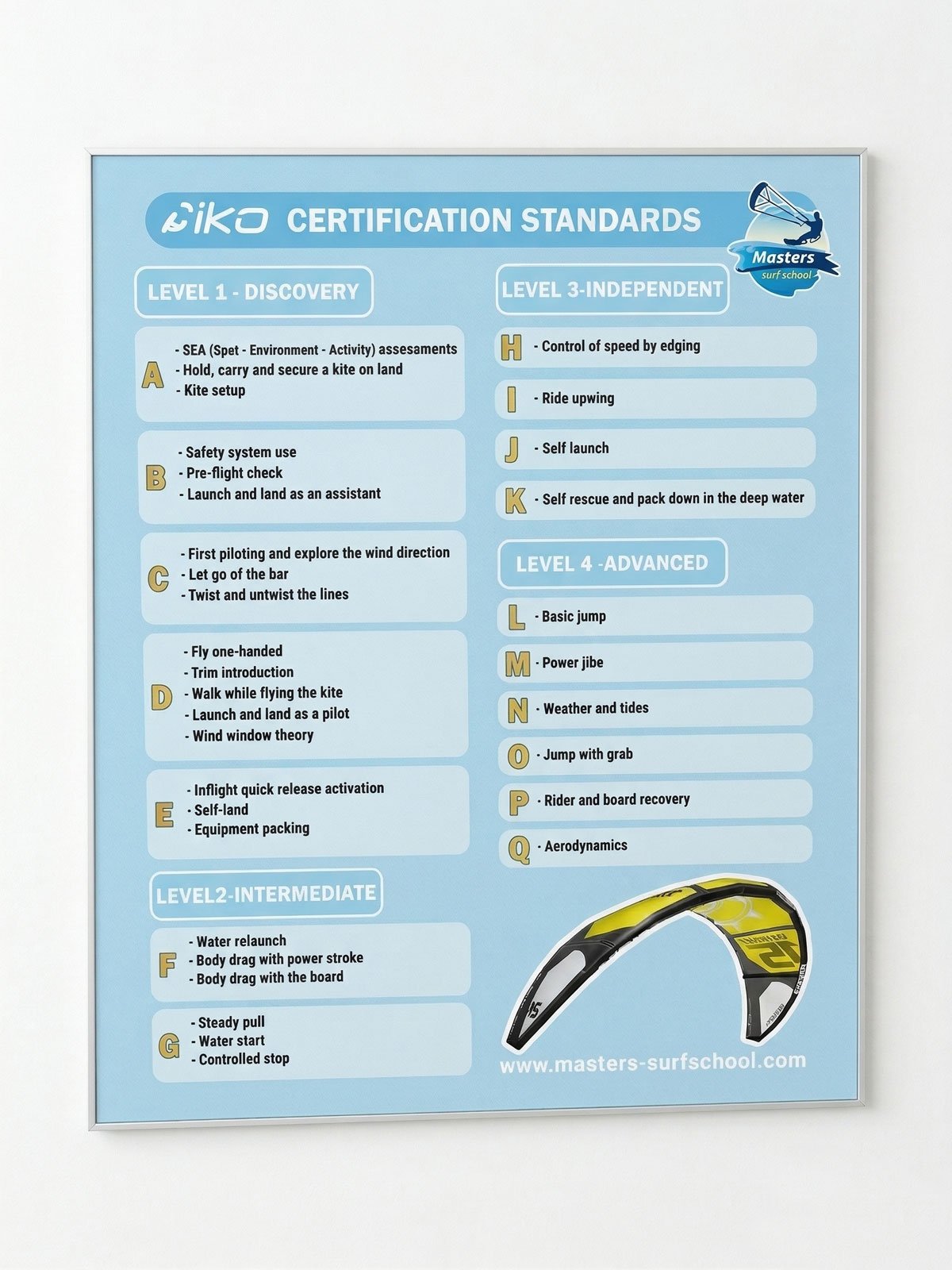
Your hurghada kitesurf experience follows a proven, stepwise curriculum designed by Masters Surf School‘s IKO-certified instructors. Each phase builds sequentially on the previous skill.
Day 1: Beach Setup, Safety Systems, and Kite Control
The first session begins on land. You‘ll learn to assemble the kite, connect the four control lines, and verify proper setup. Instructors demonstrate the complete safety system — including the primary quick-release mechanism that instantly depowers the kite in any emergency. Understanding the wind window — an imaginary quarter-sphere downwind of the rider — forms the foundation for all kite control.
Key Day 1 Milestones:
- Kite setup and pre-flight checks (15–20 minutes)
- Wind window theory and power zones (30 minutes)
- Basic kite steering at the edge of the wind window (1 hour)
- Power strokes and controlled power generation (1 hour)
Day 2: Body Dragging and Water Confidence
Body dragging teaches you to use the kite to pull yourself through the water without the board — an essential skill for retrieving a lost board and building confidence in deep water. In Hurghada‘s shallow lagoons, you practice this with the security of standing whenever necessary. Body dragging drills include downwind body drags, crosswind body drags, and upwind body drags — each progressively building your understanding of kite positioning relative to the wind.
Day 3: First Water Starts and Sustained Riding
The water start combines all previous skills: kite control, body positioning, and board awareness. The sequence is precise: fly the kite to the neutral zone (12 o‘clock), position the board perpendicular to the wind with knees bent, perform a power stroke to generate lift, and stand up smoothly as the board planes. Most students achieve their first sustained ride — 20–50 meters — by the end of Day 3.
Students who have completed a structured course typically finish with consistent water starts and movement on the board. Some students can ride after just 6 hours of kite lessons, while others may only just begin to understand kite control by then — individual progression rates vary.
IKO Certification: What It Is and Why It Matters
The International Kiteboarding Organization (IKO) is the globally recognized governing body for kitesurfing instruction and certification. An IKO certificate serves as your universal “kitesurfing license,” recognized by rental centers and schools worldwide. Upon course completion, Masters Surf School issues the appropriate IKO level certification (Discovery, Intermediate, or Independent) based on demonstrated competency.
IKO certification provides three concrete benefits: proof of competency for equipment rental anywhere in the world, recognition of your skill level for booking advanced courses internationally, and insurance eligibility at many kitesurfing destinations that require certified rider status.
🌊 Kite School Hurghada: Why Masters Surf School Stands Above the Rest
Selecting the right kite school Hurghada location determines whether your first kitesurfing experience builds confidence or frustration. Masters Surf School‘s four-location operation provides flexibility that single-location schools cannot match.
IKO-Certified Instruction: What the Credential Actually Means
IKO certification requires instructors to complete rigorous training covering teaching methodology, safety protocols, emergency response, and student progression assessment. Masters Surf School instructors hold IKO credentials and have over 15 years of experience — ensuring safe and professional training aligned with international standards. All training is based exclusively on IKO standards.
Four Locations Along the Red Sea Coast
Operating from multiple locations allows Masters Surf School to select the optimal lagoon based on daily wind direction and tide conditions. The primary location at Titanic Beach offers immediate access to a protected shallow lagoon suitable for beginners. Additional satellite locations provide backup options when wind angles shift or when particular areas become crowded.
A Wikivoyage entry notes that Masters Surf School operates in Panorama Bungalows Aqua Park Hurghada hotel with a small area of shallow water — a good spot for intermediate riders. The school‘s address at Titanic Hotel, Sahl Hashish Road positions it conveniently for guests staying in the Sahl Hasheesh resort corridor.
Complimentary Hotel Transfers and Equipment Quality
Masters Surf School provides complimentary hotel transfers — a logistical advantage that eliminates the need to arrange taxis or navigate unfamiliar roads before your lesson. Equipment is top-of-the-line, regularly renewed, and specifically selected for the Red Sea‘s wind conditions. Schools using new, comfortable equipment with modern designs receive consistently positive feedback from students.
Catamaran Sailing and Kite Safaris: Advanced Experiences
For those progressing beyond beginner status, Masters Surf School offers catamaran sailing excursions and kite safaris — multi-day journeys aboard vessels that access remote Red Sea islands unreachable from shore. These safaris provide stronger, cleaner winds and empty lagoons with zero crowd pressure, offering an entirely different dimension of the hurghada kitesurf experience egypt that advanced riders consistently rank as bucket-list material.
📅 The Best Hurghada Kitesurf Experience: Timing Your Trip for Maximum Wind
The best hurghada kitesurf experience depends heavily on which month you visit. Understanding seasonal wind patterns ensures you book during optimal conditions rather than arriving during the unreliable off-season.
Peak Season (May–October): Consistent 18–25 Knot Thermal Winds
Peak season represents the ideal window for beginners. Thermal winds blow consistently at 18–25 knots daily, and water temperatures remain at 26–30°C — no wetsuit required. The wind may be very good at various Egyptian kitesurfing towns, but the wind is much better out at sea on kite safaris, where conditions are stronger and cleaner.
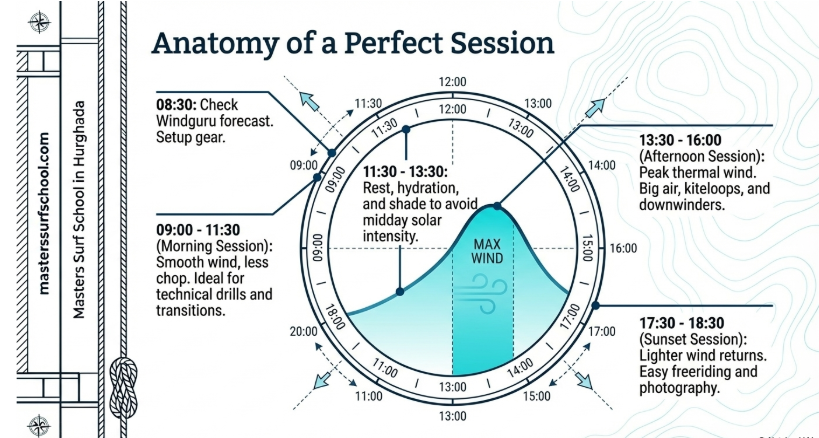
During peak season, many schools go weeks without a wind-free day — seriously, weeks of uninterrupted kitesurfing conditions. Early mornings offer lighter winds ideal for complete novices, while afternoon sessions provide stronger conditions for students progressing to water starts.
Shoulder Months (March, April, November): Fewer Crowds, Still Excellent Wind
Shoulder months deliver 15–22 knot winds — slightly less predictable than peak season but still more than adequate for learning. The primary advantage: fewer students competing for instructor attention and lagoon space. Water temperatures range from 22–26°C, and crowds thin considerably at Hurghada kite centers.
Winter Season (December–February): What to Expect
Winter brings frontal winds of 12–18 knots rather than the thermal winds that dominate summer. Water temperatures drop to 20–22°C — light wetsuits become recommended rather than optional. While still kiteable, winter conditions favor advanced riders who can extract power from lighter winds and those combining kitesurfing with other Hurghada beach activities. From November, a wetsuit becomes necessary as water temperatures dip below 20°C, and protective boots are recommended due to small rocks and shells.
🔒 Safety First: How Hurghada‘s Lagoons Protect Beginner Kitesurfers
Kitesurfing carries inherent risks, but Hurghada‘s geographical features and Masters Surf School‘s protocols minimize those risks to near-zero for beginner students.
Shallow, Sandy-Bottom Lagoons: Why Depth Matters
Hurghada‘s kitesurfing lagoons feature sandy bottoms and waist-deep water extending far from shore. This shallow environment allows beginners to practice kiteboarding safely, as the sandy bottom makes it easy to stand up and reset after any error. Protected areas like the famous AMC Hurghada lagoon provide waist-deep water for safe learning during kitesurfing lessons.
The ability to stand eliminates the most common beginner fear: being dragged into deep water. If you lose board control or experience a kite mishap, you simply stand up, regain composure, and walk back to your starting position.
On-Beach Communication Systems and Rescue Protocols
Masters Surf School instructors use radio headsets to maintain constant communication with students in the water — a system that allows real-time coaching without shouting across the lagoon. Dedicated safety boats stand ready for downwind retrieval if a student drifts beyond the designated learning zone. These measures are common practice at Hurghada‘s organized kitesurfing centers.
Equipment Safety Features Every Beginner Must Know
Every kite includes a primary quick-release system — a single pull that instantly depowers the kite completely. The kite then flags out on a single line, eliminating all pulling force. Masters Surf School dedicates the first 30 minutes of every beginner course to practicing quick-release activation until the motion becomes automatic muscle memory. Students also learn self-rescue techniques (wrapping lines and using the kite as a sail to return to shore) and right-of-way rules that prevent collisions in crowded conditions.
📝 Hurghada Kitesurf Experience Reviews: What Past Students Actually Say
Student testimonials provide the most reliable indicator of instructional quality. Reviews from multiple Hurghada kitesurfing schools consistently highlight the same positive factors.
Verified Student Testimonials and Outcomes
A student review from Masters Surf School describes the experience: “I took a kiteboarding course at Masters Surf School — everything was perfect! The instructors were great, the teaching was professional, and the atmosphere was fantastic. I felt safe throughout and received excellent guidance. Highly recommended for anyone wanting to learn kitesurfing!”
Another student who completed a five-day course with multiple instructors noted: “Very, very good. Followed 5 days of class with 4 different instructors. Each of them were excellent. Also the service from the surf school was very good.”
Reviews of similar IKO-certified schools in Hurghada describe “friendly and patient instructors” and praise the “good vibes and top-notch facilities including showers, storage for gear, compressor pumps, and delicious drinks.” One student reported showing up with no experience and finishing with consistent water starts and movement on the board.
Common Praise Points Across Hurghada Kite Schools
Consistent themes emerge across Hurghada kitesurfing school reviews:
- Patience of instruction: Instructors explain concepts step-by-step without rushing
- Equipment quality: Modern, well-maintained kites and boards
- Safety emphasis: Constant instructor vigilance and clear safety briefings
- Shallow lagoon advantage: Ability to stand reduces anxiety
- Value for money: Competitive pricing compared to European alternatives
❓ FAQs About Hurghada Kitesurf Experience
Yes, comfortable swimming ability in deep water is required. IKO certification prerequisites include the ability to swim comfortably in deep water without assistance. While Hurghada‘s lagoons are shallow, you will eventually practice in deeper areas, and safety protocols assume swimming competence.
Most students achieve independent riding after 9–12 hours of structured instruction. The typical beginner course spans 8–12 hours completed over 2–4 days. Some students can ride after just 6 hours, while others may need additional time — individual progression varies based on prior board sports experience and comfort with wind-powered activities.
Summer (May–October): Board shorts or swimwear plus a rash guard for sun protection. No wetsuit needed — water temperatures reach 26–30°C. Winter (December–February): A 2mm or 3mm wetsuit is recommended as water temperatures drop to 20–22°C. Protective boots are advised due to small rocks and shells in some lagoons. Reef-safe sunscreen is essential year-round.
Yes, Hurghada‘s major kitesurfing schools operate in tourist-oriented resort areas with professional, supervised environments. Many schools report that solo female travelers constitute a significant portion of their beginner student base. The schools maintain professional, respectful atmospheres, and instructors follow strict codes of conduct. It remains advisable to follow standard travel safety practices applicable to any international destination.
Most schools accept students from age 12–14, depending on physical size and maturity. The key factor is sufficient body weight (typically 45 kg minimum) to control the kite safely. Younger students may require private lessons rather than group instruction. Always confirm age policies directly with Masters Surf School when booking.
Yes, but beginners are strongly encouraged to use school equipment initially. School kites are specifically sized for Hurghada‘s typical wind conditions and are fully insured against accidental damage — coverage that does not extend to personal equipment. Using school gear during lessons also ensures your equipment avoids unnecessary wear during the high-impact learning phase.
Reputable schools offer flexible rescheduling or alternative activities. Masters Surf School‘s multi-day course structure builds in flexibility for occasional light-wind days. If wind conditions prevent safe kitesurfing, schools typically offer rescheduling to the next suitable day or alternative activities such as catamaran sailing (also offered by Masters Surf School). During peak season (May–October), wind-free days are extremely rare — schools often go weeks without a single windless day.
Contact Masters Surf School directly by telephone or visit in person. The school is located at Titanic Hotel, Sahl Hashish Road, Hurghada, Egypt. Operating hours are 8:30 AM to 7:00 PM daily. Telephone contact for inquiries and bookings: +20-1124823398. The school is approximately 10 km from Hurghada International Airport, and complimentary hotel transfers are provided with course bookings.
🔹 Ready to Book Your Hurghada Kitesurf Experience? Act Now
The best hurghada kitesurf experience awaits — but peak-season lesson slots fill weeks in advance. Hurghada‘s prime wind season from May through October sees maximum demand, and the most experienced IKO instructors‘ schedules book solid months ahead.
Why Book Today
✅ Limited instructor availability: IKO-certified instructors can only teach a finite number of students per day. Peak season slots disappear quickly.
*✅ Optimal wind window approaching: The strongest, most consistent thermal winds blow from May through October — book now to secure lessons during this prime period.
*✅ Complimentary transfers included: Masters Surf School‘s hotel pickup service eliminates logistics stress — but advance booking ensures this service is confirmed.
✅ Price advantage: Egypt‘s kitesurfing courses cost 30–50% less than European equivalents — an educational investment that pays dividends in accelerated progression.
How to Reserve Your Spot
Contact us via WhatsApp
Don‘t let another wind season pass without experiencing the Red Sea’s legendary lagoons. Contact Masters Surf School today and secure your place in the world‘s most beginner-friendly kitesurfing destination.
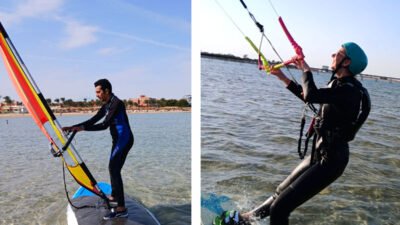
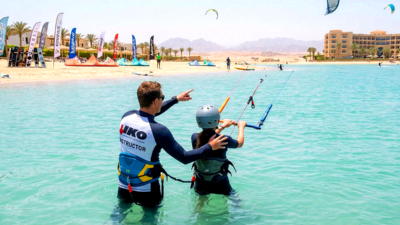
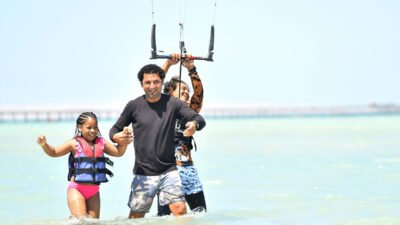

[…] world’s most forgiving and consistent learning environment. This is the primary reason why kitesurf hurghada experience consistently receives top reviews […]
[…] fish species and world-famous wrecks at significantly lower prices than European destinations. Kitesurfing and windsurfing are not just possible here; they are world-class due to the flat, waist-deep lagoons […]