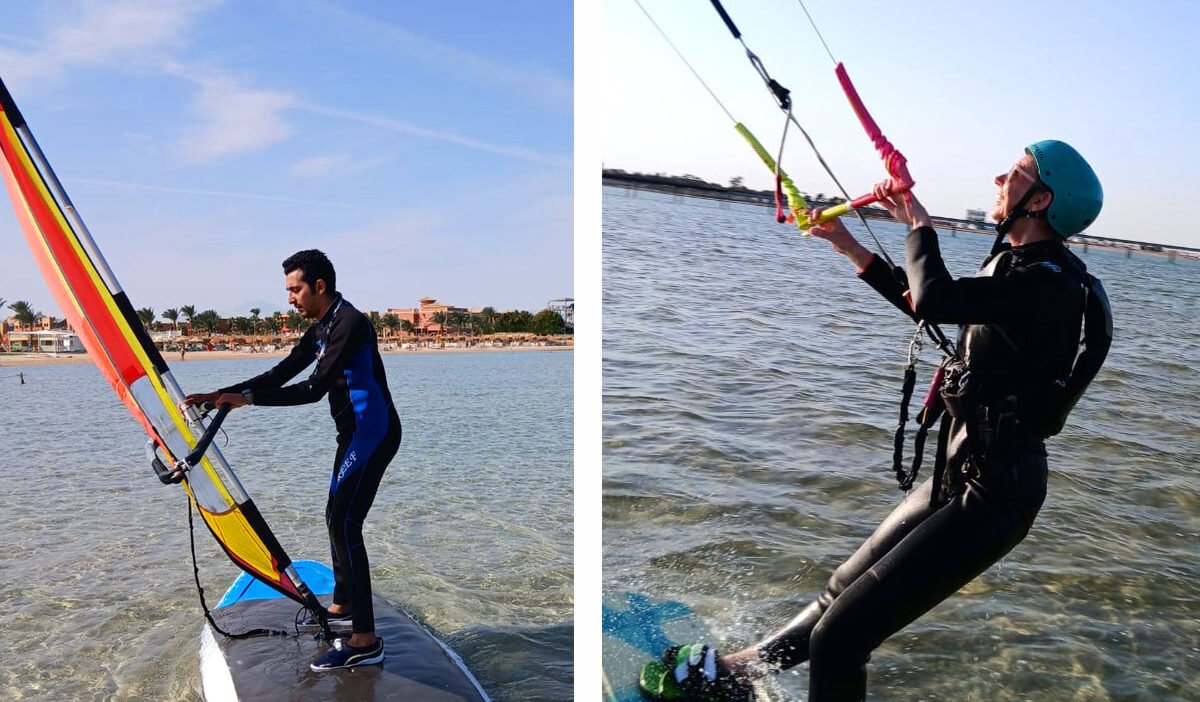
Windsurfing is easier to learn in the first few hours—most beginners can stand and sail slowly on day one. Kitesurfing has a steeper initial learning curve because you must master kite control separately before touching a board. However, kitesurfing offers a faster path to advanced riding and jumping once you pass the beginner phase.
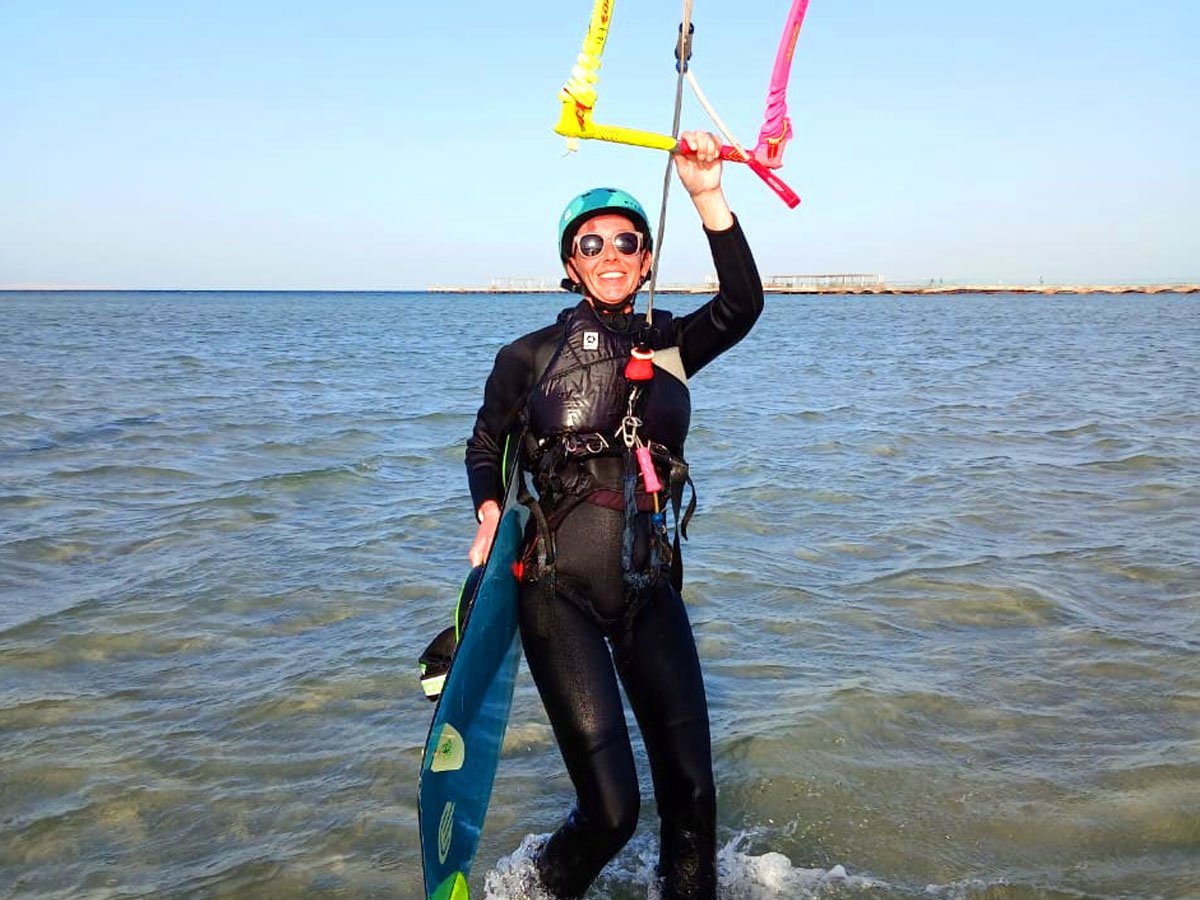
Your choice should depend on available storage space, travel habits, local wind conditions, and whether you prefer the direct feel of a sail in your hands or the flying sensation of a kite pulling you from above.
Kitesurfing or Windsurfing Which One Should You Learn
- 🤔 What Are Kitesurfing and Windsurfing, Exactly?
- 🎯 Which Sport Is Easier for Beginners: Kitesurfing or Windsurfing?
- 📊 How Long Does It Take to Learn Each Sport?
- 🏋️ What Are the Physical Demands and Fitness Requirements?
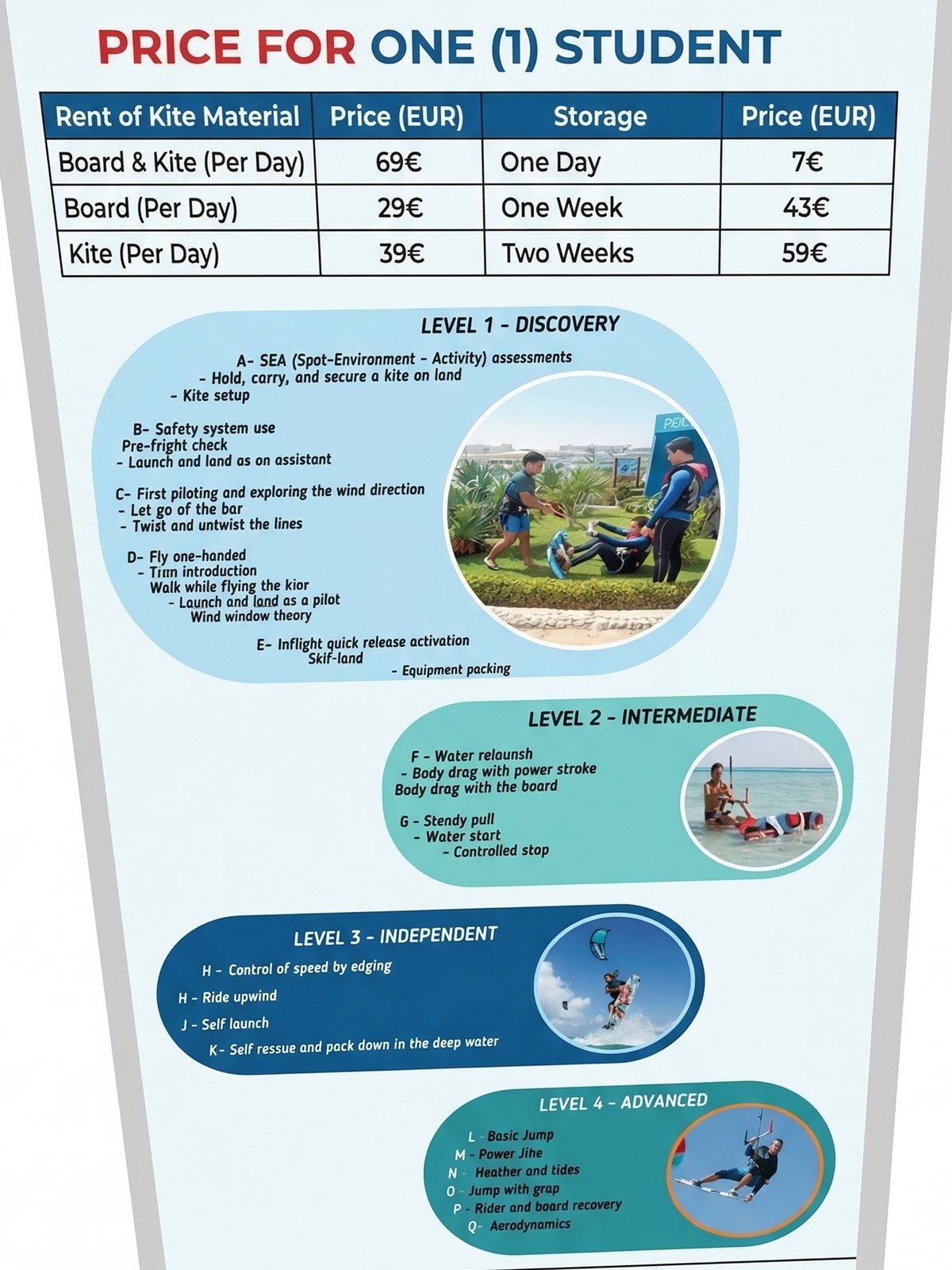
- 💰 How Much Does It Cost to Get Started?
- 🚗 Which Equipment Is Easier to Transport and Store?
- 🌬️ What Wind and Water Conditions Does Each Sport Require?
- ⚠️ Is Kitesurfing Dangerous? Safety Comparison
- 🏆 Which Sport Is Better for Progression and Tricks?
- 🌊 What About Wing Foiling? Where Does It Fit?
- 🧭 Final Verdict: Kitesurfing or Windsurfing?
- 📋 Key Takeaways Checklist
- 🌊 Ready to Start Your Wind Sports Journey?
🤔 What Are Kitesurfing and Windsurfing, Exactly?
Kitesurfing uses a large controllable kite flown overhead on 20–25 meter lines to pull a rider across the water on a small board similar to a wakeboard. The rider wears a harness that connects to a control bar, transferring the kite’s pull to the body rather than the arms. Steering happens by angling the bar and moving the kite through the “wind window”—the three-dimensional space where the kite generates power.
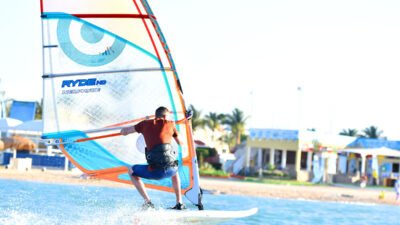
Windsurfing combines a surfboard-like hull with a mast, sail, and boom assembly directly attached to the board via a universal joint. The rider stands on the board, holds the boom with both hands, and manipulates the sail’s angle to catch wind and generate movement. There is no separate flying object to manage—everything is one connected unit. This makes the sport fundamentally different: in windsurfing, you hold the power source in your hands; in kitesurfing, you steer a distant power source through lines.
🎯 Which Sport Is Easier for Beginners: Kitesurfing or Windsurfing?
Windsurfing is easier for the first few hours on the water. Kitesurfing becomes significantly easier once you pass the initial 6–12 hours of dedicated training.
When you take your first windsurfing lesson, you will stand on a large, stable board with a small sail. Within an hour or two, most people can sail in a straight line at slow speeds and turn around. The equipment stays under you, and if you lose balance, you simply fall into the water next to the board. The fundamental skills can be learned in a few hours with sufficient wind.
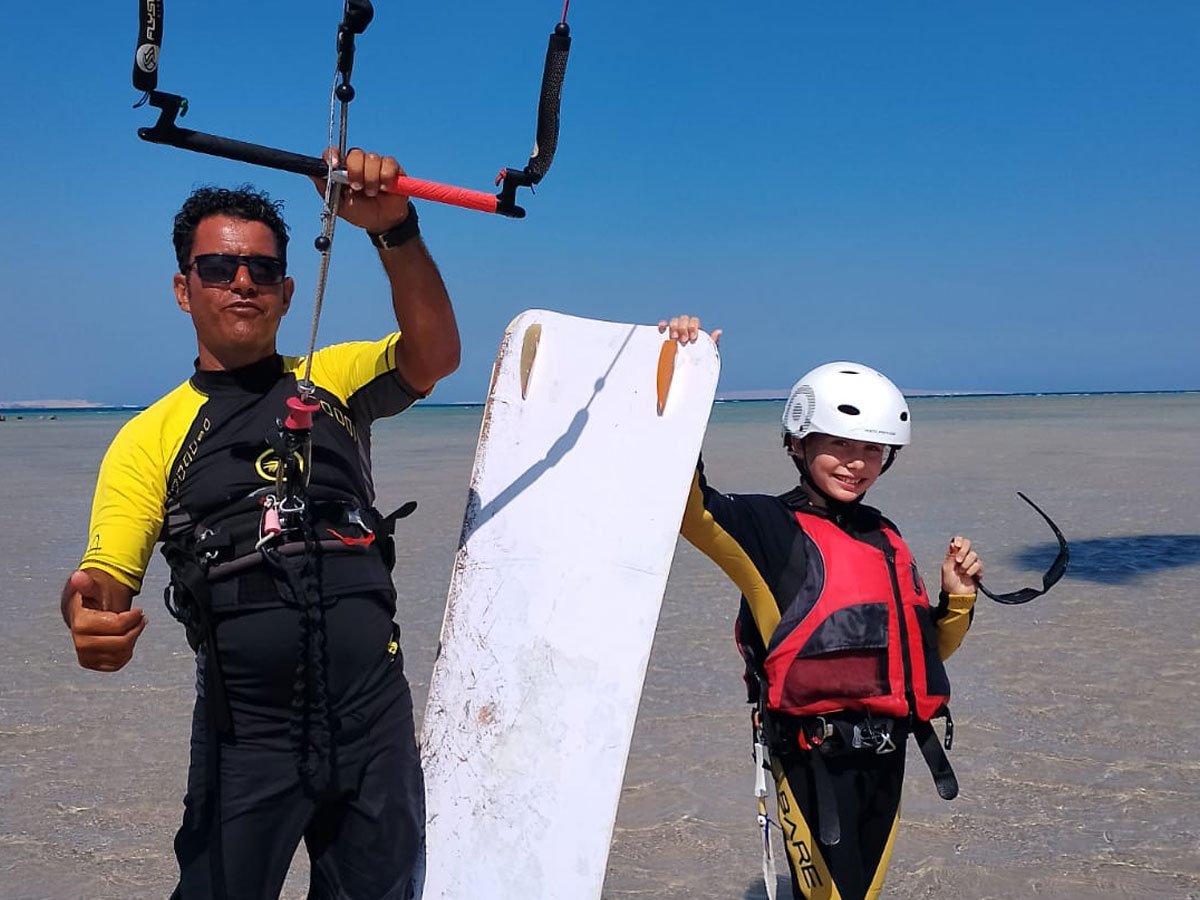
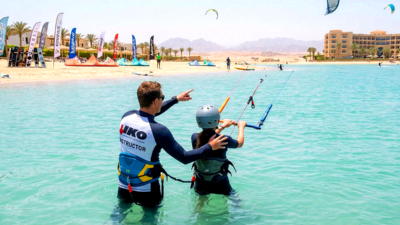
Kitesurfing starts very differently. Your first 2–4 hours are spent entirely on land or in shallow water, learning to fly a small trainer kite without a board. You must understand the wind window, master kite control at different positions, and learn safety systems—including how to activate the quick-release mechanism that instantly depowers the kite in emergencies. Only after you can control the kite reliably do you enter the water for “body dragging” (letting the kite pull you without a board). Adding the board typically happens after 6–9 hours of instruction.
The distinction matters: windsurfing offers immediate gratification and a gentle introduction. Kitesurfing demands more patience upfront but accelerates rapidly once kite control becomes second nature. As one analysis notes, “Windsurfing is easier to start initially, though it can be more challenging to master controlling the sails and balancing on the board. Kitesurfing may have a steeper learning curve at first as riders learn how to handle the kite.”
📊 How Long Does It Take to Learn Each Sport?
Reaching independent riding takes approximately 6–12 hours of lessons for windsurfing and 12–20 hours for kitesurfing, though individual progress varies significantly.
⏱️ Windsurfing Learning Timeline
- First 2–3 hours: Learn to uphaul the sail (pull it out of the water), find balance, sail in a straight line at slow displacement speeds, and perform basic turns by stepping around the mast.
- 5–10 hours: Begin using a harness (taking load off your arms), sail in stronger winds, and start planing—where the board lifts onto the water’s surface and accelerates significantly.
- 20+ hours: Consistent planing, using footstraps, attempting carve jibes (turning while staying on the board), and riding in various wind conditions.
- 1+ years: Mastering wave riding, jumping, and advanced maneuvers. Many recreational windsurfers never reach the harness-and-footstrap stage, which explains why the sport appears harder than it initially feels.
⏱️ Kitesurfing Learning Timeline (IKO Standards)
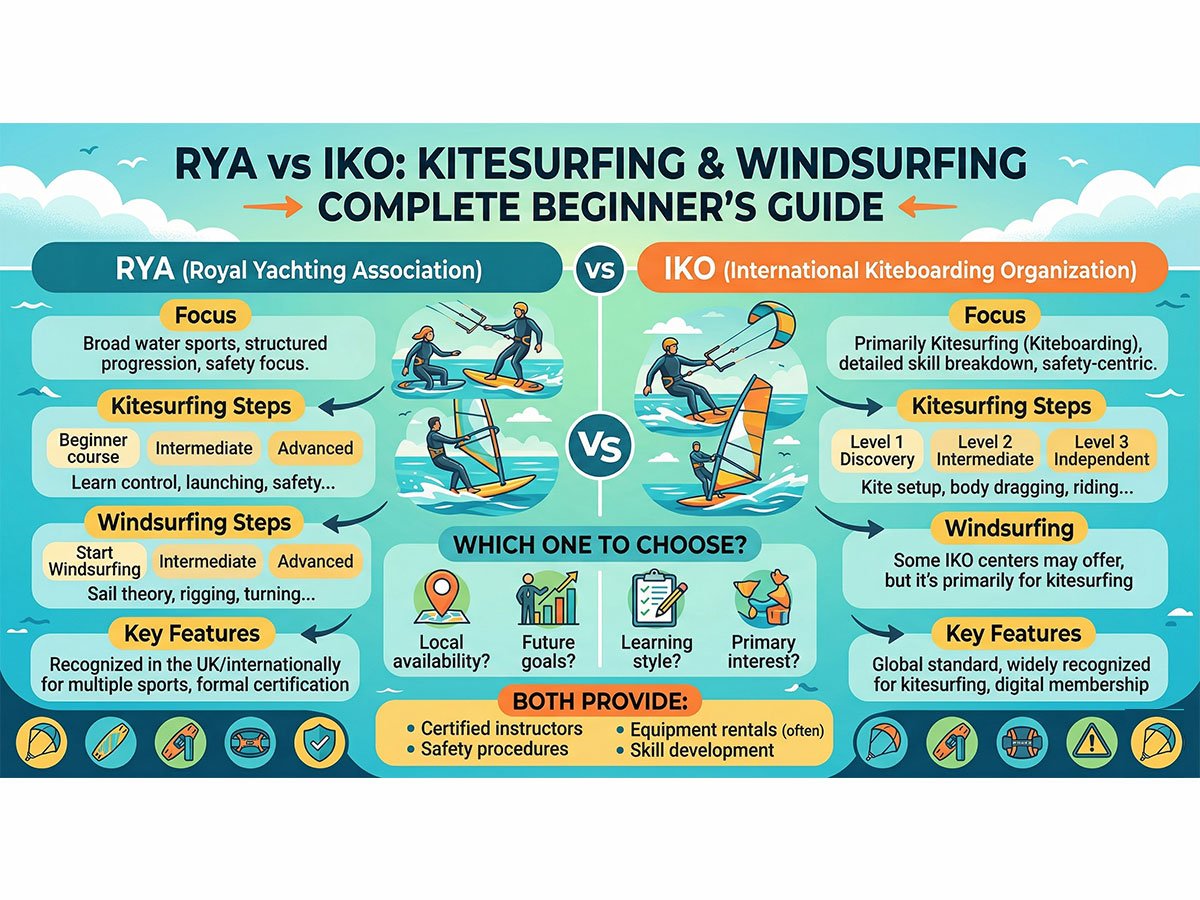
The International Kiteboarding Organization (IKO) structures learning into three levels:
- Level 1 – Discovery (4–6 hours): Kite control on land, safety systems, launching and landing with an assistant, body dragging in the water without a board.
- Level 2 – Intermediate (6–8 hours): Water starts (getting onto the board), riding short distances in both directions, controlled stops, right-of-way rules.
- Level 3 – Independent (4–6 hours): Riding upwind (returning to your starting point), consistent riding in all directions, basic turns, self-rescue techniques.
Total time to independent riding: 12–15 hours of instruction for most students. Some schools report 9–12 hours for particularly coordinated learners. The key is that kitesurfing’s difficulty concentrates in the first 6–9 hours. Once you can water start reliably, progression accelerates dramatically—many riders are jumping within their first season.
🏋️ What Are the Physical Demands and Fitness Requirements?
Direct answer: Windsurfing demands more upper body and core strength for sustained sailing. Kitesurfing requires less continuous physical effort because the harness bears most of the kite’s pull, but demands greater coordination and spatial awareness.
💪 Windsurfing Physical Profile
Windsurfing is a full-body workout. You constantly adjust the sail angle against wind pressure, which engages your arms, shoulders, back, and core simultaneously. The uphaul motion—pulling the heavy sail out of the water—is particularly taxing for beginners who fall frequently. As one rider on Reddit noted, kitesurfing sessions can be longer because “it is (I can go for longer sessions on a kiteboard in the same physical shape).”
The physical demands make windsurfing an excellent fitness activity but also mean sessions are shorter and recovery takes longer. Upper body strength is a genuine advantage when starting, though technique eventually replaces brute force.
🪁 Kitesurfing Physical Profile
Kitesurfing transfers most of the kite’s pull directly to your harness, not your arms. This means you can ride for hours with relatively low upper-body fatigue. The physical demands center on leg endurance (edging against the kite’s pull), core stability (maintaining body position), and coordination between kite movements and board direction.
A French kite community member observed: “Le kite ne fatigue pas mais les genoux gonflent un peu et on a un peu mal au dos au niveau du harnais.” (Kiting doesn’t tire you out but knees swell a bit and you get some back pain at the harness level.)
👶 Age and Minimum Requirements
Both sports are accessible across a wide age range:
- Minimum age: Most schools accept children aged 8–10 for windsurfing and 10–12 for kitesurfing, though IKO directives allow teaching from age 7 with appropriate equipment.
- Weight considerations: Windsurfing typically requires a minimum weight of approximately 40 kg (88 lbs) for safety reasons—lighter individuals may struggle to control the sail in stronger winds.
- Upper age limit: No formal upper limit exists. Schools report teaching students in their 60s and 70s successfully, provided they maintain reasonable fitness and swimming ability.
💰 How Much Does It Cost to Get Started?
A complete beginner course costs approximately €250–€600 for kitesurfing and €150–€400 for windsurfing. Full equipment purchases range from €1,800–€3,500 for kitesurfing and €1,500–€3,000 for windsurfing.
🧾 Lesson Costs
| Item | Kitesurfing (Europe) | Windsurfing |
|---|---|---|
| Intro lesson (2–3 hours) | €80–€120 | €50–€100 |
| Basic course (6–9 hours) | €250–€350 | €150–€250 |
| Full beginner to independent | €400–€600 | €250–€400 |
Lesson costs vary significantly by location. Premium destinations (Dubai, Maldives) charge higher rates—AED 400 (≈€100) for a one-hour private kitesurfing lesson in Dubai. Group lessons reduce per-person costs substantially.
🛹 Equipment Investment
Kitesurfing complete setup (new):
- Kite: €800–€1,500 (most riders need 2–3 kites for different wind ranges)
- Control bar with lines: €350–€550
- Board: €350–€700
- Harness: €120–€250
- Wetsuit: €150–€350
- Impact vest/helmet: €80–€180
- Total entry-level: €1,850–€2,600
- Total mid-range: €2,600–€3,530
Used equipment reduces costs significantly—a good second-hand kite runs €500–€800, and a board €200–€350.
Windsurfing complete setup (new):
- Board: €800–€1,800
- Sail (multiple sizes needed): €400–€900 each
- Mast: €200–€500
- Boom: €200–€400
- Extension/base: €80–€150
- Harness: €120–€250
- Wetsuit: €150–€350
- Total entry-level: €1,500–€3,000
Windsurfing gear tends to last longer (3–7 years with care), while kitesurfing equipment may need replacement every 2–4 years depending on usage frequency.
🚗 Which Equipment Is Easier to Transport and Store?
Direct answer: Kitesurfing gear is dramatically more portable and compact. A full kitesurfing setup fits in a large backpack. Windsurfing equipment requires a roof rack, van, or dedicated storage space.
📦 Kitesurfing Portability
A complete kitesurfing quiver (two kites, one board, harness, bar, pump, wetsuit) packs into two bags that easily fit in a standard car trunk or can be checked as airline luggage. This portability is one of kitesurfing’s greatest practical advantages—you can fly to kite destinations worldwide with your own gear.
Reddit users consistently highlight this benefit: “I think gear cost and size gives kiting an advantage. With 3-4 kites and perhaps 2 boards you can cover a huge wind range, and this gear is far more compact and travels much more easily than comparable wsurf kit.”
A Dubai-based windsurfer noted the urban reality: “You could live in a single bedroom apartment and drive a Smart Car and still be able to transport and store your kiteboarding gear.”
🚙 Windsurfing Transport Reality
Windsurfing requires transporting boards measuring 220–280 cm (7–9 feet) in length, plus multiple sails, masts, and booms. This demands:
- A vehicle with roof racks or a large van
- Garage or dedicated storage space at home
- Time for rigging (assembling mast, sail, boom) before each session
- Derigging after each session
Total gear weight for windsurfing can reach 60–70 pounds (27–32 kg).
Bottom line: If you live in an apartment, drive a small car, or travel frequently for water sports, kitesurfing is the clear practical winner.
🌬️ What Wind and Water Conditions Does Each Sport Require?
Kitesurfing requires consistent, clean wind of at least 12–15 knots and performs best in flat water or smooth lagoons. Windsurfing can operate in lower winds (10–12 knots) and handles choppy conditions more forgivingly.
🪁 Kitesurfing Conditions
- Minimum wind: 12–15 knots for consistent riding on standard equipment (larger kites and light-wind boards can lower this to 10 knots)
- Ideal conditions: Side-onshore or side-shore winds, 15–25 knots
- Water preference: Flat water, shallow lagoons, or smooth wave faces
- Hazards: Offshore wind (blowing from land to sea) is extremely dangerous for kitesurfing—you can be pulled out to sea with no way to return
Kitesurfing thrives in locations with steady, predictable wind patterns and minimal obstacles on land (buildings, trees, hills) that create turbulent “dirty” wind. Shallow lagoons—exactly like those found along the Red Sea coast in Hurghada—provide ideal learning conditions with standing-depth water and consistent wind.
🏄 Windsurfing Conditions
- Minimum wind: 10–12 knots for basic sailing on larger equipment
- Ideal conditions: 12–25 knots from any direction (though offshore requires experience)
- Water preference: Adaptable to flat water, chop, and waves
- Hazards: Strong offshore winds can carry you away; broken equipment far from shore creates rescue scenarios
Windsurfing is more tolerant of gusty or inconsistent wind because you can simply depower by letting out the sail. The direct connection to the sail provides instant feedback and control over power delivery.
📊 Side-by-Side Wind Requirements
| Factor | Kitesurfing | Windsurfing |
|---|---|---|
| Minimum wind | 12–15 knots | 10–12 knots |
| Wind direction tolerance | Limited (side/onshore best) | Broader (all directions rideable) |
| Chop/wave performance | Best in flat water | Good in chop |
| Upwind ability | Excellent | Good (requires technique) |
| Light wind capability | Good with large kites | Poor (equipment heavy) |
Kitesurfing’s exceptional upwind ability is worth noting—riders can sail at sharp angles into the wind, making it easy to return to starting points even in challenging conditions.
⚠️ Is Kitesurfing Dangerous? Safety Comparison
Kitesurfing carries a higher objective injury risk than windsurfing, with injury rates of 5.4–10.5 injuries per 1,000 hours. However, modern safety equipment and proper instruction reduce most serious risks dramatically.
📈 Injury Statistics
Research provides clear data on kitesurfing injury rates:
- 5.4–10.5 injuries per 1,000 hours of recreational kitesurfing
- Up to 16.6 injuries per 1,000 hours during competition
- Majority of injuries are minor: cuts, abrasions, contusions (bruising)
- Foot, ankle, and knee injuries account for approximately 50% of all kitesurfing injuries
- Head injuries: 2.9–34.0% of reported injuries (wide range due to study variations)
- Spine injuries: 2.0–16.7% of reported injuries
While most injuries are minor, catastrophic outcomes including neurological damage, internal bleeding, polytrauma, and death have been documented. These severe incidents are rare and typically involve equipment failure, poor judgment in extreme conditions, or inadequate safety training.
🪁 Kitesurfing-Specific Risks
Kitesurfing’s unique hazards stem from the kite’s power and the rider’s attachment to it via harness and lines:
- Launch/landing danger: Most injuries occur on the beach during these phases
- Lofting: Being lifted and carried uncontrollably by a gust
- Line tangles: Entanglement in kite lines during a crash
- Collision: Hitting obstacles, other riders, or the board itself
- Speed: Riders can accelerate to 35–55 knots and jump heights of 15 meters
Modern safety features have transformed the sport’s risk profile. Every kitesurfing setup includes:
- Quick-release system: Instantly depowers the kite by releasing the chicken loop
- Safety leash: Keeps the kite attached but depowered after quick-release activation
- Depower trim system: Adjusts kite power on the fly
🏄 Windsurfing Safety Profile
Windsurfing’s injury rate is lower, though comprehensive epidemiological studies are less common. The primary safety advantages:
- No flying object to lose control of—the sail stays attached to the board
- Immediate depower by releasing the sail
- The board serves as a flotation device in emergencies
- Easier self-rescue—you can paddle or lie on the board
- No lines to tangle in rescue situations
As one Quora user summarized: “If you run into trouble, windsurfing provides you with a better rescue platform than kiting and it doesn’t have the kite lines tangling in a possible rescue vessel.”
🛡️ Safety Verdict
Kitesurfing is objectively more dangerous than windsurfing for beginners and those without proper instruction. However, certified IKO training, modern safety equipment, and adherence to spot guidelines reduce the risk to manageable levels. The most dangerous kitesurfer is the self-taught one.
🏆 Which Sport Is Better for Progression and Tricks?
Kitesurfing offers much faster progression to jumping and aerial tricks. Windsurfing provides a deeper, more technical path that rewards dedication over years.
🚀 Kitesurfing Progression Curve
Kitesurfing’s progression curve is steep at the start, then flattens into rapid advancement:
- First season: Independent riding, upwind ability, first small jumps
- Second season: Controlled jumps, basic transitions, riding in varied conditions
- Third season: Higher jumps (5–10 meters), grabs, unhooked tricks, wave riding
The reason for this acceleration is simple: once kite control becomes automatic, your brain focuses entirely on board skills. The kite provides constant, predictable lift that makes jumping accessible relatively early. Even beginners can experience small jumps within months of starting—something that takes years in windsurfing.
Kitesurfing also offers more “payoff per session.” If you have only an hour of wind, you can rig quickly, ride immediately at planing speed, and pack up fast. Windsurfing’s longer rigging time and slower initial speeds mean the same hour yields less riding time.
📚 Windsurfing Progression Curve
Windsurfing’s progression is gradual and technical:
- First season: Basic sailing, harness use, first planing experiences
- Second season: Consistent planing, footstrap use, harness technique refinement
- Third season: Carve jibes, small chop hops, stronger wind confidence
- Fourth season+: Wave riding, proper jumps, advanced maneuvers
The journey from first lesson to planing in footstraps can take years for recreational sailors. This is both frustrating and rewarding—windsurfing builds deep technical knowledge that kitesurfing doesn’t demand. Every nuance of sail trim, foot pressure, and weight distribution matters.
A Reddit windsurfer captured this elegantly: “Nothing else gives you that connection to the wind and the water surface, nothing else has that elegance and aesthetic, nothing else demands that skill and touch.”
📊 Progression Comparison Table
| Skill Milestone | Kitesurfing | Windsurfing |
|---|---|---|
| First independent ride | 6–12 hours | 3–6 hours |
| Riding upwind consistently | 10–15 hours | 15–30 hours |
| First jump | Weeks to months | Months to years |
| Riding waves | 1–2 seasons | 2–4 seasons |
| Advanced aerial tricks | 2–3 seasons | 4+ seasons |
🌊 What About Wing Foiling? Where Does It Fit?
Wing foiling is a newer sport that combines elements of both kitesurfing and windsurfing. It offers the portability of kitesurfing with the direct-hand control of windsurfing, plus the ability to ride in lighter wind thanks to hydrofoil lift.
🪶 Wing Foiling Basics
Wing foiling uses:
- An inflatable handheld wing (no lines, no mast attachment)
- A board with a hydrofoil underneath that lifts the rider above the water
- A leash connecting the rider to the wing
The foil creates lift at relatively low speeds, allowing flight in as little as 10–12 knots of wind—less than kitesurfing typically requires.
⚖️ Three-Way Comparison
| Factor | Kitesurfing | Windsurfing | Wing Foiling |
|---|---|---|---|
| Learning curve | Steep start, fast progression | Gentle start, slow progression | Moderate start, moderate progression |
| Wind minimum | 12–15 knots | 10–12 knots | 10–12 knots |
| Equipment portability | Excellent | Poor | Good |
| Jumping ability | Excellent | Difficult | Limited |
| Wave riding | Good | Excellent | Good |
| Light wind performance | Good | Poor | Excellent |
| Physical demand | Moderate | High | Moderate |
| Injury risk | Moderate-High | Low-Moderate | Low |
Wing foiling is growing rapidly because it addresses several pain points: it’s more portable than windsurfing, safer than kitesurfing (no lines, no lofting risk), and works in lighter wind than either. However, foil equipment is expensive ($2,500–$4,500 for a complete setup) and foil injuries (cuts from the sharp foil wings) present unique hazards.
🤷 Which Should You Choose?
- Choose kitesurfing if: You want big air, fast progression, travel-friendly gear, and access to a vibrant global community.
- Choose windsurfing if: You value technical mastery, prefer a physical workout, have storage/transport solved, and enjoy the direct feel of holding the power source.
- Choose wing foiling if: You want a middle ground—portable, safer, great in light wind, but with a higher equipment cost and newer (smaller) community.
🧭 Final Verdict: Kitesurfing or Windsurfing?
There is no universal “better” sport. Your choice depends on your lifestyle, location, and what kind of experience you seek.
✅ Choose Kitesurfing If:
- You travel frequently and want portable gear that fits in a suitcase
- You live in an apartment or drive a small car
- You want to progress quickly to jumping and aerial tricks
- You have access to reliable, consistent wind (12+ knots)
- You prefer a sport with a large, active global community and abundant learning resources
- You’re willing to invest 12–15 hours of focused lessons before riding independently
- You can commit to learning proper safety protocols and never cutting corners
✅ Choose Windsurfing If:
- You have garage storage and a vehicle with roof racks
- You want immediate gratification on day one (standing and sailing slowly)
- You enjoy technical skill development and long-term mastery
- You prefer a more physical, full-body workout
- You value the direct connection between your hands and the power source
- You’re concerned about safety and want a lower-risk introduction to wind sports
- You have access to varied wind conditions and don’t mind rigging/de-rigging each session
🌍 Location Reality Check
Where you live matters enormously. Kitesurfing dominates in destinations like Hurghada, Egypt, where consistent winds, shallow lagoons, and established schools create ideal conditions. Windsurfing maintains strongholds in traditional locations like Hawaii, the Canary Islands, and parts of Europe with dedicated communities and infrastructure.
A Dubai-based windsurfer observed the regional disparity: “Everyone is overwhelmingly focused on kitesurfing. Took me weeks to track down a place that offers windsurfing lessons and rentals.” In contrast, destinations like Tarifa, Spain, support both sports robustly.
🎯 The Smartest Approach
If you’re genuinely undecided, try both. Most major water sports centers (including Masters Surf School in Hurghada) offer introductory sessions for both sports. Spend 2–3 hours with each, using school equipment under instructor supervision. Pay attention to:
- Which feels more intuitive to your body?
- Which leaves you more excited for the next session?
- Which fits your practical reality (storage, travel, local wind)?
The sport that fits your life is the one you’ll actually pursue. The best equipment is the gear you’ll use.
📋 Key Takeaways Checklist
- ✅ Learning curve: Windsurfing starts easier; kitesurfing progresses faster after the initial phase
- ✅ Time to independence: 12–15 hours for kitesurfing; 6–10 hours for windsurfing basics
- ✅ Cost: Similar total investment (€1,500–€3,500 for complete gear); lessons €250–€600
- ✅ Portability: Kitesurfing is far more portable and travel-friendly
- ✅ Physical demand: Windsurfing is more physically taxing; kitesurfing requires more coordination
- ✅ Safety: Windsurfing has a lower injury risk; kitesurfing requires disciplined safety habits
- ✅ Progression: Kitesurfing reaches jumping and tricks much faster
- ✅ Conditions: Kitesurfing needs cleaner, more consistent wind; windsurfing is more forgiving
- ✅ Community: Kitesurfing has grown explosively and may have more active communities in many regions
- ✅ Try both: The only wrong choice is not trying either
🌊 Ready to Start Your Wind Sports Journey?
Masters Surf School in Hurghada, Egypt, offers both kitesurfing and windsurfing lessons with internationally certified IKO instructors. Our shallow Red Sea lagoons provide the ideal learning environment—consistent winds, standing-depth water, and no waves to complicate your first sessions.
Why learn with Masters Surf School:
- 🎓 25+ years of experience teaching water sports in Hurghada
- 🏆 IKO-certified instructors following international standards
- 📍 4+ locations along the Red Sea coast
- 🚐 Complimentary hotel transfers included
- 🪁 Top-quality equipment provided during all lessons
- 🏄 Courses for absolute beginners through advanced coaching
Masters Surf School
Red Sea Governorate,
Secondary phone: +201272284800
Email: masters.surfschool@gmail.com
Limited-time offer: Book a 3-day beginner package and receive a free supervised practice session. Spots fill quickly during peak season—secure your lesson today.
Contact us or visit our website to view available dates and start your journey to becoming an independent rider.

[…] Kitesurfing or Windsurfing Which One Should You Learn? […]