Windsurfing Hurghada Egypt delivers some of the most reliable year‑round conditions on the Red Sea: 300+ sailable days annually, water temperatures never falling below 21°C, and a 40‑km coastline lined with purpose‑built centres. Whether you are a first‑timer searching for shallow, sandy‑bottom lagoons or an advanced rider chasing chop‑hop conditions, Hurghada offers a predictable, high‑value package. Courses cost €350–€500 all‑inclusive, direct flights from Europe land at Hurghada International Airport (HRG) in 4–5 hours, and a well‑established infrastructure of IKO/VDWS‑certified schools, rescue boats, and beachfront hotels makes it one of the safest places to learn or progress. The hurghada windsurfing scene concentrates along the Mercure‑Magawish strip, where reliable side‑onshore winds of 15–25 knots blow from April through October, but even winter delivers 12–15 windy days per month.
Why Is Hurghada Considered One of the World’s Most Reliable Windsurfing Destinations?
Hurghada earns its reputation because three critical factors converge here with exceptional consistency: wind, water, and infrastructure. The thermal wind machine created by the temperature difference between the desert and the Red Sea produces predictable side‑onshore winds of 4–7 Beaufort (15–25 knots) during the extended season from March to November. Peak reliability runs from April through October, when afternoon thermals kick in almost daily.
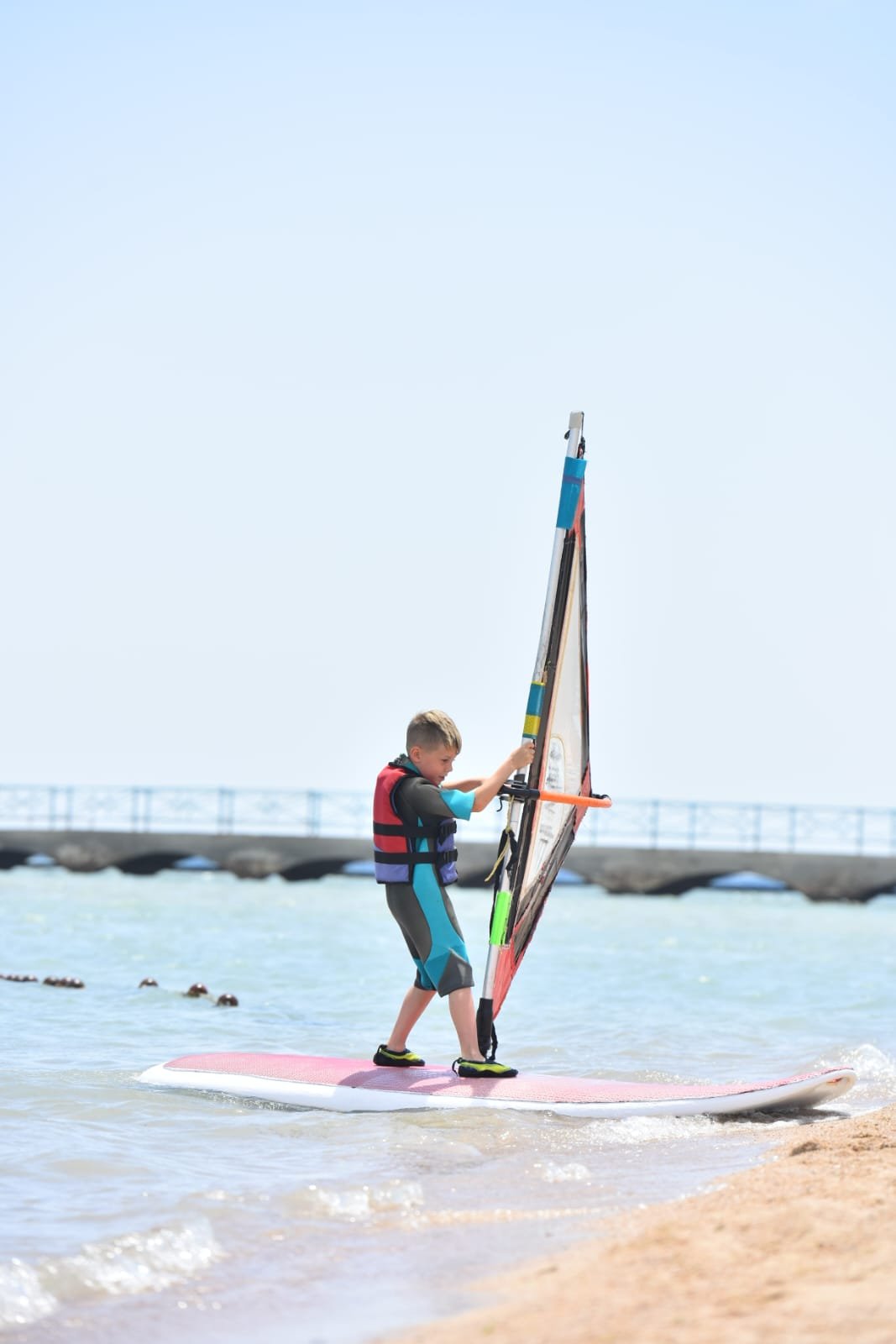
The water is warm year‑round — 21°C in winter, rising to 29°C in summer — which means a shorty wetsuit or even board shorts and a rash guard suffice for most of the year. Hurghada’s coastline is protected by offshore sandbanks, creating large areas of standing‑depth water 100–300 metres from shore. Beginners can stand on a sandy bottom while learning water‑starts; intermediates and advanced sailors find moderate chop and open‑water speed runs beyond the sandbanks.
The third pillar is infrastructure. Pioneers such as Tommy Friedl recognised Hurghada’s potential in the 1990s, and centres like Harry Nass have operated for more than 25 years. Today the Mercure‑Magawish strip hosts multiple professional centres offering rental fleets of 100+ boards and 120+ sails, radio‑equipped rescue boats, and VDWS/IKO instruction.
Key takeaway: Predictable wind + warm, shallow water + mature infrastructure = a destination where you can book months in advance and be confident of spending most days on the water.
What Are the Best Windsurfing Spots in and Around Hurghada? 📍
Hurghada is not a single spot but a collection of distinct sailing areas spread along 40 km of coast. Each area suits different skill levels and preferences.
| Spot | Best For | Water Type | Wind Angle | Notes |
|---|---|---|---|---|
| Mercure–Magawish Strip | All levels | Shallow lagoon (100–300 m) → moderate chop | Side‑onshore (NW) | Main hub; multiple centres, rescue boats, storage |
| Al Ahyaa Lagoon | Beginners | Flat, waist‑deep, sandy bottom | Side‑onshore | Protected by natural reef; can walk back if overpowered |
| Soma Bay | Intermediates–Advanced | Clear water, moderate chop | Stronger & more consistent | 45 km south; fewer crowds; ION Club centre |
| El Gouna | Beginners–Intermediates | Shallow lagoons, flat water | Reliable thermal | 25 km north; lively town with dining/nightlife |
| Safaga | Intermediates | Shallow area, morning wind | Best in mornings | Budget‑friendly; Hotel Shams + ION Club |
| Makadi Bay | Freestyle | Shallow lagoons, flat water | Offshore‑side | Good for tricks and jumps |
Al Ahyaa Lagoon deserves special mention for learners: it is a large body of water protected from open‑sea swell by a reef. You can stand waist‑deep for hundreds of metres. The wind blows side‑onshore — pushing you along the coast, not out to sea — the safest possible angle for learning.
Soma Bay, 45 km south, attracts intermediate and advanced riders because the wind blows a little stronger and more consistently there, with large shallow areas that are perfect for progression.
El Gouna, 25 km north, combines reliable thermal winds with a lively après‑sail scene of restaurants, bars, and shops — ideal for those who want both quality sessions and evening entertainment.
When Is the Best Time for Windsurfing Hurghada Egypt? 📅
The extended windy season runs from March to November, with peak wind reliability from April through October. During these months, average wind speeds range from 4 to 7 Beaufort (11–30 knots), providing consistent planing conditions for intermediate and advanced sailors.
| Month | Wind Reliability | Wind Strength | Water Temp | Crowds | Best For |
|---|---|---|---|---|---|
| Jan–Feb | 50%+ windy days | 12–20 knots | 21–22°C | Low | Budget trips, thin wetsuit needed |
| Mar | Increasing | 15–25 knots | 22°C | Low–Mod | Good value, spring thermals start |
| Apr–May | High | 15–25 knots | 23–25°C | Moderate | Excellent all‑round conditions |
| Jun–Aug | Very high (85%+) | 15–25 knots daily | 27–29°C | High | Peak season; board shorts weather |
| Sep–Oct | Very high | 15–25 knots | 26–28°C | Moderate | Best overall: wind + warmth + fewer crowds |
| Nov | Good | 12–22 knots | 24°C | Low | Late‑season bargain |
| Dec | ~50% windy days | 10–18 knots | 22°C | Low | Christmas escape; mix of sailing and relaxation |
September and October represent the sweet spot: the summer crowds have thinned, water temperatures remain at 26–28°C, and the thermal wind machine still operates at full strength.
January and February can also deliver excellent wind — sometimes stronger than summer — making Hurghada attractive for windsurfers when European spots are frozen. Expect 12–15 windy days per month and water temperatures around 21–22°C, so a 3/2 mm wetsuit is advisable.
The wind follows a predictable daily pattern: morning sessions tend to be lighter, with wind building from midday and peaking between 13:00 and 17:00. This allows structured days — lessons or light sailing in the morning, full‑power sessions in the afternoon.
What to look for when choosing a centre:
- ✅ IKO or VDWS instructor certification
- ✅ Radio‑equipped rescue boat (not all centres have one)
- ✅ Fleet age (ask when equipment was last refreshed)
- ✅ Student‑to‑instructor ratio (1:1 is fastest for progression)
- ✅ Direct beach access from accommodation
How Much Does Windsurfing in Hurghada Cost? 💰
A complete windsurfing hurghada egypt trip is exceptionally competitive compared to European or Caribbean alternatives. Below is a realistic price breakdown.
| Item | Cost (EUR) | Cost (USD approx.) | Notes |
|---|---|---|---|
| Beginner course (6–10 hrs, incl. equipment) | €350–€500 | $400–$560 | IKO/VDWS certified; 1:1 or 1:2 ratio |
| Private lesson (2 hrs) | €60–€90 | $70–$105 | 1‑on‑1 instruction with radio helmet |
| Semi‑private lesson (2 hrs) | €60–€90/person | $70–$105 | 2 students, 1 instructor |
| Equipment rental (1 day) | €60–€109 | $70–$125 | Board, sail, mast, boom, harness |
| Equipment rental (1 week) | €250–€400 | $290–$460 | Discounted weekly rate |
| Hotel (mid‑range, per night) | €50–€120 | $58–$140 | Many hotels adjacent to centres |
| All‑inclusive resort (per night) | €100–€200 | $115–$230 | Rixos Magawish, Mercure, etc. |
| Visa on arrival | ~$25 | ~$25 | Most nationalities; 30‑day validity |
| Airport transfer | €10–€20 | $12–$23 | HRG airport to hotel |
| Flights (Europe–HRG, return) | €200–€500 | $230–$575 | 4–5 hours; multiple carriers |
A one‑week hurghada windsurfing package — flights, 7 nights mid‑range hotel, 6 days equipment rental, and a beginner course — typically falls between €900 and €1,500 per person, significantly below equivalent packages in Tarifa, Maui, or Cabarete.
Cost‑saving tips:
- Travel in March or November for lower flight and accommodation prices.
- Book a package through a tour operator (e.g., Sportif, Planet Windsurfing) for bundled savings.
- Rent equipment rather than fly your own gear — airline oversize baggage fees often approach local rental costs.
- Choose a hotel with an on‑site centre to eliminate daily transfer costs.
What Are the Wind and Water Conditions Like? 🌊
Wind pattern: The prevailing wind direction is northwest, blowing side‑onshore along Hurghada’s coastline. This is the safest angle for all levels — it pushes you along the beach rather than out to sea. Wind speed ranges from 6.7 to 26.8 mph (approximately 6–23 knots) with gusts up to 37.9 mph during strong days.
The wind is thermally driven: the desert heats up during the day, pulling cooler air from the sea. This creates a reliable afternoon wind‑machine effect that can run for weeks without interruption during summer. Morning sessions tend to be lighter, with wind building from around 11:00 and peaking between 13:00 and 17:00.
Water conditions: Offshore sandbanks create three distinct zones:
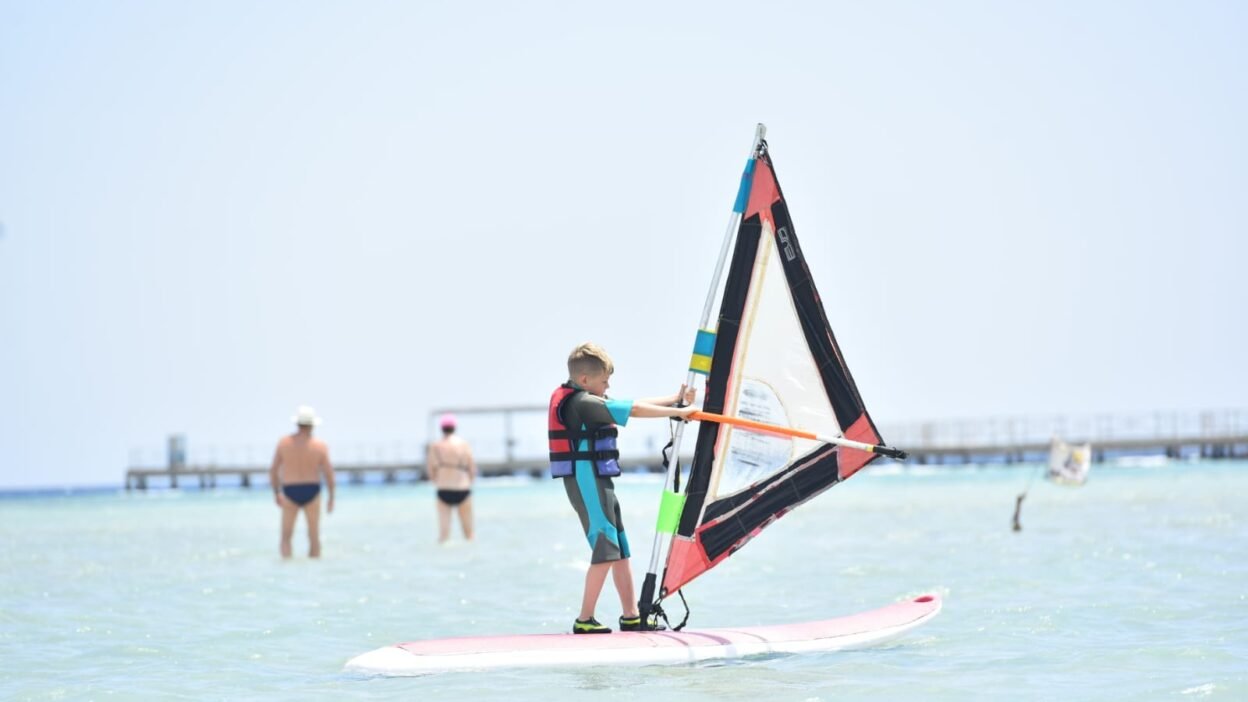
- Lagoon zone (0–300 m from shore): Standing‑depth, flat water with a sandy bottom. Ideal for beginners learning water‑starts, beach‑starts, and first gybes.
- Chop zone (300 m+): Moderate chop develops as the water deepens. Excellent for improving planing skills, practising gybes, and building wave confidence. Chop rarely exceeds 1 metre even on strong wind days.
- Open water: Between and beyond sandbanks, riders find space for speed runs, jumping, and freeride blasting.
Temperature: Air temperatures range from 20–25°C in winter to 35–40°C in summer. Water temperatures stay between 21°C (winter) and 29°C (summer). Most sailors wear a shorty or rash vest in summer and a 3/2 mm wetsuit in winter.
How Does Windsurfing Hurghada Compare to Other Red Sea Destinations? ⚖️
The Red Sea offers multiple world‑class windsurfing destinations. Here is how windsurfing hurghada egypt stacks up against the main alternatives.
| Criteria | Hurghada | Dahab | Soma Bay | El Gouna | Safaga |
|---|---|---|---|---|---|
| Wind consistency | ★★★★☆ | ★★★★★ | ★★★★★ | ★★★★☆ | ★★★★☆ |
| Beginner‑friendliness | ★★★★★ | ★★★★★ | ★★★★☆ | ★★★★★ | ★★★★☆ |
| Advanced conditions | ★★★☆☆ | ★★★★★ | ★★★★☆ | ★★☆☆☆ | ★★★☆☆ |
| Water flatness | ★★★☆☆ | ★★★★★ | ★★★★☆ | ★★★★☆ | ★★★★☆ |
| Infrastructure | ★★★★★ | ★★★★☆ | ★★★★☆ | ★★★★☆ | ★★★☆☆ |
| Value for money | ★★★★★ | ★★★★☆ | ★★★☆☆ | ★★★★☆ | ★★★★★ |
| Accessibility (airport) | ★★★★★ | ★★★☆☆ | ★★★☆☆ | ★★★★☆ | ★★★☆☆ |
| Nightlife/off‑water | ★★★★☆ | ★★★☆☆ | ★★☆☆☆ | ★★★★★ | ★☆☆☆☆ |
| Crowds | ★★★☆☆ | ★★★☆☆ | ★★★★☆ | ★★★☆☆ | ★★★★★ |
Hurghada vs. Dahab: Dahab offers greater diversity — a protected lagoon for beginners, a flat speed track, and groundswell waves outside the headland — plus stronger wind statistics. However, Dahab requires a longer transfer (1+ hour from Sharm El Sheikh airport) and has a quieter atmosphere. Hurghada wins on accessibility, infrastructure maturity, and value.
Hurghada vs. Soma Bay: Soma Bay, 45 km south, experiences slightly stronger and more consistent wind. Its large shallow areas suit beginners and intermediates. The trade‑off is fewer dining and entertainment options and higher accommodation costs, centred around the Kempinski and ION Club.
Hurghada vs. El Gouna: El Gouna (25 km north) offers similar wind reliability with a more upscale, manicured atmosphere. It suits those who want lagoon conditions alongside restaurants, bars, and boutique shopping. Hurghada provides a broader range of budget options and a more authentic Egyptian experience.
Verdict: For the broadest audience — especially first‑time Red Sea visitors, families, and budget‑conscious sailors — Hurghada delivers the best overall package of wind reliability, infrastructure, and value.
Is Windsurfing Hurghada Safe for Beginners? 🦺
Yes. Hurghada is widely regarded as one of the safest places in the world to learn windsurfing, for several structural reasons:
- Shallow, standing‑depth lagoons. The sandy‑bottom lagoons extend 100–300 metres from shore. Beginners can stand at any time, eliminating fear of deep water. If the wind pushes you downwind, you simply stand up and walk back.
- Side‑onshore wind. The wind pushes you along the coast, not out to sea — the safest possible wind angle for learning.
- Rescue infrastructure. Professional centres maintain dedicated rescue boats and, in some cases, walkie‑talkie communication systems. Kite Windsurf Hurghada, for example, operates an observation tower with radio contact to the station, ensuring constant visual monitoring.
- No dangerous marine life. Unlike some tropical destinations, Hurghada’s lagoons have sandy bottoms free of rocks, coral, or hazardous marine animals in the teaching areas.
- Warm water. Water temperatures never drop below 21°C, reducing the risk of cold‑water shock and allowing comfortable, extended sessions.
Safety recommendations for all sailors:
- Always wear a life jacket or impact vest during lessons.
- Confirm your centre operates a rescue boat before booking.
- Check that your instructor holds IKO or VDWS certification.
- Apply reef‑safe, zinc‑based sunscreen (SPF 50+) — the Red Sea sun is intense.
- Stay hydrated; desert heat accelerates dehydration even on the water.
Case Study: Harry Nass — 25 Years of Windsurfing Excellence in Hurghada 🏆
Few stories illustrate the evolution of windsurfing hurghada egypt better than Harry Nass. Starting as a windsurfing instructor at Lake Garda, Italy, in 1984, Harry opened his first centre in Lanzarote in 1990, later managed a centre in Kos, Greece, and ran a successful operation in Alaçati, Turkey. In 1999, a chance visit to Dahab — originally intended as a holiday — revealed the Red Sea’s potential, and Harry Nass Windsurf & Kite Centres was born.
Today, the Hurghada centre operates directly on Mercure Hotel beach, offering a fleet of over 100 boards and 120 sails from JP, Neil Pryde, and Tabou. The centre is open year‑round and serves all levels — from first‑time beginners in the shallow lagoon to advanced riders tackling the chop beyond the sandbanks.
What makes Harry Nass a model for Hurghada windsurfing:
- Longevity: 25+ years in operation demonstrates deep local knowledge and consistent quality.
- Equipment investment: Fleet refreshed annually, ensuring sailors use current‑generation gear.
- Safety culture: Radio‑equipped rescue boats, monitored sailing zones, and structured progression.
- Multi‑sport integration: The centre also offers kitesurfing and wing foiling, allowing sailors to cross‑train.
Key takeaway for visitors: Choose a centre with a proven track record. Longevity signals reliability, local expertise, and investment in safety — the same attributes that have made Harry Nass a benchmark for Red Sea windsurfing.
What Should I Pack for a Windsurfing Trip to Hurghada? 🧳
Packing correctly ensures maximum time on the water. Here is a practical checklist.
| Category | Essential Items | Notes |
|---|---|---|
| On‑water clothing | Board shorts / swimwear; long‑sleeve lycra rash guard or UV shirt; 3/2 mm wetsuit (winter) or shorty (shoulder season); water shoes (optional) | Sandy lagoon bottom; occasional shell patches |
| Sun protection | Polarised sunglasses with strap; reef‑safe zinc sunscreen SPF 50+; lip balm with SPF; wide‑brim hat (for beach) | Red Sea sun is intense; reapply frequently |
| Equipment (if bringing own) | Board, sail(s), mast, boom, harness, mast foot, extension | Confirm centre storage availability and airline baggage policy first |
| Documents | Passport (valid 6+ months); visa (available on arrival, ~$25 USD); travel insurance (with watersports cover); IKO/VDWS card (if certified) | Visa on arrival for most nationalities |
| Health & comfort | Refillable water bottle; electrolyte tablets; basic first‑aid kit; insect repellent; motion‑sickness tablets (for boat excursions) | Centres provide drinking water |
| Off‑water | Light cotton clothing; warm layer for winter evenings (10–15°C); power adapter (Type C/F, 220V) | Winter evenings can be surprisingly cool |
Rent vs. bring: Unless you are competing or have highly specialised gear, renting locally is strongly recommended. Airline oversize baggage fees often approach the cost of a week’s rental, and local fleets are current‑generation equipment.
Frequently Asked Questions (People Also Ask) ❓
Most complete beginners can stand on a board and sail a short distance within 2–4 hours. Reaching the planing stage (skimming at speed) typically requires 10–20 hours spread over multiple days. Hurghada’s shallow lagoons and consistent wind significantly accelerate progression compared to deep‑water or gusty locations.
Yes. Most nationalities can obtain a visa on arrival at Hurghada International Airport for approximately $25 USD. The visa is valid for 30 days. E‑visas can also be arranged online before travel.
Yes. Most lessons take place in waist‑deep water where you can stand at any time. You also wear a flotation vest. Basic water confidence helps, but swimming ability is not a barrier to learning in Hurghada’s shallow lagoons.
Windsurfing uses a board with a fixed sail mounted on a mast; you hold the boom directly. The initial learning curve is gentler — you can cruise slowly within your first few hours. Kitesurfing uses a kite (9–12 m²) and a small twin‑tip board; the learning curve is steeper initially but progression to riding upwind is typically faster (9–12 hours).
Both are excellent. Dahab offers a protected lagoon with perfectly flat water and slightly better wind statistics. Hurghada offers easier airport access, more accommodation options across all budgets, and a broader range of off‑water activities. For a first‑time windsurfing holiday, Hurghada’s infrastructure and value edge make it the safer recommendation.
Absolutely. Hurghada offers extensive snorkelling and diving (including the Giftun Islands), desert quad‑biking, day trips to Luxor, water parks, and beachfront resorts with kids’ clubs. The city’s tourist infrastructure caters well to mixed‑activity groups.
windsurfing Hurghada Egypt trip Conclusion
Windsurfing hurghada egypt combines rare ingredients: 300+ sailable days per year, warm shallow lagoons, side‑onshore winds, and a mature infrastructure of professional centres that have been refining their operations for over 25 years. Whether you are a complete beginner looking for a safe, accelerated learning environment or an intermediate rider chasing reliable planing conditions without breaking the bank, Hurghada delivers — and it does so at a price point that consistently undercuts European and Caribbean alternatives.
The key to a successful trip lies in matching your dates, skill level, and budget to the right spot and centre. Use the comparisons and checklists in this guide to make an informed decision.
👉 Ready to book your Hurghada windsurfing adventure?
- Compare centres and check real‑time availability on platforms such as TripAdvisor, GetMyBoat, or directly through centre websites.
- Book early for peak season (April–October) — the best instructors and equipment slots fill weeks in advance.
- Check visa requirements and secure travel insurance with specific watersports coverage before departure.
Your next session on the Red Sea is closer than you think. Start planning today and experience why Hurghada remains one of the world’s most trusted windsurfing destinations.
✅ Key Takeaways — At a Glance
- Best months: April–October for peak wind; September–October for the ideal balance of wind, warmth, and fewer crowds.
- Top centres: Harry Nass (25‑year legacy), Masters Surf School (IKO, 4 lagoon locations), Kite Windsurf Hurghada (walkie‑talkie rescue).
- Beginner course cost: €350–€500 all‑inclusive (6–10 hours).
- One‑week budget: ~€900–€1,500 per person (flights, hotel, equipment/course).
- Safety: Shallow lagoons, side‑onshore wind, rescue boats, warm water — among the safest places to learn.
- Pack: Rash guard, SPF 50+ sunscreen, polarised sunglasses, 3/2 mm wetsuit (winter), passport, visa on arrival (~$25).
- Rent, don’t fly your gear: Oversize baggage fees often match local rental costs; local fleets are current and well‑maintained.