Hurghada kite services deliver exceptional value for money, with beginner courses ranging from €350–€500 and hourly lessons from €60–$70. The Al Ahyaa Lagoon provides waist-deep, flat-water conditions with consistent 15–25 knot winds over 250 days per year. Masters Surf School leads the market with 25+ years of experience, four lagoon locations, and IKO-certified instruction. For advanced riders, kite safaris on liveaboard yachts start at €1,195 for week-long expeditions. This guide compares every major provider, breaks down costs by service tier, and helps you match the right school to your skill level and budget.
Hurghada Kite Services: The Complete 2026 Commercial Comparison Guide
- What Are Hurghada Kite Services, and What Do They Include?
- Which Are the Best Kite Schools in Hurghada? (2026 Comparison)
- How Much Do Hurghada Kite Services Cost in 2026?
- What Are the Wind and Water Conditions for Kitesurfing in Hurghada?
- Are Hurghada Kite Services Safe for Beginners?
- What Is the Difference Between a Kite Safari and Standard Lessons?
- How Does Hurghada Compare to Other Egyptian Kite Spots?
- What Equipment Is Provided by Hurghada Kite Services?
- People Also Ask
- Key Takeaways
- Your Next Steps
What Are Hurghada Kite Services, and What Do They Include?
Hurghada kite services encompass the full spectrum of kiteboarding instruction, equipment rental, guided safaris, and coaching packages operating from multiple lagoon and open-water locations along Egypt’s Red Sea coast.
These services are structured into four primary categories. Lessons and courses range from 2–3 hour taster sessions (€80–€120) to comprehensive IKO Level 1 beginner courses (9–12 hours, €350–€500) that take students from zero experience to independent riding. Equipment rental provides access to premium kites, boards, harnesses, and safety gear for riders who already know how to kite but don’t want to transport their own gear. Kite safaris are multi-day liveaboard experiences (typically 7–8 nights) that combine kitesurfing with yacht-based accommodation, meals, and guided trips to remote spots like Geisum, Giftun, and Tawila Islands. Advanced coaching targets intermediate and expert riders seeking to refine freestyle tricks, improve wave riding technique, or prepare for competition.
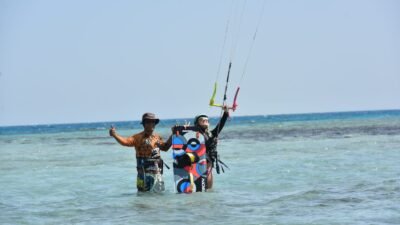
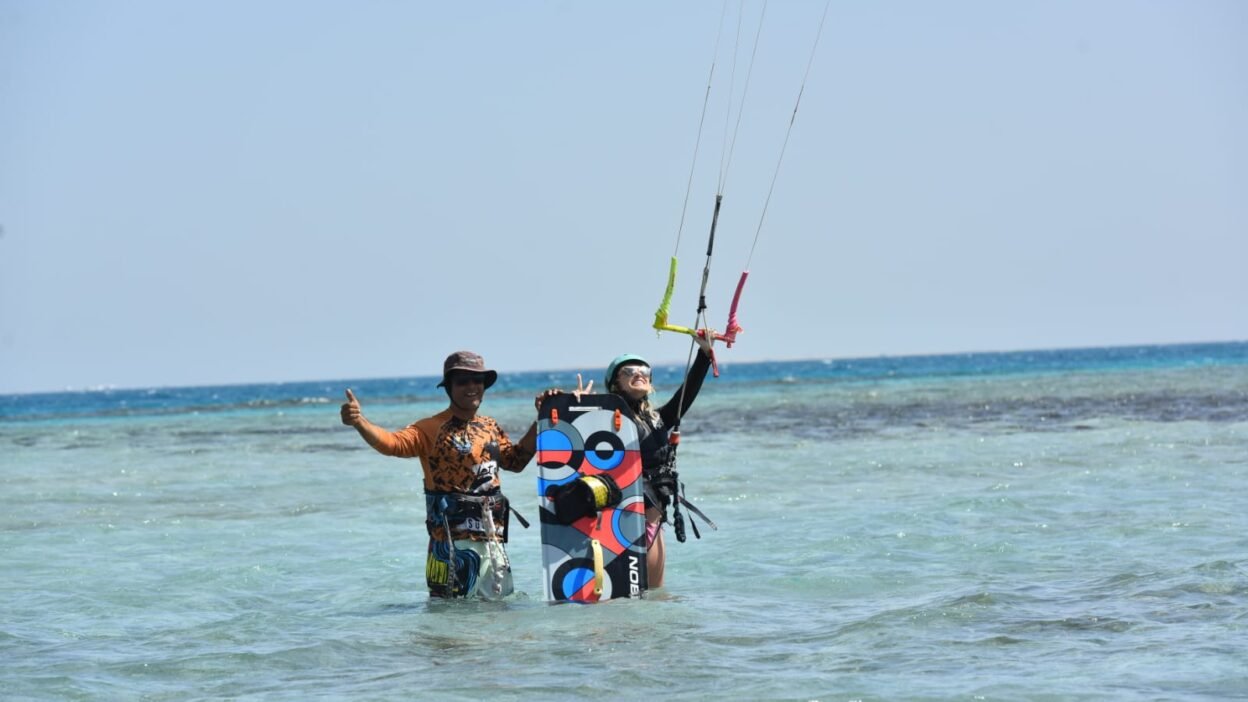
The service infrastructure in Hurghada is mature and professional. Most schools employ IKO-certified instructors, maintain multilingual teaching capabilities (particularly English and Russian), and offer complimentary hotel transfers. The Al Ahyaa Lagoon serves as the primary hub, featuring a sandy bottom, reef-protected flat water, and side-onshore wind that pushes riders toward the beach rather than out to sea.
Which Are the Best Kite Schools in Hurghada? (2026 Comparison)
The best kite schools in Hurghada for 2026 are Masters Surf School (best overall for beginners), Kite School Egypt (best for multilingual instruction), Paradise Kitesurf Red Sea (best lagoon access), and Harry Nass (best for windsurfing combo).
| School | Years Operating | IKO Certified | Primary Location | Best For | Beginner Course Price (2026) |
|---|---|---|---|---|---|
| Masters Surf School | 25+ years | Yes | Al Ahyaa Lagoon (4 locations) | Beginners, safety focus, fast progression | €350–€500 |
| Kite School Egypt | Established | Yes | Hurghada coast | Multilingual (English/Russian) | €350–€500 |
| Paradise Kitesurf Red Sea | Established | Yes (IKO methods) | Lagoon setting | All skill levels, IKO certification | €350–€500 |
| Harry Nass | Since 1999 | Yes | Picturesque bay | Windsurfing + kitesurfing combo | Contact school |
| OleKite | Established | Yes (IKO Assistant Trainer) | Hurghada coast | Instructor training, wing foiling | Contact school |
Masters Surf School distinguishes itself through its 25-year local track record, operation across four lagoon locations, and inclusion of free hotel transfers in all packages. The school’s shallow-water lagoon environment—where students can stand waist-deep and simply walk back if they lose control—dramatically reduces lesson time and accelerates progression.
Kite School Egypt excels in serving the significant Russian-speaking tourist market, with instructors fluent in both English and Russian. This bilingual capability eliminates language barriers during technical instruction—a critical factor when learning safety systems and kite control.
Paradise Kitesurf Red Sea operates directly on a lagoon ideal for all skill levels, with shallow waters for beginners and ample space for advanced riders to practice tricks without crowding.
Harry Nass has been operating since 1999 and was awarded ‘Best Windsurfing and Kite Centre’ by the Egyptian Ministry of Tourism in 2011, making it the top choice for riders who want to combine kitesurfing with windsurfing.
How Much Do Hurghada Kite Services Cost in 2026?
Hurghada kite services in 2026 range from €40–€70 per hour for private lessons, €350–€500 for complete beginner courses, and €1,195–€2,050 for week-long all-inclusive kite safaris.
| Service Type | Duration | Price (2026) | Inclusions |
|---|---|---|---|
| Taster Session | 2–3 hours | €80–€120 | Basic theory, safety, body dragging |
| Beginner Course (IKO Level 1) | 9–12 hours | €350–€500 | Theory, setup, kite control, board start, first rides |
| Private Hourly Lesson | 1 hour | €40–€70 | One-on-one instruction |
| 2-Hour Session | 2 hours | $63–$140 (€58–€130) | First taste of kitesurfing |
| 3-Day Private Course | 3 days | From $75 | Progressive instruction |
| Kite Safari (Liveaboard) | 7–8 nights | €1,195–€2,050 | Accommodation, meals, guiding |
| 6-Hour Private Lesson | 6 hours (split over 2 days) | Contact provider | Personalized technique refinement |
Hurghada delivers exceptional value compared to European spots like Tarifa or the Canary Islands. The lower operating costs and year-round demand from international visitors keep prices competitive while maintaining high instruction standards.
Cost-saving strategies for budget-conscious riders include: booking multi-day packages directly with IKO-certified schools rather than paying hourly; sharing lessons with a friend (many schools offer small-group discounts); visiting during shoulder seasons (March–April or November) when prices may be slightly lower; and combining your trip with affordable accommodation near the lagoons.
What Are the Wind and Water Conditions for Kitesurfing in Hurghada?
Hurghada offers year-round kitesurfing with peak conditions from May to October, featuring consistent 15–25 knot thermal winds, 26–30°C water temperatures, and flat, waist-deep lagoon conditions at Al Ahyaa.
The wind season runs year-round, but the peak period from May through October delivers the strongest and most consistent conditions. During these months, thermal winds kick in almost daily as the desert heats up, pulling cool air from the sea and creating steady winds averaging 15 to 25 knots. The prevailing wind direction is north to north-northwest, blowing side-onshore—meaning it pushes riders along the coast rather than out to sea, which is the safest possible angle for learning.
Wind speed by season:
- Peak (May–October): 15–25 knots, occasionally 30–35 knots for advanced riders
- Shoulder (March–April, November): 12–18 knots, kiteable but less consistent
- Winter (December–February): 12–18 knots, frontal systems, lighter and more variable
Water conditions are equally favorable. The Al Ahyaa Lagoon is protected from open-sea swell by a natural reef, creating a massive area of flat, waist-deep water with a sandy bottom. Water temperature sits at 26–30°C from May to October, allowing riders to train in board shorts and a rash guard without a wetsuit. During winter months (December–March), a 3/2mm full wetsuit is recommended.
Most common kite size: For a 75kg rider, the most used kite size is 9–10m, with a 12m recommended for lighter wind days (12–16 knots).
Are Hurghada Kite Services Safe for Beginners?
Yes—Hurghada kite services are exceptionally safe for beginners due to shallow, flat-water lagoons, side-onshore wind patterns, IKO-certified instruction, and established safety protocols at all major schools.
The primary safety feature is the Al Ahyaa Lagoon itself. The water never exceeds chest depth across hundreds of metres of riding area, with a sandy bottom and no hidden rocks. If a beginner loses control of the kite or gets pulled downwind, they can simply stand up and walk back to the lesson area. This eliminates the deep-water恐惧 that hinders progression at many other destinations.
The wind direction provides an additional safety layer. Side-onshore wind pushes riders along the coast rather than out to sea. Even if a rider completely loses control, the natural drift is toward the beach, not into open water.
All reputable schools employ IKO-certified instructors who follow standardized safety protocols. The first lesson always begins on the beach with a trainer kite, teaching students the “wind window” (the area where the kite generates power), safety release systems, and proper launching and landing procedures before they ever enter the water.
Safety infrastructure at major schools includes: dedicated beach assistants for launching and landing; radio communication between instructors and students; rescue boats on standby at busy locations; and equipment maintained to IKO standards with functional quick-release systems.
For advanced riders, the northern area of the lagoon offers wave conditions with 0.5–1.5 metre waves, but these are clearly separated from the beginner zones.
What Is the Difference Between a Kite Safari and Standard Lessons?
A kite safari is a multi-day liveaboard experience combining kitesurfing with yacht-based accommodation and guided trips to multiple spots, while standard lessons are fixed-location instruction at a single lagoon or beach.
| Feature | Standard Lessons | Kite Safari |
|---|---|---|
| Duration | 2–12 hours (single or multi-day) | 7–8 nights |
| Location | Fixed (Al Ahyaa Lagoon or beach) | Multiple spots (Geisum, Giftun, Tawila, Ashrafi Islands) |
| Accommodation | Not included (hotel separate) | Included (double cabin with AC, fridge, toilet, shower) |
| Meals | Not included | All-inclusive (3x daily buffet, snacks, drinks) |
| Instruction | Focused, progressive lessons | Coaching + free riding |
| Price | €350–€500 (course) | €1,195–€2,050 |
| Best For | Learning fundamentals | Progression, exploration, community |
Standard lessons are the default choice for beginners and intermediates. They provide structured, progressive instruction at a single location—typically the Al Ahyaa Lagoon—with the same instructor and equipment throughout the course. The focus is on building foundational skills: kite control, body dragging, board starts, and independent riding. Most beginners achieve independent riding within 3–6 days of standard lessons.
Kite safaris appeal to intermediate and advanced riders seeking variety and adventure. Participants stay on a crewed yacht that moves between pristine spots along the Red Sea coast. Each day offers new conditions, from flat-water lagoons to open-sea waves, allowing riders to experience different challenges and refine their skills in varied environments. Safaris also foster a strong community atmosphere, with group meals, shared experiences, and the opportunity to kite with like-minded riders.
The luxury tier of kite safaris includes motor yachts with additional amenities like snorkeling, diving, wakeboarding, and fishing equipment.
How Does Hurghada Compare to Other Egyptian Kite Spots?
Hurghada offers the most convenient access (10 minutes from HRG airport) and the widest range of schools, but El Gouna provides superior beginner conditions with its massive shallow lagoon, while Dahab and Soma Bay cater to more experienced riders.
| Factor | El Gouna | Hurghada | Dahab | Soma Bay |
|---|---|---|---|---|
| Water Depth | 0.6–1m lagoon | Deep, choppy | Deep open sea | Flat but deeper |
| Best For | Beginners + freestyle | Experienced riders | Wave riding | Intermediate+ |
| Wind Days/Year | 300+ | 250+ | 280+ | 280+ |
| Wind Speed | 15–25 knots | 12–22 knots | 15–30 knots | 15–25 knots |
| Nearest Airport | HRG (20 min) | HRG (10 min) | SSH (1 hr) | HRG (40 min) |
| Beginner Course | €360 (3 days) | €350–€500 | Limited options | Contact school |
El Gouna is widely considered the best spot in Egypt for beginners. Its lagoon is a vast, enclosed body of shallow water (0.6–1 metre deep) with a flat, sandy bottom, no current, no waves, and no deep water. Most students progress from zero to independent riding within three days. El Gouna is located just 22km north of Hurghada—only 20 minutes by car—making it easily accessible for anyone staying in Hurghada hotels.
Hurghada offers the most convenient access (10 minutes from the airport) and the widest selection of schools. However, the kite spots tend to be deeper and choppier, without the protected lagoon environment of El Gouna. Many kiters based in Hurghada hotels take a short transfer to El Gouna specifically to use the lagoon.
Dahab is better suited for experienced wave riders, with open-water, deep-sea conditions and occasional waves. The wind tends to be gustier and less consistent than El Gouna.
Soma Bay offers flat-water conditions and is located about 45km south of Hurghada.
What Equipment Is Provided by Hurghada Kite Services?
Hurghada kite services provide complete, high-quality equipment packages including kites, boards, harnesses, safety gear, and (when needed) wetsuits—all maintained to IKO standards and included in lesson and rental prices.
Standard equipment packages include:
- Kites: Multiple sizes (typically 7m, 9m, 12m) to match wind conditions and rider weight
- Boards: Twin-tip boards in various sizes for different skill levels and weight ranges
- Harnesses: Seat harnesses for beginners, waist harnesses for intermediate/advanced riders
- Safety equipment: Quick-release systems, leashes, helmets (optional but available)
- Wetsuits: 3/2mm full suits available for winter months (December–March)
Equipment quality varies by school. Top-tier schools like Masters Surf School and Harry Nass emphasize “high-quality equipment” and “the latest equipment”. Schools with IKO certification are required to maintain equipment to specific safety standards.
Rental options are available for riders who already know how to kite but don’t want to transport their own gear. Rental prices are typically quoted on an hourly or daily basis, with discounts for multi-day rentals.
What to bring: Most schools recommend bringing your own impact vest (if you have one), sunglasses with a retention strap, sunscreen, and a rash guard for sun protection. Wetsuits and all kitesurfing-specific equipment are provided.
People Also Ask
Most beginners achieve independent riding within 3–6 days of lessons. The shallow lagoon conditions and consistent wind accelerate progression significantly compared to deep-water locations.
Basic fitness helps, but kitesurfing is more about technique than strength. The sport uses the kite’s power rather than upper body strength, and the shallow water allows frequent rest breaks.
May through October offers the strongest and most consistent winds (15–25 knots) and warmest water (26–30°C).
Yes—Hurghada is one of the world’s most beginner-friendly destinations. The shallow lagoon, side-onshore wind, and IKO-certified instructors make it ideal for first-timers.
Yes. Major schools employ instructors who speak English fluently, and many also offer Russian, German, and other languages.
Key Takeaways
| Takeaway | Detail |
|---|---|
| 🏆 Best overall school | Masters Surf School—25+ years, 4 lagoon locations, IKO-certified |
| 💰 Best value | Beginner courses €350–€500; significantly cheaper than Europe |
| 🌊 Best conditions | May–October: 15–25 knots, 26–30°C, flat water |
| 🎯 Best for beginners | Al Ahyaa Lagoon—waist-deep, sandy bottom, side-onshore wind |
| 🚐 Best convenience | 10 minutes from HRG airport; free hotel transfers included |
| 🏝️ Best adventure | Kite safaris from €1,195—7–8 nights, multiple spots, all-inclusive |
Your Next Steps
Ready to book your Hurghada kite experience? 🏄♂️
- Assess your level — Complete beginner? Book a 9–12 hour IKO Level 1 course (€350–€500). Already riding? Book hourly coaching or a kite safari.
- Compare schools — Use the comparison table in Q2 to match your priorities (budget, language, location).
- Check the wind forecast — Peak season (May–October) offers the most reliable conditions.
- Book directly — Contact schools directly for the best rates and package deals.
- Confirm transfers — Most top schools include complimentary hotel transfers—confirm when booking.
🌐 Visit Masters Surf School for packages, availability, and expert guidance.