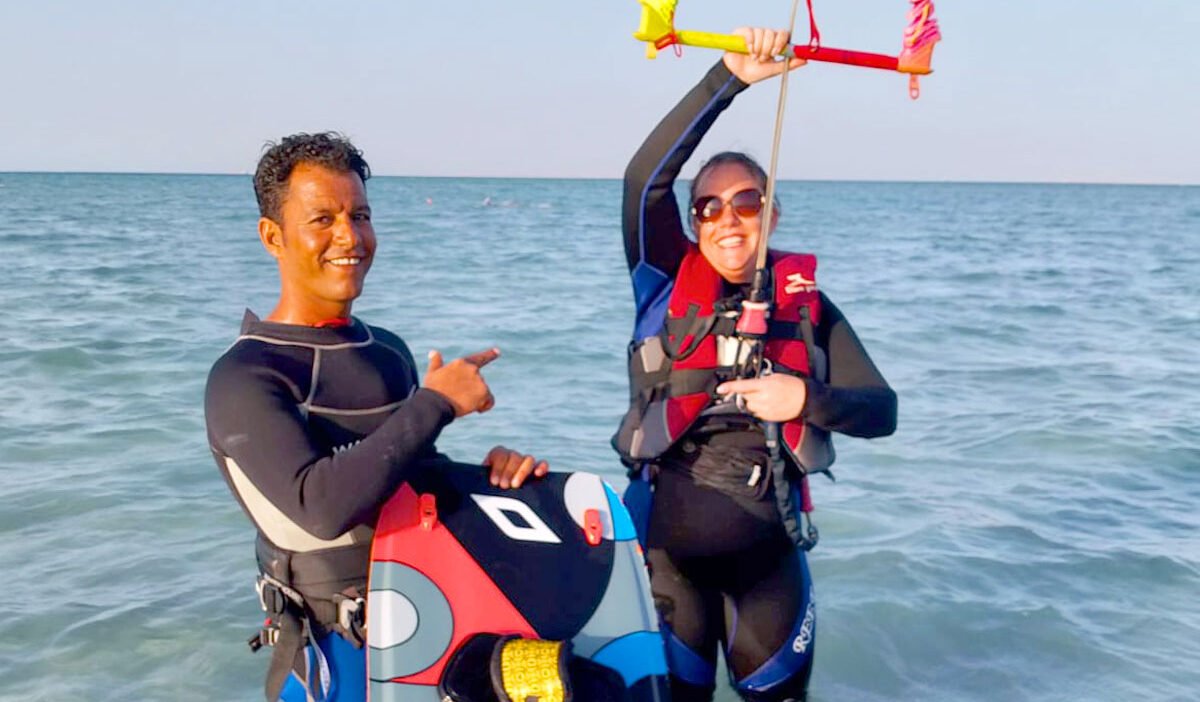
If you want to learn kite surfing, Hurghada in Egypt is one of the best places on earth to start. With warm, shallow lagoons, consistent wind almost every day, and IKO-certified instructors at affordable prices, you can go from complete beginner to riding independently in just 3 to 6 days. This Q&A guide answers everything you need to know — from kitesurfing hurghada and kite school hurghada options to what you’ll learn in a kitesurfing course egypt, so you can book your first lesson with confidence.
Learn Kite Surf Hurghada Guide
- 🏄♂️ Introduction: Why Learn to Kite Surf in Hurghada, Egypt?
- When is the best time to take a kitesurfing course in Egypt?
- How much does a kitesurfing course in Hurghada cost?
- What is included in the price of a kitesurfing course?
- Which kite school in Hurghada is best for beginners?
- What will I learn in a beginner kitesurfing course in Hurghada?
- Is kitesurfing physically difficult for a complete beginner?
- What equipment do I need for my first lesson, and can I rent it?
- What is the kitesurfing equipment price in Egypt if I want to buy my own gear?
- What are the most common mistakes beginners make, and how can I avoid them?
- How many lessons do I need to become an independent kitesurfer?
- 🎯 Your Next Step: Book Your Kitesurfing Adventure in Hurghada Today
- ✅ Key Takeaways for Beginner Kitesurfers
🏄♂️ Introduction: Why Learn to Kite Surf in Hurghada, Egypt?
Imagine the sun warming your skin, the turquoise water of the Red Sea stretching endlessly before you, and a steady wind filling your kite as you glide across a perfectly flat lagoon. This isn’t a dream — it’s a typical day in Hurghada, Egypt’s premier kitesurfing destination.
For absolute beginners, Hurghada offers the perfect combination of shallow, flat‑water lagoons, consistent thermal winds, and professional instruction at surprisingly affordable prices. The Al Ahyaa Lagoon area, just north of the city center, provides waist‑deep, warm water with a sandy bottom — conditions that allow you to stand up easily and focus on kite control without the fear of deep water or strong waves.
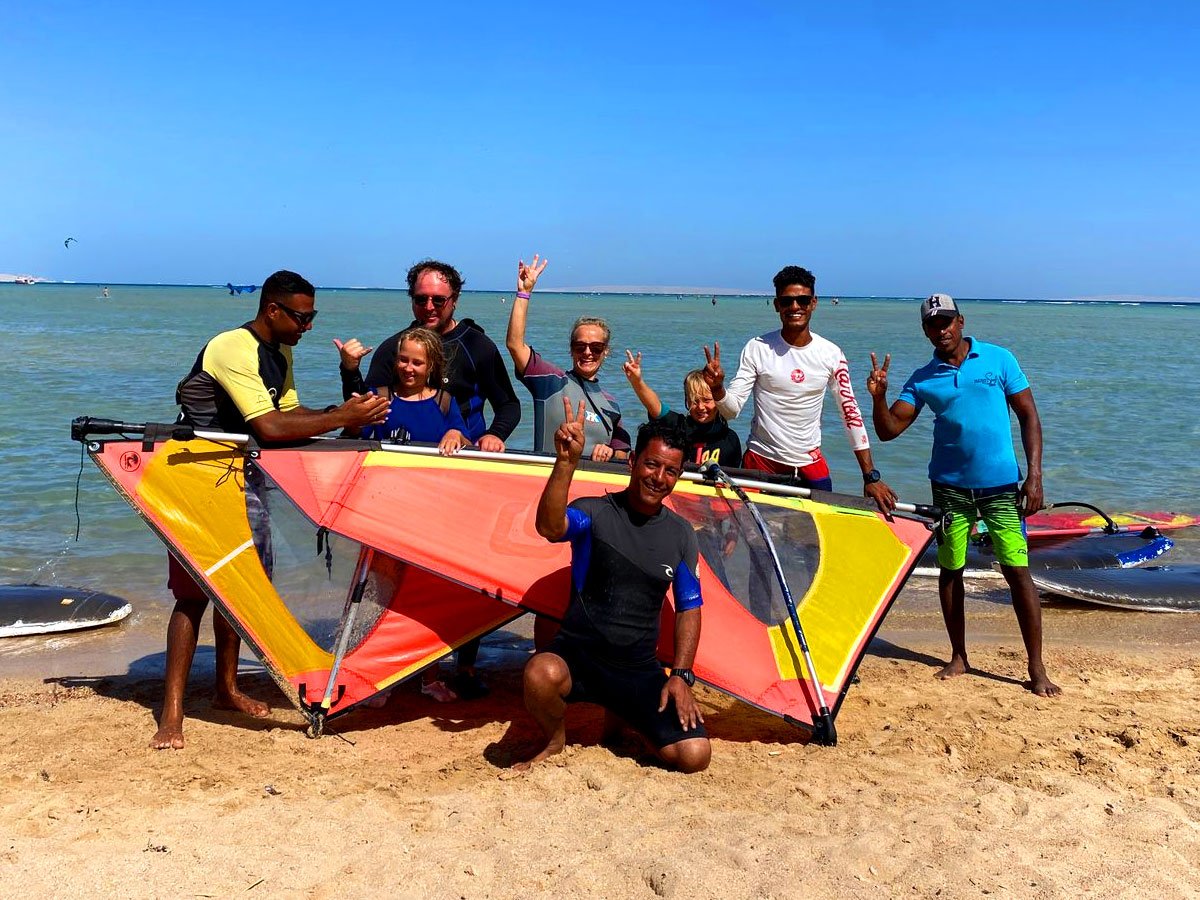
With IKO‑certified instructors, year‑round sunshine, and wind that blows steadily from May through October, Hurghada consistently ranks as one of the world’s most forgiving and effective environments to master this sport.
When is the best time to take a kitesurfing course in Egypt?
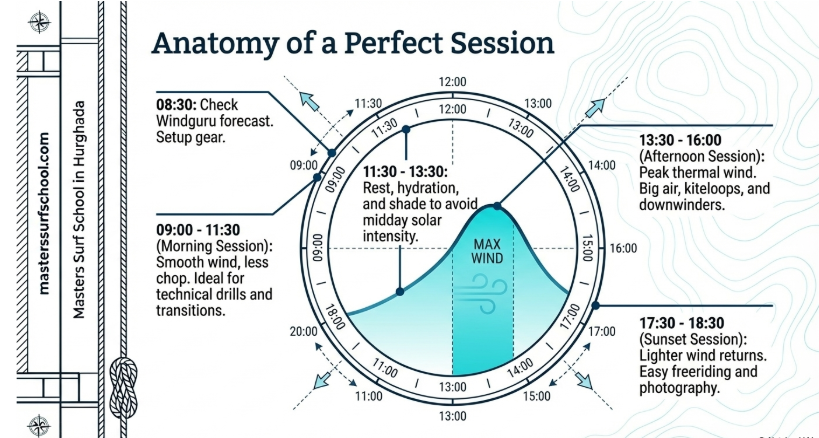
The best time to learn kite surfing in Hurghada is between April and October. During these months, you will experience consistent thermal winds averaging 18–25 knots daily, with water temperatures between 26–30°C — warm enough that you don’t need a wetsuit. For a beginner, this consistency is gold: you can book a week‑long course with confidence, knowing you will likely have rideable wind every day. March and November are also excellent alternatives with slightly fewer crowds, offering 15–22 knot winds and water around 22–26°C. Even in winter (December–February), you can still learn, with 12–18 knot winds and water around 20–22°C, though a light wetsuit is recommended.
How much does a kitesurfing course in Hurghada cost?
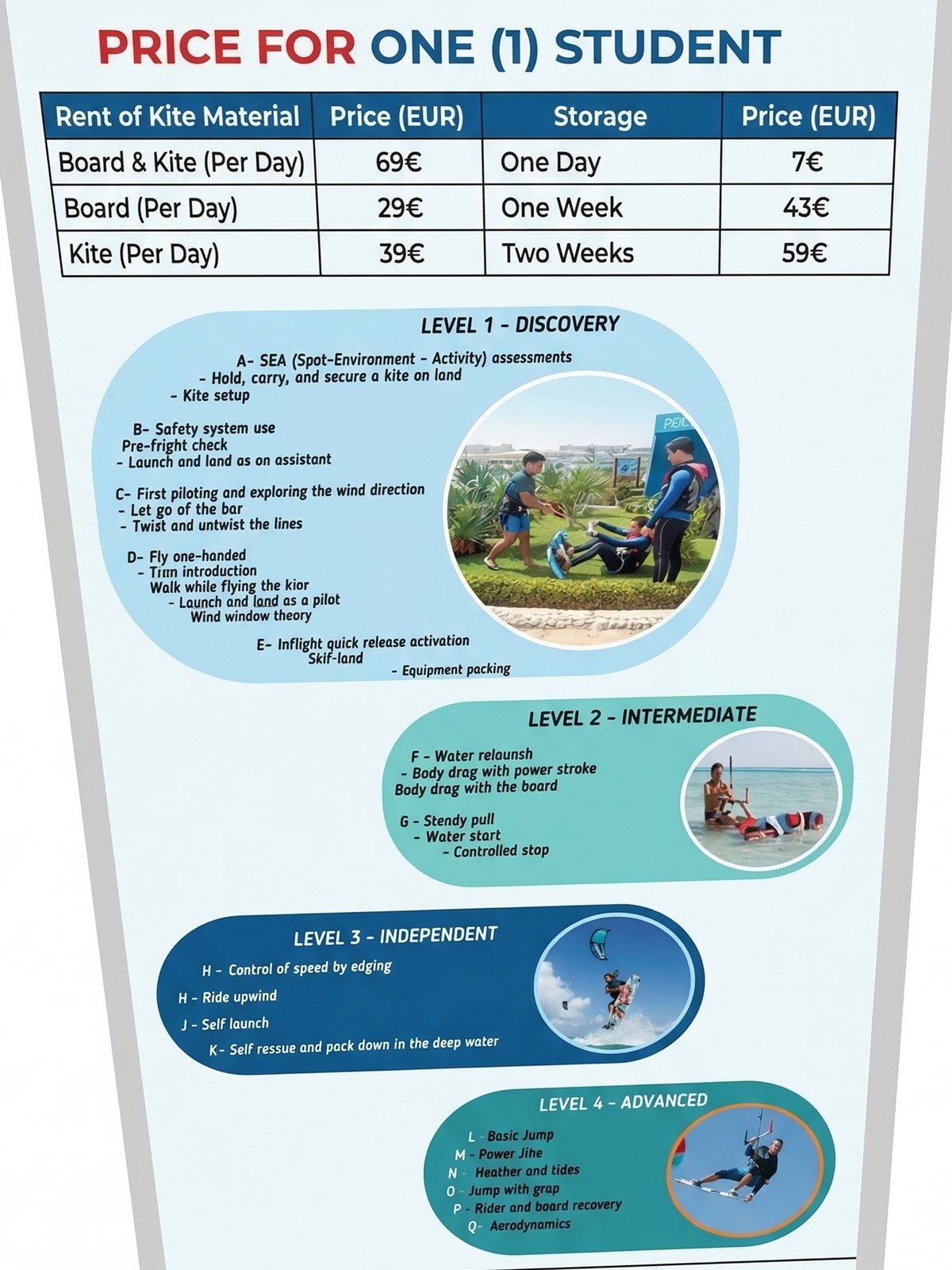
A standard 12‑hour group kitesurfing course in Hurghada (typically spread over 3 days) costs between €400 and €560, and includes all necessary equipment. Private 1‑on‑1 training costs between €400 and €600 for 9 hours, which offers faster progression. For shorter commitments, an introductory 2‑hour lesson costs around $97, while a basic 7‑hour course (2–3 days) is approximately $300, and a full advanced 12‑hour course (3–4 days) is about $500. These prices are significantly lower than European destinations like Tarifa, Spain, where individual lessons start from €120.
What is included in the price of a kitesurfing course?
When you book a kitesurfing course in Hurghada, the price typically includes everything you need to learn safely and comfortably. You will receive a full equipment package including kite, board, harness, helmet, impact vest, and wetsuit if needed. Most reputable schools include hotel transfers, IKO certification at no extra cost, access to a prepared beach, and beverages during training. Meals are usually not included, so you should budget separately for food.
Which kite school in Hurghada is best for beginners?
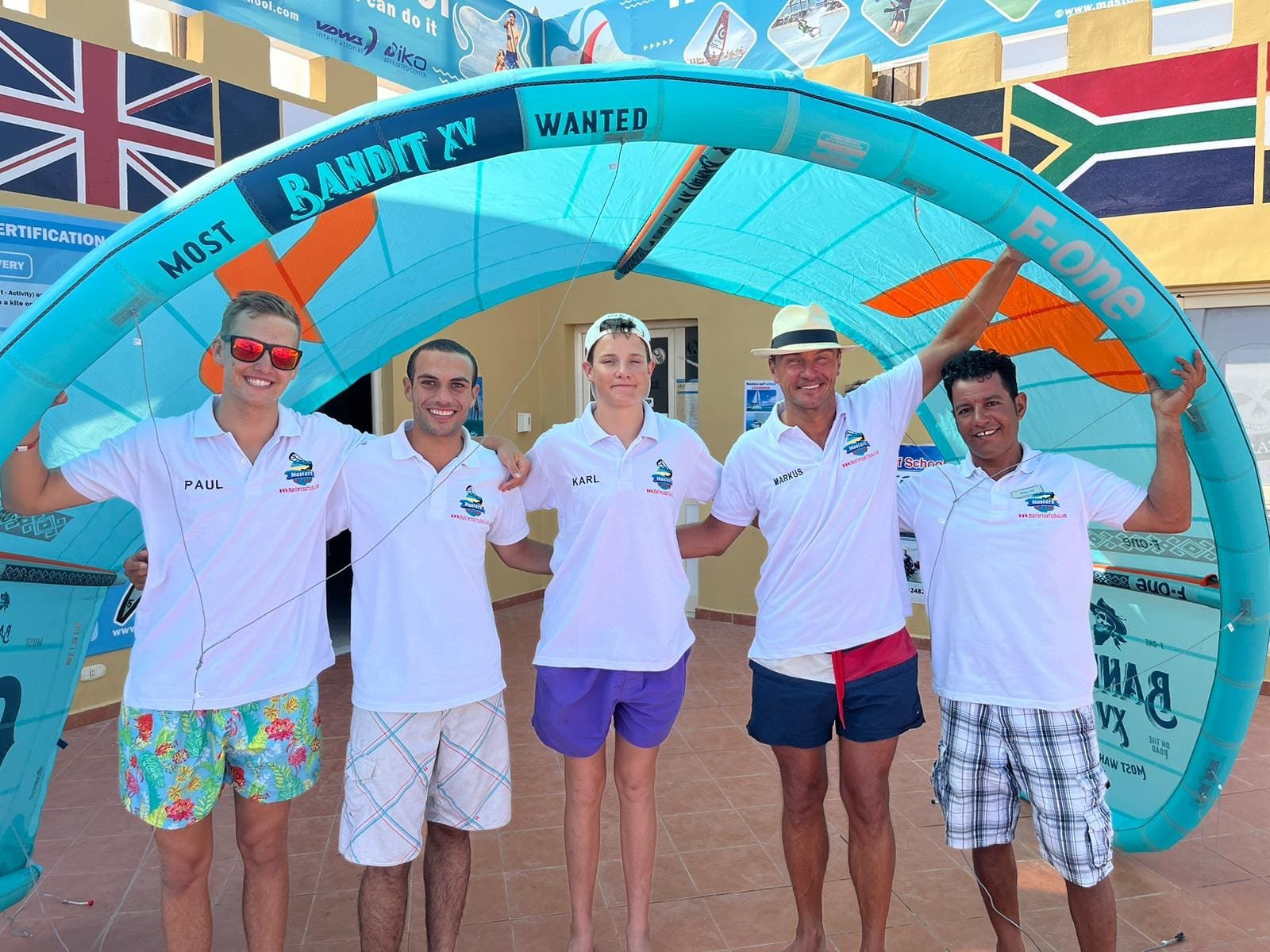
Masters Surf School provides over 25 years of experience across four Red Sea locations, with shallow-water training areas perfect for beginners. All these schools use IKO teaching methods and issue internationally recognized IKO certificates upon course completion.
Masters Surf School
Red Sea Governorate,
Secondary phone: +201272284800
Email: masters.surfschool@gmail.com
What will I learn in a beginner kitesurfing course in Hurghada?
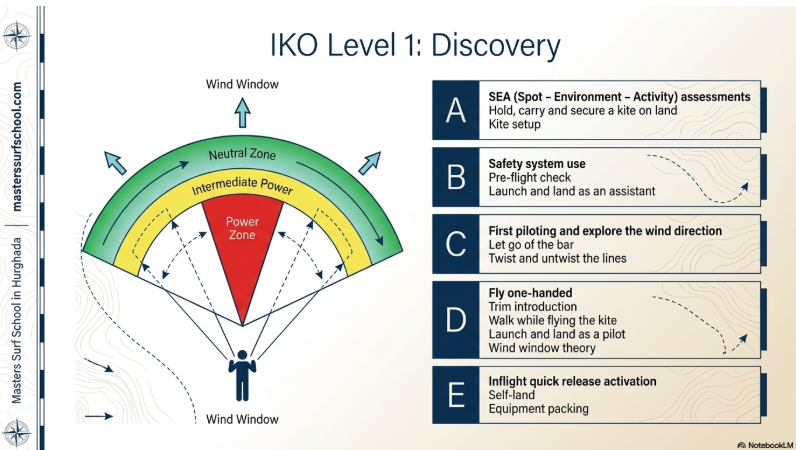
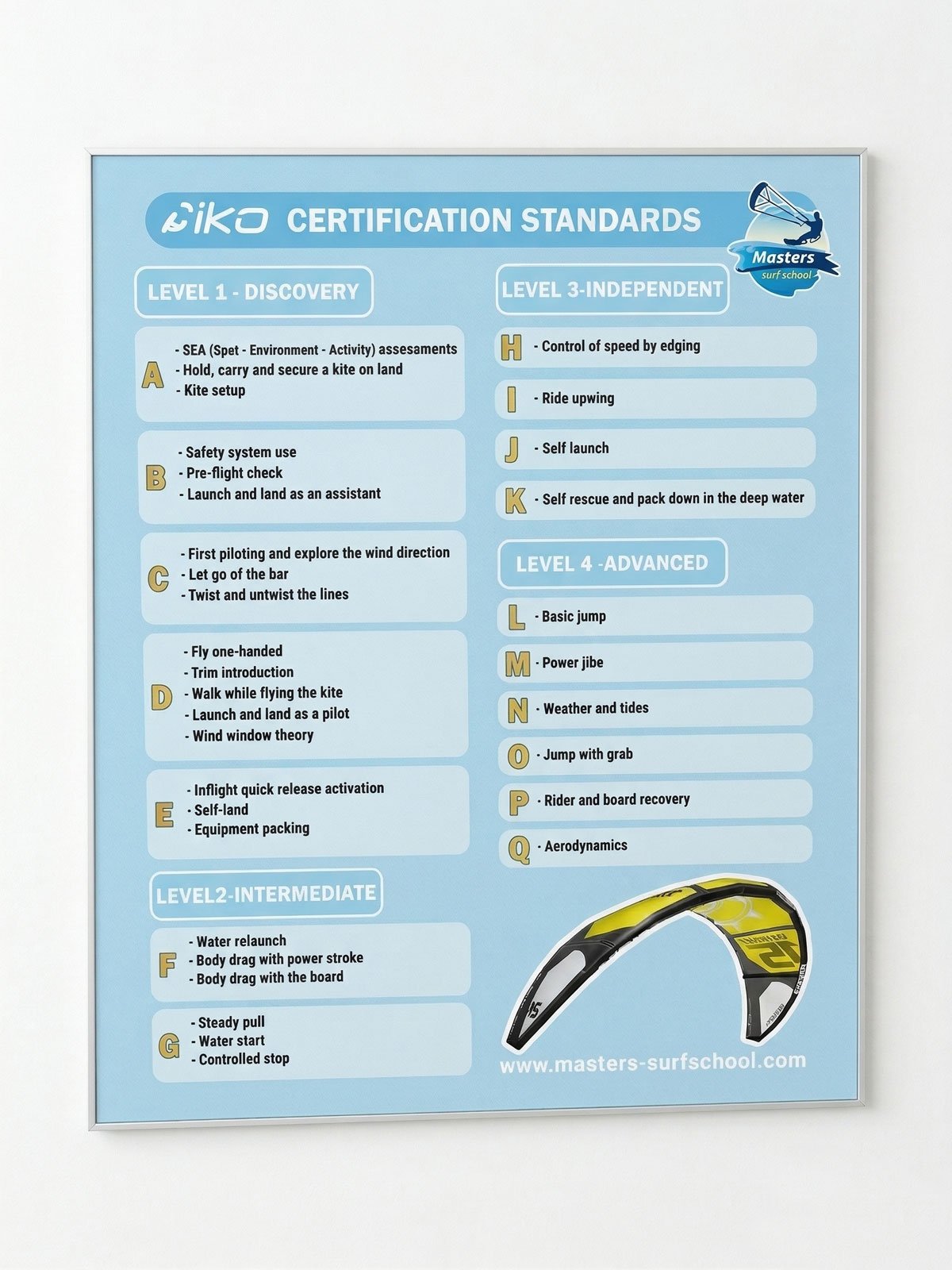
A standard beginner kitesurfing course follows the International Kiteboarding Organization (IKO) standards and progresses through three main phases. Day 1 — Foundations: You start on the beach with a small trainer kite to understand the “wind window” (the area in the sky where the kite generates power).
You learn safety systems (how to release the kite instantly), launching and landing techniques with instructor assistance, and basic kite control. Day 2 — Body Dragging: Once you control the kite confidently, you enter the water to learn body dragging — letting the kite pull you through the water without a board. This teaches you how to generate power and move upwind. Day 3 — Board Starts and Riding: You add the board, learning the “water start” technique to get on the board and ride. By the end of a 3‑day course, many students are riding independently in both directions and learning to turn. The most common and optimal course duration for full independence is 11–13 hours.
Is kitesurfing physically difficult for a complete beginner?
Kitesurfing is surprisingly accessible for beginners. If you get physically tired, it usually means you are tensing your muscles and fighting the kite — the main part of the body that gets tired is actually your head. Once you learn to relax rather than tense up, everything becomes much easier, both psychologically and physically.

The shallow, warm lagoons of Hurghada allow you to stand up easily at any time, removing the fear of deep water. The consistent side‑onshore wind pushes you slightly toward the beach, not out to sea, adding an essential layer of safety. With proper instruction, most students progress faster than they expect, often riding independently within three to six days.
What equipment do I need for my first lesson, and can I rent it?
For your first kitesurfing lesson, you don’t need to buy any equipment — everything is provided by the school. Your rental package typically includes: a kite (appropriate for your weight and wind conditions), a control bar with safety leash, a twin‑tip board, a harness (waist or seat), a helmet, an impact vest, and a wetsuit if needed. If you continue kitesurfing after your course, daily rental for a full setup costs between €70 and €110. For board‑only rental, expect €10–€20 per day. Many schools offer weekly rental discounts for extended stays.
What is the kitesurfing equipment price in Egypt if I want to buy my own gear?
If you decide to buy your own kitesurfing equipment in Egypt, a complete new setup costs between $1,500 and $3,500 (approximately €1,400–€3,300). Here is a breakdown of individual components: a new kite ranges from €280–€470 for entry‑level to €750–€2,300 for high‑performance; a bar and lines cost €330–€750; a twin‑tip board ranges €280–€940; a harness costs €95–€470; and a helmet with impact vest totals €95–€190. Buying used equipment offers significant savings — a second‑hand kite in good condition can cost 20% to 60% less than its original retail price, and many local schools sell previous‑season rental gear at substantial discounts.
What are the most common mistakes beginners make, and how can I avoid them?
Avoid these common beginner mistakes to learn faster and safer. Skipping theory lessons is a major error — kitesurfing requires knowledge about wind patterns, equipment, and safety, just like learning to drive without understanding traffic rules. Not wearing proper safety gear — always wear a helmet and impact vest, and ensure your kite has a functional quick‑release system. Going out in unsuitable conditions — stick to steady winds (12–25 knots) when starting out and avoid gusty or offshore winds; flat water offers the most favorable learning conditions. Launching and landing alone — always get assistance from an instructor or fellow kiter; never launch or land your kite without help. Riding beyond your skill level — keep a safe distance from shore, practice within your limits, and always kitesurf with a buddy when possible.
How many lessons do I need to become an independent kitesurfer?
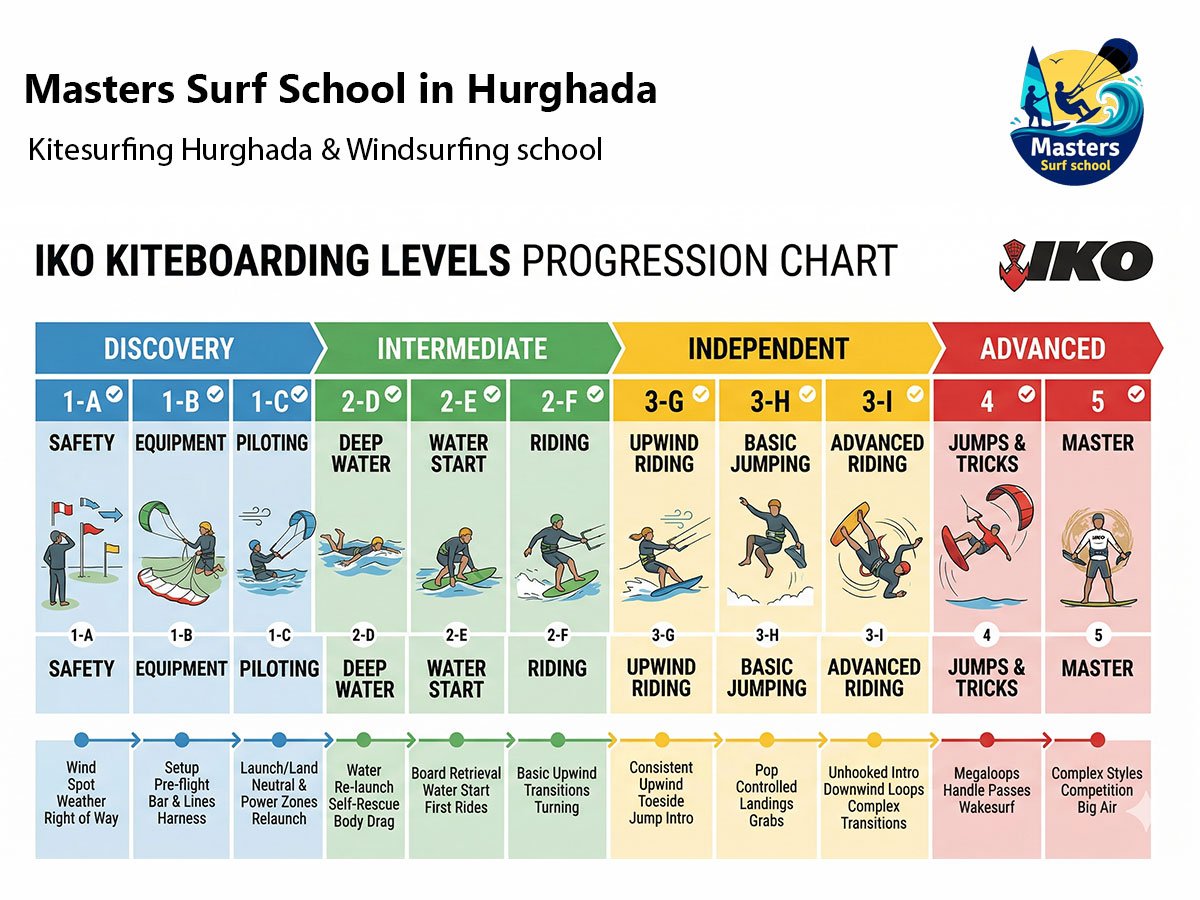
Most beginners become independent kitesurfers after 11–13 hours of professional instruction, typically spread over 3 to 5 days. A 12‑hour group course (€400–€560) is the most popular option, with many students riding independently within three to six days. Some fast learners may start riding after just 6 hours, while others may need more time — this is completely normal, and absolutely everyone achieves success with proper instruction. Investing in 3–5 days of professional lessons saves money in the long run by avoiding bad habits and equipment mistakes.
🎯 Your Next Step: Book Your Kitesurfing Adventure in Hurghada Today
The Red Sea is calling, and the wind is waiting. With prices significantly lower than Europe, guaranteed wind conditions, and world‑class IKO‑certified instructors, Hurghada offers the best value for money in the global kitesurfing market. Whether you choose a 3‑day group course or private lessons, you will be riding independently and experiencing the incredible freedom of kitesurfing in one of the most beautiful spots on earth.
Don’t wait — peak season from April to October fills up quickly. Contact Masters Surf School or any of the recommended kite schools in Hurghada today to secure your place. Book your 3‑day beginner course now and be riding independently by the end of the week. Click below to check availability and claim your early booking discount!
✅ Key Takeaways for Beginner Kitesurfers
- 🌊 Best season: April to October (18–25 knot winds, 26–30°C water, no wetsuit needed)
- 💰 Course cost: €400–€560 for a 12‑hour group course, including all equipment and IKO certification
- 🏫 Top schools: Kite School Egypt, Sultan Kite School, OleKite, and Masters Surf School — all IKO‑certified
- 🪁 Learning curve: Most students ride independently within 3–6 days (11–13 hours of instruction)
- 🛡️ Safety first: Always wear helmet and impact vest, never launch alone, and stick to steady winds
- 📦 Equipment: Don’t buy anything before your course — all gear is included in the lesson price
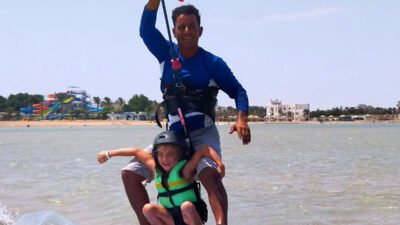
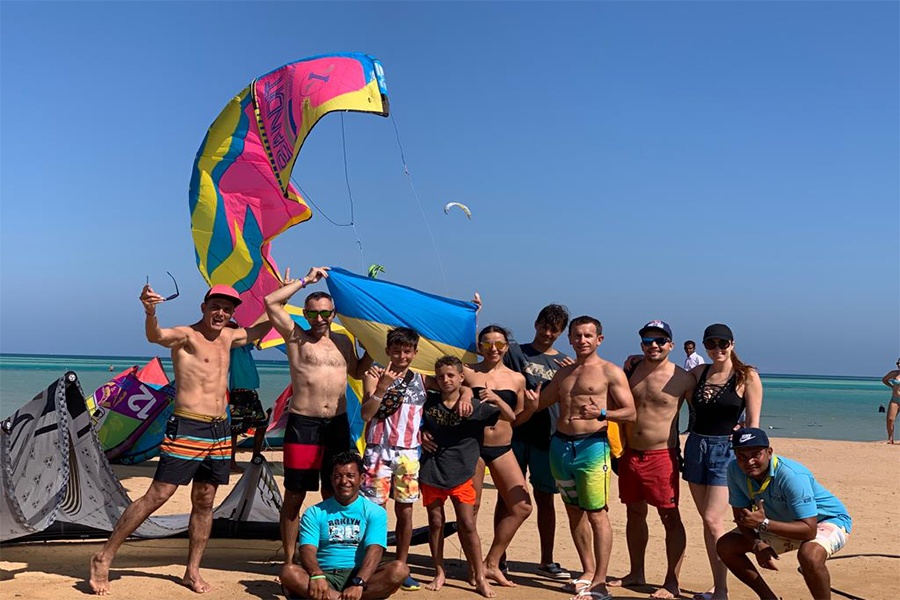
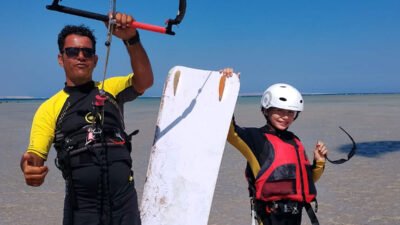

[…] Learning to kite surf in Hurghada is easier than you think. The Red Sea offers warm, shallow lagoons and consistent winds 250+ days per year, making it one of the world’s top spots for beginners. This guide covers everything you need: the best season (April–October), safest spots (Al Ahyaa Lagoon), essential safety rules, step‑by‑step learning phases, current prices, gear tips, and advanced adventures like kite safaris and remote camps. Follow these expert tips to master kite surfing faster and safer. […]