Mastering kitesurfing techniques transforms you from a struggling beginner into a confident rider who can navigate upwind, execute smooth transitions, and even catch air. The core skills—kite control, body dragging, water starts, and upwind riding—build on each other in a proven progression. Hurghada, Egypt, offers ideal learning conditions with shallow lagoons and consistent winds, making it one of the world’s best destinations to learn kitesurfing. With the right instruction and practice, you can go from first lesson to independent rider in just 3–5 days. This guide breaks down every essential technique, answers the most common questions, and helps you choose the right path for your kitesurfing journey.
Top Kitesurfing Techniques and Skills: Your Complete Guide to Riding with Confidence
- What Are the Most Important Kitesurfing Techniques for Beginners?
- How Do You Progress from Basic Kitesurfing to Advanced Tricks?
- Kitesurfing Techniques Comparison Table
- Where Is the Best Place to Learn Kitesurfing Techniques?
- People Also Ask: Quick Answers to Common Questions
- Your Kitesurfing Progression Checklist
- Ready to Master These Kitesurfing Techniques? 🌊
What Are the Most Important Kitesurfing Techniques for Beginners?
The most important kitesurfing techniques for beginners are kite control, body dragging, water starts, and upwind riding. These four foundational skills form the backbone of everything you will do on the water. Master them in order, and you will progress safely and quickly.
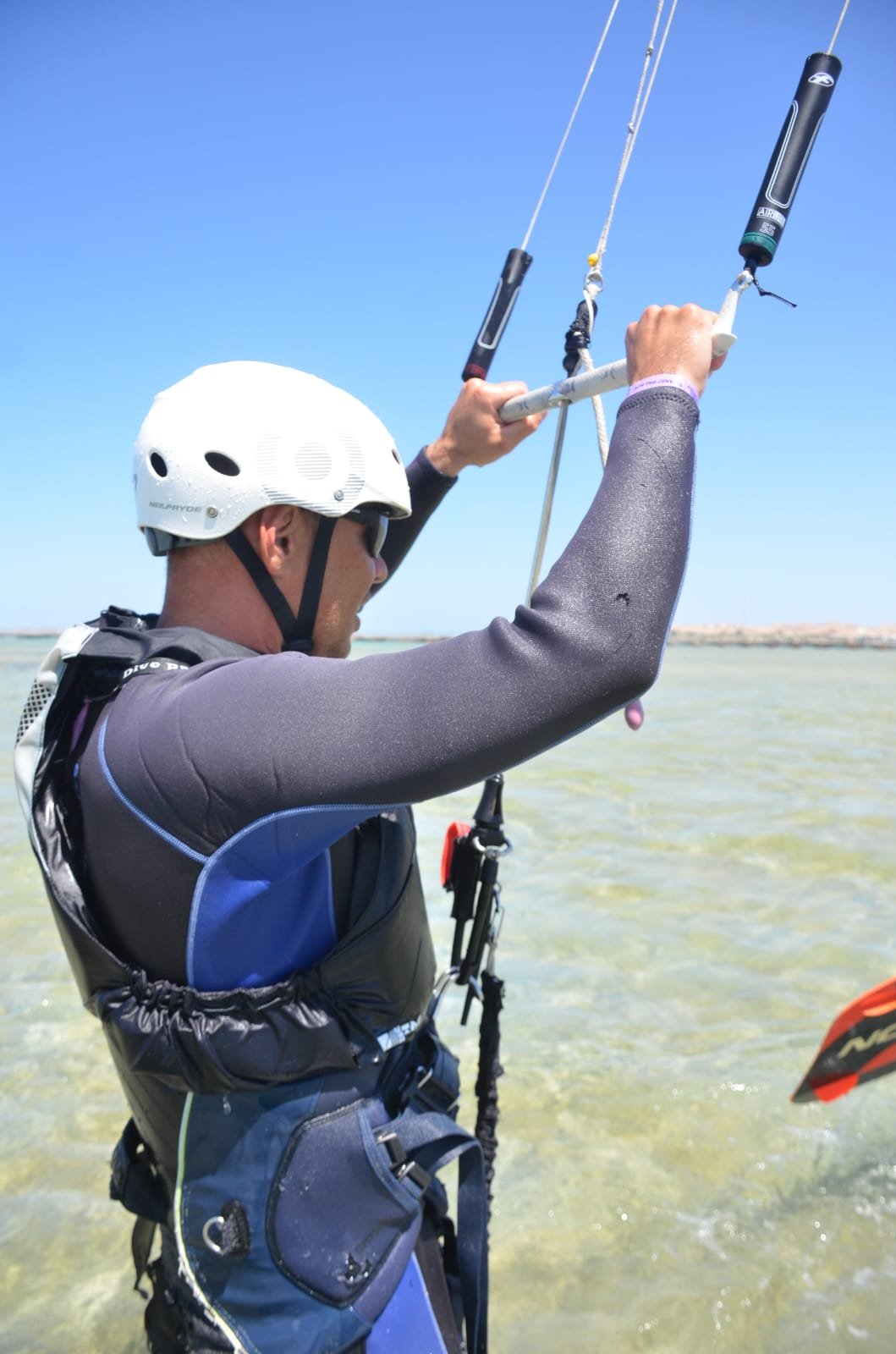
Kite Control: Your First and Most Essential Skill
Kite control is the ability to fly your kite with precision and intention. Before you ever strap on a board, you must learn how the kite responds to your inputs.
Understanding the wind window is your starting point. The wind window is the three-dimensional area downwind of you where the kite can fly. Think of it like a clock face: 12 o’clock is directly overhead (the neutral position), 9 o’clock and 3 o’clock are the edges of the window, and 6 o’clock is straight downwind (the power zone).
Bar tension and steering require small, deliberate movements. Avoid over-steering—do not rotate the bar like a steering wheel. Instead, use gentle pushes and pulls with your hands to guide the kite through the sky. Practice parking the kite at 10:30 or 1:30 to maintain stability while you prepare for your next move.
The golden rule: keep the kite moving. A stationary kite loses power and can fall from the sky. Constant, gentle steering keeps the kite powered and responsive.
Body Dragging: Your Underwater Transportation
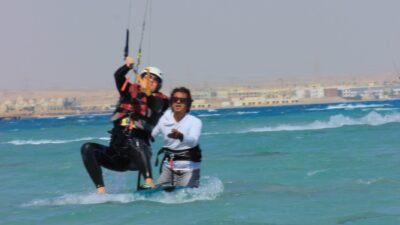
Body dragging is the technique of using your kite to pull your body through the water without a board. This skill is essential for two reasons: retrieving your lost board and learning to pilot the kite while distracted by waves and water conditions.
How to body drag effectively:
- Keep your body relaxed and float on your back or stomach
- Use one hand on the center of the bar to maintain control
- Extend your free arm in the direction you want to travel—it acts as a rudder
- Point your body like an arrow to reduce drag and increase speed
Upwind body dragging is the most valuable variation. To drag upwind, angle your body against the pull of the kite, keeping the kite higher in the wind window (between 11 and 11:30 or 12:30 and 1). This technique lets you return to your board even when it has drifted upwind of you.
Water Starts: Getting on the Board
A water start is the moment you transition from being in the water to standing on your board and riding. This is often the most exciting milestone for beginners.
The step-by-step water start technique:
- Position your board perpendicular to the wind, with your feet in the straps
- Guide the kite from the neutral 12 o’clock position toward the power zone (around 1 o’clock or 11 o’clock)
- As you feel the pull, lean back, extend your front leg, and bend your back knee
- Allow the kite to lift you onto the board
Critical mistake to avoid: Do not pull the bar all the way in. Ease the bar out slightly as you gain speed to prevent being pulled forcefully over the board. The goal is a smooth, controlled rise, not a violent yank.
Riding Upwind: The Holy Grail of Kitesurfing
Riding upwind is the ability to travel against the wind direction, and it is the most critical milestone for progressing in kitesurfing. Without this skill, you will constantly walk back up the beach—the infamous “walk of shame.”
The upwind riding technique requires three key elements:
Body position: Lean your torso backward into the harness lines. Keep your front leg straight and your back knee slightly bent. Your weight should be on your back foot, digging the heelside edge of the board into the water.
Board angle: Edge the board against the water at a moderate angle. Going too fast flattens the board and pushes the kite downwind, making it harder to hold your edge.
Kite position: Keep the kite lower in the sky, around or below 45 degrees. A lower kite creates more forward pull and less upward lift, helping you drive upwind.
Pro tip: Look where you want to go—not at the kite. Your body follows your eyes. Looking upwind naturally twists your shoulders and hips into the correct position.
How Do You Progress from Basic Kitesurfing to Advanced Tricks?
Progressing from basic kitesurfing to advanced tricks follows a clear pathway: refine your fundamentals, master transitions, learn to jump, then add rotations and grabs. Each step builds on the previous one.
Transitions: Changing Direction with Style
Transitions are techniques for changing your riding direction smoothly without stopping or sinking.
Heel-to-toe transition: This is the simplest direction change. Ride in one direction, then shift your weight and slide the board to ride with your toes pointing in the direction of travel. This “toeside riding” position opens up new angles and prepares you for more advanced moves.
Pivot transition: Turn the board by pivoting on your heels or toes while keeping the kite steady. This is a controlled, low-risk way to change direction.
Jumps: Your First Taste of Flight
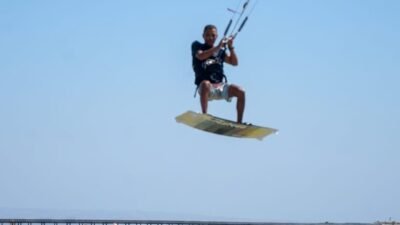
Jumping is one of the most exciting parts of kitesurfing. Start small and build gradually.
The straight jump technique:
- Ride at a comfortable speed with the kite at 45 degrees
- Edge hard against the kite to create line tension
- Steer the kite toward 12 o’clock
- As the kite reaches overhead, pull in on the bar and pop off the tail of your board
- Keep the kite above you during the jump
- Spot your landing and redirect the kite forward as you descend
Timing is everything. Send the kite upward just as you edge hard against it. This creates the maximum lift for your jump.
Rotations: Adding Spin to Your Arsenal
Rotations add a spin to your jump, making it look more stylish and setting you up for even bigger tricks.
Backroll: The first rotation most riders learn. Push off, look over your front shoulder, and let your body follow your head. The rotation happens naturally when you commit to the look.
Frontroll: Slightly trickier than the backroll because you rotate in the opposite direction. Make a normal jump, then look over your back shoulder as far as you can. Keep turning until you spot your landing.
Kiteloop: A heli-loop or downloop involves looping the kite while in the air. This slows your descent and gives you more control on the way down. Start practicing kite loops on the beach first to understand the power curve.
Kitesurfing Techniques Comparison Table
| Technique | Difficulty | Time to Learn | Key Equipment | Common Mistakes |
|---|---|---|---|---|
| Kite Control | Beginner | 2–4 hours | Trainer kite, harness | Over-steering, pulling bar too hard |
| Body Dragging | Beginner | 2–3 hours | Full kitesurfing gear | Stiff body, incorrect hand position |
| Water Start | Intermediate | 3–6 hours | Board, kite, harness | Pulling bar all the way in, looking down |
| Upwind Riding | Intermediate | 5–10 hours | Board with adequate volume | Looking at kite, edging too hard |
| Transitions | Intermediate | 3–5 sessions | Standard twin-tip | Losing speed, kite too high |
| Jumps | Advanced | 5–15 sessions | Standard twin-tip, proper kite size | Poor timing, inadequate speed |
| Rotations | Advanced | 10–20 sessions | Standard twin-tip | Not committing to the look, poor pop |
Where Is the Best Place to Learn Kitesurfing Techniques?
Hurghada, Egypt, is one of the best places in the world to learn kitesurfing techniques, offering shallow lagoons, consistent winds, and world-class instruction.
Why Hurghada Stands Out
Perfect learning conditions: The shallow, flat-water lagoons allow beginners to stand up in waist-deep water for hundreds of meters. If you make a mistake, you simply stand up and walk back. No deep-water anxiety, no swimming for your life.
Consistent wind: Thermal winds blow 15–25 knots from April to October, with wind available approximately 85% of the year. This consistency means you can progress without long gaps between sessions.
Warm water: Water temperatures sit at 26–30°C from May to October. You train in board shorts and a rash guard—no wetsuit needed. This freedom of movement lets you take longer, more productive sessions.
IKO-certified instruction: International Kiteboarding Organization (IKO) certification ensures your instructor meets global standards for safety and teaching quality. IKO courses take you from first kite control to riding upwind with clear milestones (Levels 1–3).
Masters Surf School: Your Hurghada Partner
Masters Surf School is a premier water sports center with over 25 years of experience in Hurghada, Egypt. Operating from multiple locations along the Red Sea coast, the school offers:
Masters Surf School
Red Sea Governorate,
Secondary phone: +201272284800
Email: masters.surfschool@gmail.com
- IKO-certified instructors guiding you in ideal conditions
- Shallow lagoons with consistent winds for safe, fast progression
- Beginner lessons, advanced coaching, catamaran sailing, and kite safaris
- Complimentary hotel transfers and top-quality equipment
With over 25 years of local expertise, Masters Surf School combines safety, quality instruction, and the perfect environment to help you master kitesurfing techniques faster than you thought possible.
People Also Ask: Quick Answers to Common Questions
Most beginners can learn to ride independently in 3–5 days of consistent lessons in ideal conditions like Hurghada. Full mastery of upwind riding typically takes 5–10 hours of water time.
No. Kitesurfing uses technique and the kite’s power, not physical strength. Proper body position and kite control matter far more than muscle.
Your kite size depends on your weight and wind conditions. A qualified instructor will match you with the right equipment. Generally, beginners start with larger kites (12–14m) in lighter winds.
Absolutely not. Kitesurfing involves significant safety risks. Professional instruction is essential for learning proper techniques and safety protocols.
IKO (International Kiteboarding Organization) certification is a global standard that proves your skill level. Certified schools and instructors follow strict safety and teaching protocols.
A complete beginner-to-independent course typically costs €350–€500 in Hurghada. This includes equipment, instruction, and often transfers. Compared to other watersports, this represents excellent value.
In warm water destinations like Hurghada, board shorts and a rash guard are sufficient. In cooler climates, a wetsuit is necessary. Always wear a helmet and impact vest for safety.
Your Kitesurfing Progression Checklist
✅ Master kite control on land – practice flying the kite with small, deliberate movements
✅ Learn body dragging – practice both downwind and upwind dragging
✅ Execute your first water start – focus on smooth, controlled rises
✅ Ride in both directions – build confidence on your strong and weak sides
✅ Conquer upwind riding – this unlocks your independence on the water
✅ Practice transitions – change direction smoothly without stopping
✅ Try your first jump – start small, focus on timing and control
✅ Add rotations – backrolls and frontrolls add style to your riding
Ready to Master These Kitesurfing Techniques? 🌊
The journey from beginner to confident kitesurfer is one of the most rewarding experiences you can have. With the right techniques, proper instruction, and ideal conditions, you can be riding independently in less than a week.
Book your kitesurfing experience in Hurghada today and discover why the Red Sea is one of the world’s premier kitesurfing destinations. With IKO-certified instructors, shallow lagoons, and consistent winds, you will progress faster than you ever imagined.
[Contact Masters Surf School] to secure your spot and start your kitesurfing adventure. Spaces fill quickly during peak season—don’t wait to make your dream a reality!