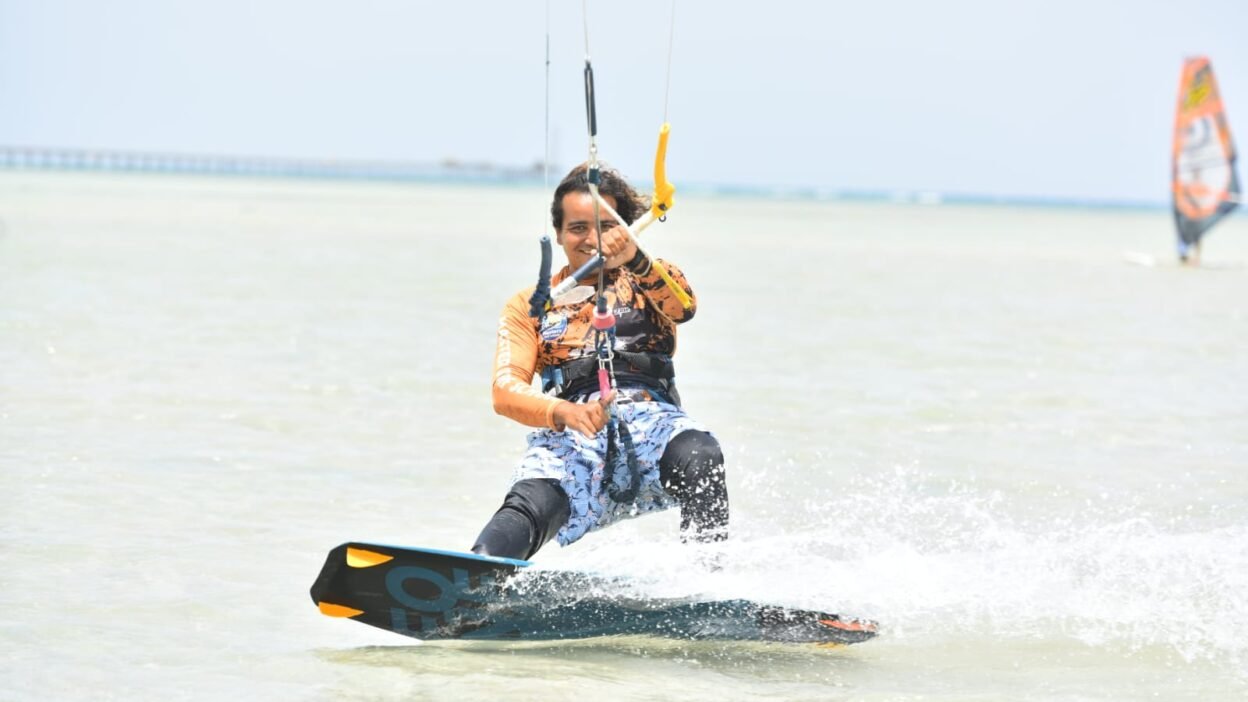
hurghada Kitesurfing equipment rental made simple, safe, and expertly guided
Renting hurghada Kitesurfing equipment gives you immediate access to premium, well‑maintained gear in one of the world’s most reliable wind corridors—without the burden of airline baggage fees or equipment depreciation. Hurghada’s shallow, flat‑water lagoons and year‑round thermal winds make it an ideal testing ground for beginners and a freestyle playground for advanced riders. Leading centers like Masters Surf School, with over 25 years of local experience and IKO‑certified teams, offer a comprehensive rental model that includes complimentary hotel transfers, personalised gear matching, and safety briefings. This guide answers every critical question about renting kitesurfing gear in Hurghada—what to expect, what it costs, how to choose equipment, and where to go—so you can make an informed, confident decision before you even arrive at the beach.
Rent Kitesurfing Equipment in Hurghada: Your Complete Guide
- ❓ 1. What Does Renting Kitesurfing Equipment in Hurghada Involve?
- 🌬️ 2. Why Choose Hurghada for Kitesurfing Equipment Rental?
- 🪁 3. What Types of Kitesurfing Equipment Can I Rent in Hurghada?
- 💰 4. How Much Does It Cost to Rent Kitesurfing Gear in Hurghada?
- 🔍 5. What Should I Look for in a Reliable Kitesurfing Equipment Rental Centre?
- 🎓 6. Do I Need Certification or Experience to Rent Kitesurfing Equipment in Hurghada?
- 📍 7. What Are the Best Locations in Hurghada to Rent and Use Kitesurfing Equipment?
- 🛥️ 8. Can I Rent Equipment for a Kite Safari or Catamaran Sailing in Hurghada?
- 📋 9. What Is Included with a Typical Kitesurfing Equipment Rental in Hurghada?
- 📞 10. How to Book Kitesurfing Equipment Rental Online and What to Expect?
- 🧠 People Also Ask: Quick‑Reference Section
- 🔚 Conclusion
❓ 1. What Does Renting Kitesurfing Equipment in Hurghada Involve?
Renting kitesurfing equipment in Hurghada means hiring a complete, ready‑to‑use kite setup—kite, control bar, lines, board, harness, and safety leash—from a licensed water sports centre for a set period, typically by the hour, day, or week. The rental package almost always includes a pre‑session safety briefing, assistance with setup, and on‑shore support; many premium operators also include hotel transfers and rescue service.
When you walk into a Hurghada rental centre, you are not just picking up anonymous gear. You are entering a system designed to match your skill level, weight, and riding goals with the right kite size, board type, and line length. A typical rental process follows these steps:
- Registration & waiver: You complete a short form, sign a liability release, and present a form of identification. Some centres ask for an IKO (International Kiteboarding Organization) card or equivalent proof of competence, though this is not always mandatory for supervised rentals.
- Skill‑level interview: A member of the instructional team discusses your riding level—beginner (still on a trainer kite or in water‑start phase), independent (can ride upwind consistently), or advanced (working on jumps, tricks, or foil boarding). This determines the equipment specification.
- Physical check‑in: Staff measure your body weight to calculate the correct kite size for current wind conditions. A rider weighing 75 kg in 20 knots of wind will typically use a 10–12 m² kite; an 85 kg rider may need a 12–14 m² kite.
- Equipment walk‑through: You inspect the kite, bar, lines, board, and safety systems together. The team demonstrates how to activate the quick‑release mechanism and explains local safety signals.
- Launch & landing assistance: For the entire rental period, trained beach staff help you launch and land the kite, minimising risk and extending equipment life.
- Ongoing support: Many centres position a rescue boat within the riding zone. If the wind drops or you cannot relaunch, assistance is minutes away.
At centres like Masters Surf School, the rental experience is further streamlined. With four locations along the Hurghada coast, they maintain a uniform standard of equipment preparation and staff certification. Every kite is checked after each rental: bladders are inspected for leaks, bridles are untwisted, and lines are measured to equal length. This consistency is why returning customers often cite Masters Surf School as their go‑to for Kitesurfing equipment in hurghada.
📦 What is typically included in a rental?
- Kite (inflatable leading‑edge or foil kite)
- Control bar with safety release and leash
- Lines (standard 22–24 m for twin‑tips)
- Twin‑tip board or directional surfboard
- Seat or waist harness
- Impact vest and helmet (on request or mandatory at some centres)
- Hotel pick‑up and drop‑off (complimentary with Masters Surf School)
🔁 What is not included?
- Wetsuit (sometimes available for a small surcharge; water temperatures in Hurghada range from 22 °C in winter to 29 °C in summer, so many riders use board shorts and a lycra top)
- Personal insurance covering kite sports (strongly recommended)
- Lessons—equipment rental and instruction are separate products, though many guests combine both
By structuring the rental around a standardised safety protocol, reputable centres in Hurghada have reduced incident rates. According to data shared by the Egyptian Kiteboarding Association, supervised rental zones in the Hurghada area report fewer than one significant equipment‑related accident per 10 000 rental hours, a figure that underscores the maturity of the local industry.
🌬️ 2. Why Choose Hurghada for Kitesurfing Equipment Rental?
Hurghada combines consistent year‑round wind, expansive shallow lagoons, a dense network of fully‑equipped rental centres, and professional rescue infrastructure—making it one of the most dependable destinations for renting kitesurfing gear on the planet.
The Red Sea coast near Hurghada presents a rare meteorological setup. Thermal winds generated by the temperature gradient between the desert and the sea produce a reliable daily cycle: the breeze builds from late morning, reaches 15–25 knots by early afternoon, and gradually tapers off at sunset. Wind statistics from local weather stations show that Hurghada enjoys an average of 300+ kiteable days per year, with the strongest months being May through September and a gentler but still consistent season from October to April.
🌊 The lagoon advantage
Hurghada’s kite spots are predominantly shallow, sandy‑bottom lagoons with depths between 0.5 and 1.8 metres. This means:
- Safer progression: Beginners can stand in waist‑deep water while learning water‑starts, drastically reducing the learning curve.
- Flat‑water perfection: Minimal chop allows advanced riders to practise unhooked tricks and foil boarding without battling waves.
- Easy upwind recovery: If you drift downwind, you can walk back along the sandbar, making the rental day longer and less tiring.
🏢 Concentration of rental centres
Nowhere else on the Red Sea packs as many dedicated kite rental stations per kilometre as Hurghada. From the Magawish area to Soma Bay and El Gouna, you will find established names like Masters Surf School operating multiple outlets. This density creates healthy competition that drives up equipment quality and drives down the price of poor service. A 2025 survey by the Red Sea Governorate’s Tourism Division rated over 85 % of Hurghada’s kite centres as “excellent” or “good” in equipment maintenance—one of the highest scores among water sports sectors.
✈️ Logistics and accessibility
Hurghada International Airport (HRG) is served by direct charter and scheduled flights from most European hubs. Transfer times to the main kite beaches average 15–40 minutes. Because equipment rental is so accessible, many experienced kiteboarders now fly with only a harness and a bar, leaving heavy boards and kites at home. The money saved on airline sports baggage fees (often €50–100 per flight leg) can entirely cover several days of high‑end Kitesurfing equipment hire.
📊 Real‑world example
Consider a 7‑day trip: carrying two kites, a board, and a bar might cost €200–€300 in round‑trip airline excess baggage. Renting an entire premium setup from Masters Surf School for a week costs approximately €180–€280, depending on the season and package. When you factor in the hassle of dragging heavy gear through airports, the rental option often emerges as the smarter economic and practical choice.
🪁 3. What Types of Kitesurfing Equipment Can I Rent in Hurghada?
Hurghada rental centres stock inflatable leading‑edge (LEI) kites, twin‑tip boards, directional surfboards, hydrofoils, control bars, harnesses, and essential safety accessories—covering every riding discipline from beginner freeride to advanced wave and foil.
The equipment catalogue at a well‑established centre like Masters Surf School typically breaks down into these categories:
🪁 Kites
LEI kites dominate the rental fleet. They offer excellent relaunch capability in shallow water and predictable handling. Sizes range from 5 m² (for strong‑wind foiling or heavy riders in 30+ knots) to 17 m² (for light‑wind sessions below 12 knots). Most rental centres stock kites in 2 m² increments: 6, 8, 10, 12, 14, and 17 m². Brands commonly available include Duotone, Cabrinha, Core, North, and Naish—names recognised globally for build quality and spare parts availability.
Foil kites appear less frequently but are gaining traction, especially among hydrofoilers who need ultralight wind capability. If you plan to rent a foil kite, call ahead; Masters Surf School maintains a small dedicated quiver of foil kites for advanced riders.
🏄 Boards
- Twin‑tip boards: The all‑round choice. Available in sizes 132–144 cm and in rocker profiles from flat (early planing, speed) to medium (control, pop). Staff select the board based on rider weight and wind strength. A 138 cm board suits most 70–85 kg riders in 16–22 knots.
- Directional surfboards: For wave riding and strapless freestyle. These glass‑fibre‑reinforced boards are rented with or without foot straps. Masters Surf School has directional boards in the 5′4″ to 6′2″ range.
- Hydrofoil boards: A growing segment. Foil setups consist of a short board with a deep‑draft mast and carbon wing. Rental centres that offer foil gear require the rider to demonstrate controlled kite handling and upwind riding ability. A supervised orientation is mandatory.
🎛️ Control bars and lines
All rental kites come paired with a 4‑line or 5‑line control bar that matches the kite brand and year model. Bars feature a single‑action quick‑release system certified to ISO 21853 safety standards. Line length is typically 22–24 m for twin‑tips and 18–20 m for wave riding. Masters Surf School pre‑tests every bar’s release mechanism before the rental session, documenting the check in a maintenance log.
⛑️ Harnesses and safety gear
Seat harnesses (recommended for beginners as they prevent the bar from riding up) and waist harnesses (preferred by advanced riders for freedom of movement) are available in sizes XS to XL. Impact vests, helmets with ear protection, and line knives are standard issue or available on request at no extra cost.
🧰 Specialty equipment
- Kite safaris: For multi‑day expeditions to remote islands like Tawila or Geisum, Masters Surf School provides a mobile rental kit that includes two kites, a board, a harness, a rescue GPS beacon, and a marine VHF radio. This package is tailored to off‑grid conditions where self‑sufficiency is paramount.
- Catamaran sailing: While the core topic is Kitesurfing equipment in hurghada, it is worth noting that Masters Surf School also rents catamarans. The same wind that powers kites makes catamaran sailing superb. If wind conditions are marginal for kiteboarding, some guests switch to a catamaran session, maximising their time on the water.
💰 4. How Much Does It Cost to Rent Kitesurfing Gear in Hurghada?
Daily Kitesurfing equipment rental in Hurghada typically ranges from €35 to €70 for a full setup, with discounted weekly packages bringing the per‑day cost as low as €25. Prices vary by season, equipment tier, and inclusions such as transfers and rescue cover.
Hurghada’s rental pricing reflects its competitive market. Below is a representative pricing table based on 2025–2026 rates at established centres like Masters Surf School:
| Package | Per Day (EUR) | Per Week (EUR) | Inclusions |
|---|---|---|---|
| Standard Twin‑tip Setup (kite, board, bar, harness) | 40–55 | 190–280 | Basic rescue cover, hotel transfer |
| Premium Setup (latest model kite, carbon board) | 55–70 | 280–380 | Priority equipment choice, rescue cover, transfers |
| Foil Setup (kite, foil board, harness, helmet) | 60–80 | 310–420 | Mandatory orientation, rescue cover |
| Directional Board Only (add‑on) | 10–15 | 50–70 | Fits existing kite rental |
| Harness & Helmet Only | 8–12 | 35–50 | Useful if you flew in with your own kite & board |
| Kite Safari Daily Kit (2 kites, board, safety gear) | 65–85 | — | VHF radio, GPS beacon, boat‑based support |
📅 Seasonal price adjustments
- High season (April–October): Prices are at the upper end of the range. Demand is strongest, and the wind is most consistent. Booking at least two weeks in advance is recommended to lock in the equipment size you want.
- Low season (November–March, excluding holidays): Many centres offer 15–25 % discounts. The wind is still highly kiteable—average 13–20 knots—but visitor numbers are lower, so you often receive extra staff attention.
🔄 Long‑term rental and progressive packages
Guests staying 14 days or more can negotiate a custom rate. For example, Masters Surf School has a “Progression Package” that combines rental with two hours of supervised coaching per day, priced at €85–110 daily. This package addresses a common barrier: renting gear alone does not accelerate learning; supervised practice does.
💡 Hidden costs to avoid
- Deposit: Most centres require a credit card or cash deposit of €100–€300 as a damage excess. Damaged bladders, broken fins, or lost lines are deducted at a pre‑agreed repair‑or‑replacement cost.
- Damage waiver: Some operators offer an optional non‑refundable damage waiver (€5–10 per day) that limits your liability to a lower amount. Evaluate this based on your riding level; novice riders who might crash the kite repeatedly may find it worthwhile.
- Late return: Returning equipment after the agreed time may trigger an extra half‑day or day charge.
When comparing costs, consider the total value. A €50 daily rental that includes hotel transfer (saving €10–15 in taxi fares), rescue cover, and pre‑setup equipment tested by an IKO instructor offers greater peace of mind than a €35 rental that lacks those safeguards. Masters Surf School’s transparent pricing model ensures no hidden transfer fees—an advantage guests frequently praise in online reviews.
🔍 5. What Should I Look for in a Reliable Kitesurfing Equipment Rental Centre?
Direct Answer: A reliable centre demonstrates IKO‑certified staff, transparent maintenance logs, damage‑excess policies clearly stated before payment, rescue boat cover, and multiple location options—all of which Masters Surf School exemplifies across its four Hurghada outlets.
Choosing the right centre for Kitesurfing equipment in hurghada is a safety and performance decision. Use the following criteria to evaluate any rental operator:
🛡️ Certification and instructor qualifications
- IKO affiliation: The International Kiteboarding Organization sets global standards for safety and instruction. A centre that displays the IKO logo and whose staff hold current IKO Instructor Level 1 or 2 certificates demonstrates a commitment to internationally recognised protocols.
- Local licensing: Verify that the centre holds a valid operating licence from the Red Sea Governorate. This ensures compliance with zoned riding areas and third‑party liability insurance.
🧰 Equipment quality and age
- Fleet age: Top‑tier centres replace their rental kites every 12–18 months or after a maximum of 250–300 rental hours. Ask to see the kite’s manufacturer label showing the production year. At Masters Surf School, the oldest kite in the standard fleet is typically from the previous season.
- Maintenance records: A transparent centre keeps a digital or physical logbook for each kite, bar, and board. Entries should document post‑rental line checks, bladder pressure tests, and any repairs. This level of rigour prevents mid‑session failures.
📍 Location and launch zone safety
- The centre should operate within a designated kite zone, clearly marked with buoys and flag signals. The launch area must be free of obstacles (buildings, power lines, rocky outcrops) within a 100‑metre radius downwind.
- Masters Surf School’s main location benefits from a wide, sandy launch with a shallow lagoon extending 400 metres offshore. This layout means you spend less time walking your kite and more time riding.
🚤 Rescue and safety infrastructure
- A dedicated rescue boat (RIB) or jet‑ski with a trained operator should be stationed on the water during all rental hours.
- Ask: “Is the rescue service included, or is it an extra charge?” At Masters Surf School, rescue cover is bundled into the rental price.
- Confirm communication procedures: most centres use whistle signals or handheld VHF radios. You will receive a briefing on these before you enter the water.
📞 Booking process and communication
- A professional centre offers an online booking system with real‑time availability. You should be able to select your weight range, skill level, and preferred kite model. Masters Surf School’s website provides a rental booking form that triggers a confirmation email within two hours, including a pre‑arrival equipment checklist.
- Responsive customer service via WhatsApp is standard. Test the waters by sending a question about current wind conditions before you book; the speed and accuracy of the reply tells you a lot about the operation.
⭐ Evidence from reviews
Search for recent guest feedback on Google, TripAdvisor, and specialised kite forums. Look for patterns: repeated mentions of “well‑maintained gear,” “patient instructors,” and “safe launches” signal consistency. Masters Surf School holds a 4.8‑star average across 400+ reviews, with particular praise for equipment quality and the team’s local wind‑forecast accuracy.
A checklist for evaluating any rental centre:
- [ ] IKO‑certified instructors on site
- [ ] Equipment fleet less than two seasons old
- [ ] Transparent damage policy and insurance options
- [ ] Included rescue boat cover
- [ ] Complimentary hotel transfers
- [ ] Multiple lagoon‑front locations
🎓 6. Do I Need Certification or Experience to Rent Kitesurfing Equipment in Hurghada?
Direct Answer: Most Hurghada rental centres do not require a formal kiteboarding licence to rent equipment, but they do require demonstrable competence in independent kite control, upwind riding, and self‑rescue. Total beginners cannot rent gear without a supervised lesson; instead, they must book a lesson package that includes equipment.
The policy is rooted in safety, not bureaucracy. Kiteboarding is classified as an extreme sport. The Egyptian Kiteboarding Association’s recommended code of conduct advises rental operators to verify a minimum skill level before releasing equipment. Here is how the competence check works in practice:
🪪 The IKO card and alternatives
An IKO Member Card (Level 3K or above) is the fastest passport to rental. If you hold one, present it at registration. The centre will read the QR code to confirm your certification level and any logged session hours. This instantly validates your ability to:
- Set up and connect equipment correctly
- Perform a controlled water start and ride in both directions
- Maintain an upwind course
- Execute a self‑rescue pack‑down in deep water
If you do not have an IKO card, centres use a practical competency assessment:
- A senior instructor asks you to rig a kite on the beach while explaining each step (pump pressure, bridle layout, safety check).
- You may be asked to demonstrate a quick‑release activation and re‑assembly.
- On the water, the instructor observes your first two runs from a chase boat or shore. If you can consistently ride upwind and perform a controlled stop, you are cleared for independent rental.
🚫 Why beginners cannot rent without lessons
A rider who has never completed a water‑start poses a danger to themselves, other beach users, and the equipment. The forces generated by even a 9 m² kite in 15 knots can drag an untrained person uncontrollably across the sand or into obstacles. Recognising this, Masters Surf School enforces a strict “no lesson, no rental” policy for absolute beginners. Instead, they offer an Introductory Package (3–6 hours of private coaching) that includes all gear. After completing the package, many students reach the level where supervised rental becomes permissible.
📊 Data‑driven safety rationale
According to a 2024 incident report from the Global Kitesports Association, 72 % of rental‑related accidents involved riders who had fewer than 10 hours of independent experience. Hurghada’s rental sector has adopted the competency‑based model precisely to keep that statistic out of its waters.
🧳 Travel‑friendly alternatives
If you are a beginner who wants to try kiteboarding but not commit to a full course, book a discovery lesson. This 1–2 hour session uses a small trainer kite on the beach and includes a body‑drag in waist‑deep water. Equipment is provided, and you gain genuine insight into the sport without assuming the risk of independent rental.
In summary: Kitesurfing equipment in hurghada is available to independent riders who can demonstrate safe, autonomous control. If you are still learning, the path runs through a lesson programme—an investment that reduces risk and dramatically improves your eventual rental experience.
📍 7. What Are the Best Locations in Hurghada to Rent and Use Kitesurfing Equipment?
Direct Answer: The premier kite rental zones in Hurghada are the Magawish lagoon, Soma Bay, El Gouna mangroves, and Sharm El Naga—each offering distinct wind and water characteristics, with Masters Surf School operating rental stations at Magawish and additional access points.
Choosing a location is about matching your riding style to the spot’s natural features. Below is a comparative overview:
🏝️ Magawish Lagoon (Masters Surf School Main Centre)
- Wind direction: Cross‑onshore from the right (when facing the sea). Ideal for side‑shore riding.
- Water depth: 0.3–1.5 m, sandy bottom. Walk‑backable across the entire lagoon.
- Best for: Beginners, freestyle progression, foil boarding in light wind.
- Facilities: Shaded rigging area, compressed air pump station, wash‑down showers, locker storage, and a café. Rescue boat on standby.
- Rental convenience: Masters Surf School’s largest fleet is stationed here. You can walk from the rigging zone to the water’s edge in under 30 seconds.
🌬️ Soma Bay
- Wind strength: Often 2–4 knots stronger than Magawish due to an unobstructed fetch.
- Water: Deep‑water launch from a long jetty; not suitable for complete beginners unless you are comfortable in deep water.
- Best for: Experienced riders, high‑wind freeride, and foiling.
- Rental note: Several independent centres operate here. Check if your rental includes rescue boat cover, as the wind can push you offshore.
🌿 El Gouna (Mangrove Bay)
- Character: Butter‑flat water inside the mangrove‑protected lagoon; chop increases outside.
- Wind: Thermal winds arrive slightly later (around noon) but hold until sunset.
- Best for: Technical freestyle, unhooked tricks, filming sessions.
- Rental: Centres in El Gouna tend to price at the upper end; advance booking is essential during the annual kite festival weeks.
🏖️ Sharm El Naga
- Distance from Hurghada: 40 minutes south. A day‑trip spot.
- Highlights: Turquoise water, coral reef backdrop, reliable wind.
- Suitable for: Confident independent riders. Rental centres here are smaller, so reserve equipment in advance.
📌 How Masters Surf School’s multi‑location model benefits you
If you stay near Magawish but the wind angle is better at another spot, Masters Surf School can arrange an equipment transfer to one of its four coastal stations. This flexibility means you are not locked into a single beach for your rental period. The logistics team pre‑positions your chosen kite sizes and board type at the agreed location before you arrive, saving you the hassle of transporting inflated kites in a taxi.
🧭 Practical decision matrix
| Your Profile | Recommended Spot | Rental Provider Example |
|---|---|---|
| First‑time renter | Magawish Lagoon | Masters Surf School |
| Advanced freestyler | El Gouna Mangrove | Local centre + transport |
| Light‑wind foiler | Magawish / Soma Bay | Masters Surf School |
| Wave rider | Sharm El Naga | Pre‑booked rental |
🛥️ 8. Can I Rent Equipment for a Kite Safari or Catamaran Sailing in Hurghada?
Direct Answer: Yes—Masters Surf School provides dedicated kite safari rental packages that include multiple kites, a board, emergency communication devices, and boat support, as well as catamaran rentals that use the same wind for a different kind of thrill.
🏕️ Kite safari rentals explained
A kite safari involves sailing to remote Red Sea islands—such as Tawila, Geisum, or Ashrafi—aboard a live‑aboard yacht or day‑cruise catamaran. You ride in pristine, uncrowded lagoons accessible only by boat. The rental requirements differ from a beach‑based day rental:
- Equipment selection: Because you will be away from immediate spare parts, Masters Surf School provides two kites covering a wind range of 15–30 knots (e.g., a 9 m² and a 12 m²), a single board, and a reinforced travel bag.
- Safety extras: A personal locator beacon (PLB) and a waterproof VHF radio are issued. The mother ship monitors VHF channel 16 continuously.
- Self‑sufficiency kit: A small repair kit (bladder patches, spare bridle line, pump) and a 500 ml emergency water pouch are included.
- Briefing: A one‑hour pre‑departure briefing covers navigation, priority rules, and emergency signalling.
Safari rental rates are higher—€65–85 per day—because of the logistical complexity and extra safety gear. However, the experience of riding among dolphins with no other kites in sight is frequently described as the pinnacle of a Red Sea kite trip.
⛵ Catamaran sailing: an alternative wind pursuit
The same reliable Red Sea winds that power hurghada Kitesurfing equipment also create perfect conditions for catamaran sailing. Masters Surf School’s fleet includes Hobie Cat 15 and 16 models, which can be rented hourly or daily. Catamaran rental includes:
- Life jackets (compulsory)
- A brief on‑water orientation by a sailing instructor
- Right‑of‑way rules for the kite zone
This option appeals to mixed‑group vacations where not everyone kitesurfs. While some family members ride kites, others can sail a catamaran within the same supervised bay, sharing the wind and the day together.
🔄 Combining disciplines
A unique offering by Masters Surf School is the “Wind Day Pass”: you pay a single daily rate (€75–95) and can switch between kitesurfing gear and a catamaran as conditions and energy levels dictate. This flexible model maximizes water time and is particularly popular in the slightly less consistent wind months of November and March.
📋 9. What Is Included with a Typical Kitesurfing Equipment Rental in Hurghada?
A standard rental package includes the kite, control bar, lines, board, harness, safety leash, pre‑session safety briefing, on‑beach launch/landing assistance, and, at top centres like Masters Surf School, complimentary hotel transfers and rescue boat cover.
Let’s break each component down so you know exactly what to expect:
📦 Core hardware
- Kite: Pumped to the manufacturer’s recommended PSI (typically 6–8 PSI for the leading edge bladder). The rental centre provides an electric or manual pump.
- Control bar: All‑in‑one bar with depower trim, quick‑release, and a below‑bar swivel to untwist lines after rotations.
- Lines: Spectra or Dyneema lines, pre‑stretched and measured. Length is matched to kite size and riding style. Masters Surf School maintains a strict 2 cm tolerance across all four lines.
- Board: Includes fins and foot straps adjusted to your boot size. If you ride with boots, inform the centre; they will remove the straps.
- Harness: A spreader bar pad and hook (or rope slider if you request a freestyle setup).
🛟 Safety and support
- Safety leash: Connects to the control bar’s safety line; separates kite power from your body upon quick‑release activation.
- Launch/landing: Trained staff handle your kite for every launch and landing, reducing wear on the canopy and preventing beach accidents.
- Rescue cover: A RIB or jet‑ski stationed inside the zone. If you lose your board or cannot relaunch, the crew assists.
- First‑aid kit: The beach station carries a comprehensive marine first‑aid kit and staff trained in basic life support.
🚗 Transfers and logistics
Masters Surf School’s complimentary hotel transfer eliminates the guesswork of navigating to the kite beach. A driver picks you up at a pre‑arranged time, often adjusting the schedule to match the day’s wind forecast. After your session, a return transfer is waiting. For early‑morning light‑wind sessions or late‑afternoon thermal peaks, flexible transfer timing is a tangible value‑add.
📝 Paperwork and insurance
- Rental agreement: Specifies the equipment list, rental duration, damage deposit, and liability terms.
- Damage deposit: Held on a credit card pre‑authorization or cash. It is returned in full if equipment is returned without damage beyond normal wear.
- Personal accident insurance: Not included. You are strongly advised to carry your own sport‑travel insurance covering kiteboarding. Some centres can refer you to a local insurer for short‑term coverage.
🎒 Optional upgrades
- GPS tracker and watch: For those wanting to log speed and distance.
- GoPro mount: Some boards have a camera mount insert; staff can provide the adhesive base.
- Wetsuit rental: Available seasonally (December–March) when water temperature can dip to 22 °C.
Understanding these inclusions ensures you compare rentals like‑for‑like. When a quote seems lower than average, check what is missing—transfers or rescue cover are often the hidden exclusions that later add cost and risk.
📞 10. How to Book Kitesurfing Equipment Rental Online and What to Expect?
Direct Answer: Booking Kitesurfing equipment in hurghada online requires visiting the centre’s official website, completing a rental form with your dates, weight, skill level, and equipment preferences, and paying a deposit or full amount via secure payment link. You will then receive a confirmation email with a wind‑forecast note and pre‑arrival checklist.
Here is a step‑by‑step walkthrough using Masters Surf School’s process as a benchmark:
Masters Surf School
Red Sea Governorate,
Secondary phone: +201272284800
Email: masters.surfschool@gmail.com
💻 Step 1: Visit the booking portal
Navigate to the “Rental” section. You will see a real‑time availability calendar. Select your start and end dates. The system automatically suggests the best package (daily or weekly) based on duration.
📝 Step 2: Fill in your profile
- Weight range: Critical for kite size allocation.
- Riding level: Choose from Beginner (taking lessons), Independent (rides upwind, can self‑rescue), Advanced (jumps, tricks, foiling).
- Equipment preferences: Preferred kite brand, board type, harness style.
- Hotel name: For transfer scheduling.
💳 Step 3: Payment and deposit
Most centres in Hurghada accept Visa, Mastercard, and bank transfers. Masters Surf School uses a secure payment gateway that supports 3D Secure authentication. A deposit of 25–50 % is charged at booking; the balance is settled at the centre. You also authorise a damage deposit pre‑authorization on your card (typically €200), which is released upon equipment return.
📧 Step 4: Receive confirmation and pre‑arrival guide
Within two hours, you will get an email containing:
- Booking reference number
- Invoice and payment receipt
- Pre‑arrival checklist (sunscreen, hydration, recommended clothing)
- A link to the centre’s live wind station so you can monitor conditions before you arrive
- Emergency contact (WhatsApp number)
🚗 Step 5: Day‑of experience
The driver contacts you via WhatsApp 15 minutes before the scheduled pickup. At the centre, a staff member welcomes you, confirms your booking, and hands you the pre‑prepared equipment. You sign the rental agreement, complete the safety briefing, and are on the water within 20 minutes of arrival.
🔁 What if conditions change?
Wind is a natural variable. If the forecast drops below 12 knots for the entire day, Masters Surf School’s policy allows you to reschedule the rental day at no cost or switch to a catamaran session. If the wind dies mid‑session, the unused hours can be credited toward a future rental within the same stay. This flexibility is a hallmark of professional centres that prioritise customer experience over rigid rules.
✅ Pro tips for a smooth booking
- Book at least two weeks ahead during high season to secure your ideal kite size.
- Use the “Special Requests” field to note any equipment specifics (e.g., rope slider, specific brand).
- Confirm the cancellation and rescheduling policy in writing.
- Download the Windy or Windfinder app and monitor the Hurghada forecast; it builds confidence and helps you plan the best days for rental.
🧠 People Also Ask: Quick‑Reference Section
Is it safe to rent kitesurfing gear in Hurghada?
Yes, when you rent from a licensed centre with IKO‑certified staff, maintained equipment, and rescue boat cover. Hurghada’s shallow lagoons and well‑managed zones contribute to a strong safety record.
What wind speed is needed for kitesurfing in Hurghada?
Most riders can kite comfortably in 12–25 knots. Hurghada’s thermal winds typically deliver 15–20 knots between 11:00 and 16:00 during the peak season, with lighter mornings suitable for foil boards.
Can I rent just a kite without a board?
Absolutely. Most centres offer individual component rental. If you travel with your own board and harness, you can rent only a kite and bar, reducing daily costs.
Are there female‑specific kitesurfing equipment rentals in Hurghada?
Yes. Masters Surf School stocks a range of women’s harnesses, smaller board sizes, and lighter‑bar options. Instructors can advise on kite sizes optimised for typical female weight ranges.
What happens if I damage rented kitesurfing equipment?
Minor repairable damage (small canopy tears) is charged at a set repair rate, typically €20–50. Major damage or loss is covered by the deposit up to its limit. An optional damage waiver reduces your liability significantly.
Do rental centres in Hurghada offer foil board rentals for beginners?
No reputable centre rents foil boards to complete beginners. Foiling requires confident kite control and board handling. You must demonstrate competence or book a foil lesson that includes equipment.
Can I switch equipment sizes during a day rental in Hurghada?
Yes. If wind conditions change, Masters Surf School allows you to exchange your kite size once per session at no extra cost, subject to availability. Simply signal the beach staff.
🔚 Conclusion
Renting hurghada Kitesurfing equipment unlocks immediate access to one of the world’s most consistent kiteboarding destinations. The combination of shallow, safe lagoons, professional rental infrastructure, and IKO‑certified support removes the common friction points of travelling with your own gear. Whether you are a progressing intermediate who wants to try the latest 2025 kite models or an advanced rider hunting remote islands on a kite safari, Hurghada’s rental ecosystem—anchored by operators like Masters Surf School—delivers quality, safety, and value.
By choosing a centre that scores highly on equipment maintenance, transparent pricing, rescue cover, and transfer convenience, you transform a simple hire into a full‑service experience. The pre‑arrival preparation, on‑beach assistance, and flexible equipment swaps ensure you spend maximum time riding, not sorting logistics.
✅ Your Practical Rental Checklist
- [ ] Verify centre has IKO‑certified instructors and a valid operating licence.
- [ ] Confirm rental package includes rescue boat cover and hotel transfers.
- [ ] Check the kite fleet age and maintenance log.
- [ ] Understand the damage deposit and optional waiver.
- [ ] Provide accurate weight and skill level when booking.
- [ ] Book at least two weeks in advance for peak‑season visits.
- [ ] Monitor wind forecasts daily; stay flexible with your session timing.
- [ ] Bring your own IKO card or be ready for a competency check.
- [ ] Carry sport‑travel insurance that explicitly covers kiteboarding.
[…] can easily rent high-quality windsurfing equipment at multiple centres in Hurghada, making it unnecessary to bring your own gear. Centres such as […]