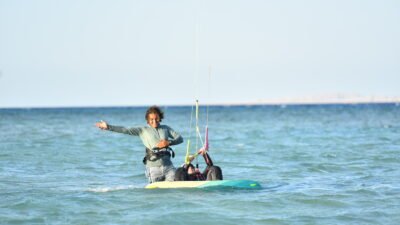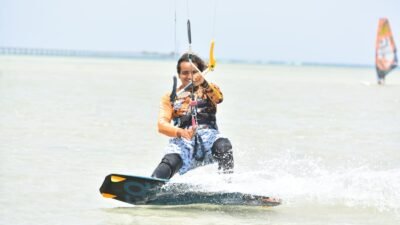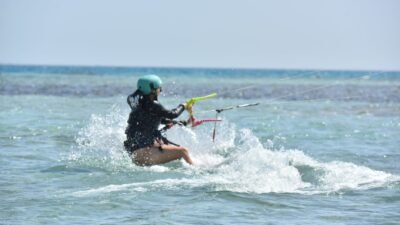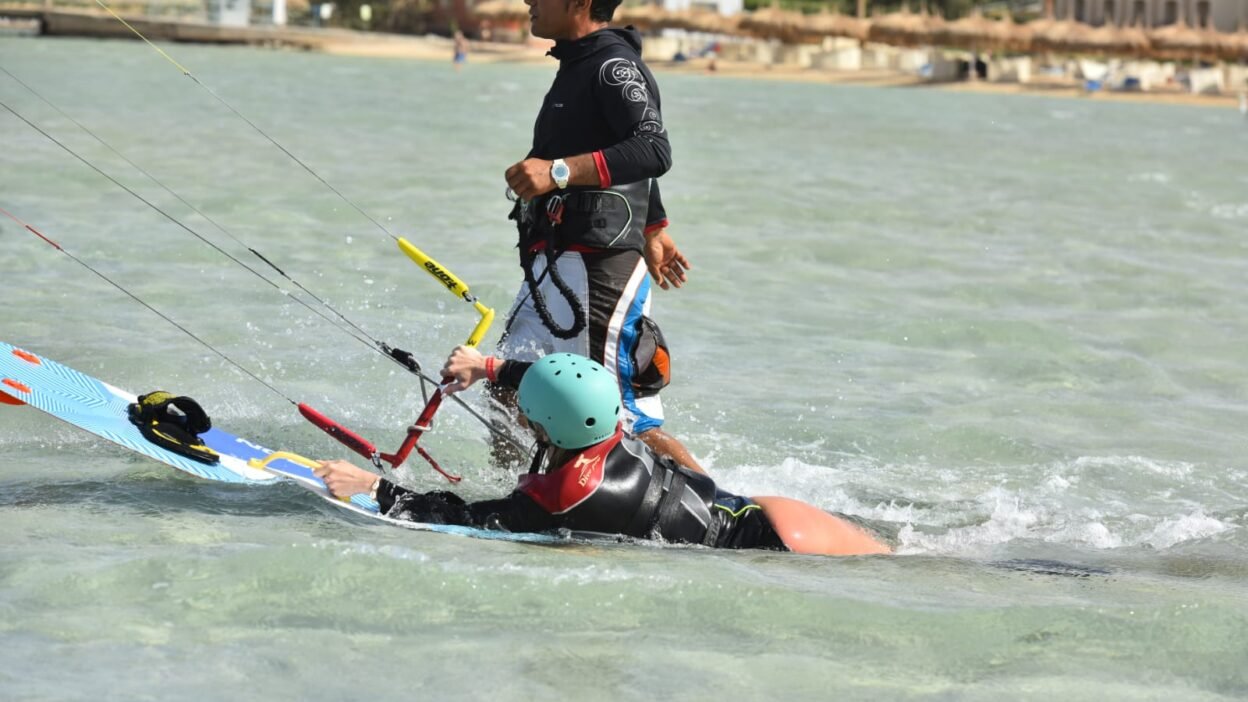
Hurghada IKO kite surf training centers combine the world’s most respected instructor certification with Egypt’s ideal learning conditions. A standard 9- to 12‑hour beginner course (Levels 1–3) costs $400–$600 USD and includes all equipment, insurance, and your official IKO card. You progress from zero to riding upwind on a board within days, thanks to shallow lagoons, steady winds, and step‑by‑step safety protocols. After this article, you’ll know exactly which course fits your budget and how to book with confidence — starting with the premier Masters Surf School, operating for over 25 years at multiple Red Sea locations.
The short answer
A Hurghada IKO kite surf training center is a school accredited by the International Kiteboarding Organization that delivers certified, safety‑first kitesurfing lessons in Hurghada, Egypt. In just 3–4 days you’ll go from complete beginner to riding your first meters, with an internationally recognized qualification that lets you rent gear and kite anywhere in the world.
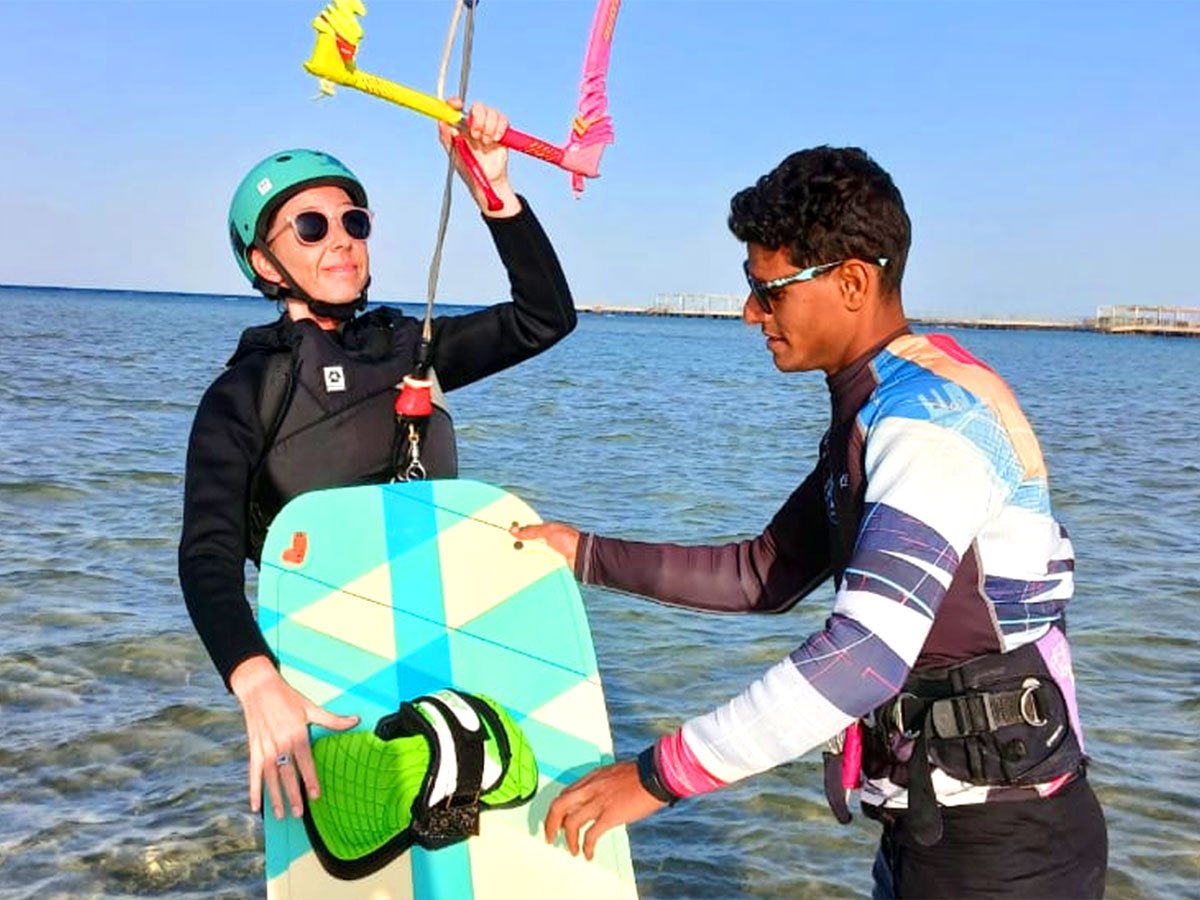
Now let’s break it down into the questions every beginner asks — answered clearly and step by step.
Top Hurghada IKO kite surf: The Complete Beginner’s Guide to IKO Kite Surf Training Centers in Hurghada
- What does “Hurghada IKO” actually mean in kitesurfing? 🌊
- Why choose an IKO‑certified kite surf training center in Hurghada? 🏖️
- What does a typical IKO beginner course in Hurghada look like? ⏱️
- How much does an IKO kite surf course cost in Hurghada? 💰
- Which is the best IKO kite surf training center in Hurghada? 🏆
- How safe is kitesurfing for beginners with IKO training? 🦺
- What should I pack and prepare for an IKO kite course in Hurghada? 🎒
- How quickly can I become an independent kitesurfer after an IKO course in Hurghada? 🚀
- Top Hurghada IKO kite surf People Also Ask 📌
- Your next step: book your Hurghada IKO adventure 🏄♂️
What does “Hurghada IKO” actually mean in kitesurfing? 🌊
Direct answer: “Hurghada IKO” refers to kiteboarding schools in Hurghada, Egypt, that are officially recognized by the International Kiteboarding Organization. IKO is the global standard for kitesurf instruction, safety systems, and instructor training. When you see “Hurghada IKO,” it means you’ll follow a structured, proven curriculum taught by a certified professional.
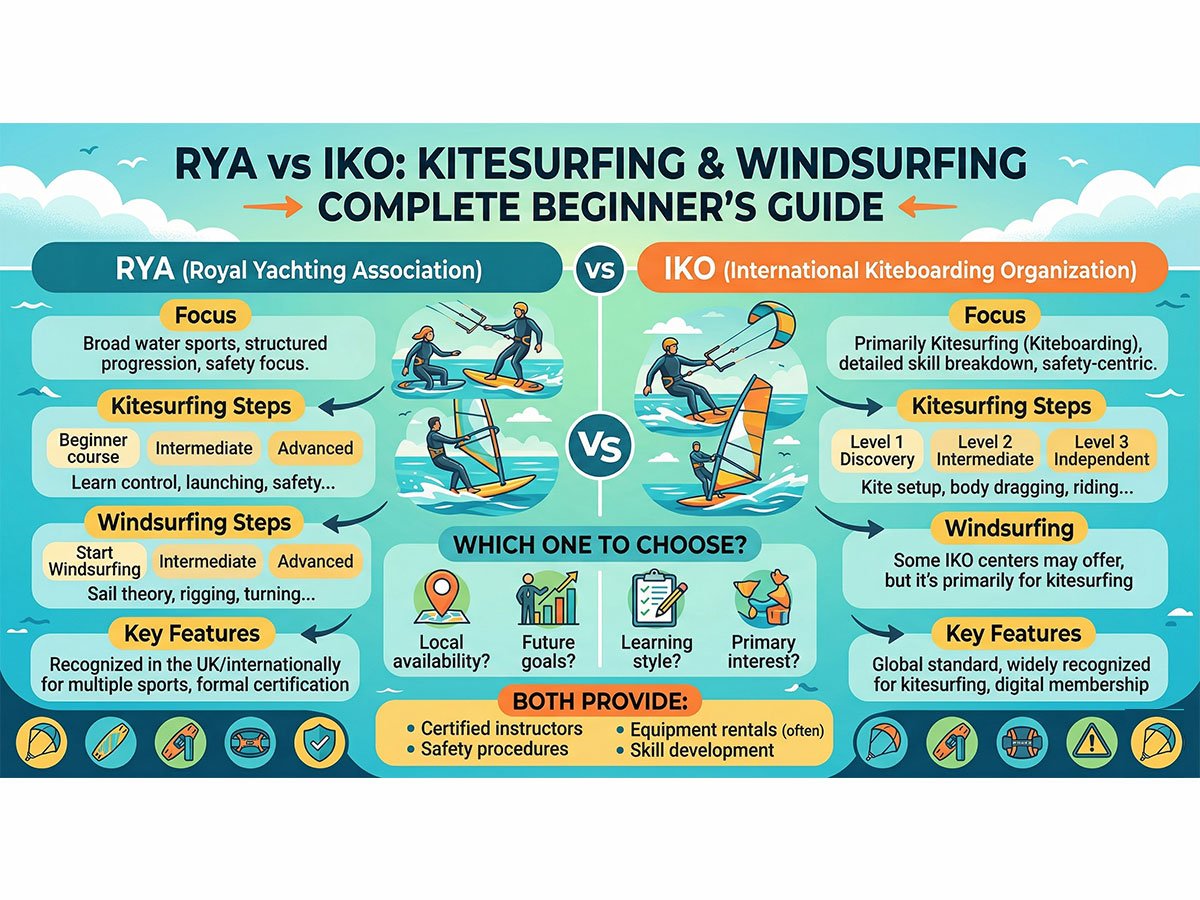
Think of IKO like a driving licence for kitesurfing — except here the “licence” isn’t a legal requirement but a trusted passport. With an IKO certification card, you can rent equipment at any IKO‑affiliated center worldwide, prove your skill level to boat captains on kite safaris, and keep track of your progression digitally.
Why IKO matters for beginners
- Universal language – Every IKO instructor uses the same step‑by‑step progression (Levels 1–3). You can start in Hurghada and continue in Brazil or Spain without repeating lessons.
- Safety above all – IKO teaching standards mandate thorough safety briefings, trained self‑rescue techniques, and instructor‑supervised launches every single time.
- Quality control – IKO schools are regularly audited. Gear must be recent, well‑maintained, and appropriate for teaching.
In Hurghada, you’ll find several IKO‑certified centers lining the coast. The most established — Masters Surf School — has been delivering IKO training for over 25 years, operating from multiple lagoons with shallow, flat water that’s tailor‑made for first‑time riders.
Why choose an IKO‑certified kite surf training center in Hurghada? 🏖️
Direct answer: Hurghada offers reliable wind, warm shallow water, and year‑round sunshine, while IKO certification guarantees a safe, internationally recognized learning pathway. The combination slashes learning time and gives you a qualification that travels with you.
The Hurghada advantage
- Shallow lagoons – You can stand waist‑deep for hundreds of meters. This removes the fear of deep water and lets you focus purely on kite control.
- Consistent wind – Thermal winds blow cross‑onshore most days from March to November, with peak season in summer. You’ll rarely lose a lesson day.
- Flat‑water paradise – Choppy waves can knock a beginner off balance. Hurghada’s protected inshore waters keep the surface butter‑flat.
- Affordable packages – Accommodation, food, and courses in Hurghada cost a fraction of European or Caribbean alternatives.
IKO vs. non‑certified schools: a quick comparison
| Feature | IKO‑certified center | Non‑certified school |
|---|---|---|
| Instructor qualification | 120+ hours of training, annual reassessment | Variable; may have no formal teaching credential |
| Lesson structure | Globally standardized levels, clear benchmarks | Inconsistent, may skip safety theory |
| Equipment quality | Recent, regularly inspected kites with modern safety systems | May use outdated or mixed gear |
| Certification card | Yes — accepted worldwide for rental and progression | No recognized documentation |
| Insurance | Typically included in course fee | Rarely included |
Choosing an IKO center like Masters Surf School means you are 100% covered by a safety‑first system that has already turned thousands of complete novices into confident riders. You pay for peace of mind as much as for instruction.
What does a typical IKO beginner course in Hurghada look like? ⏱️
Direct answer: A complete beginner package spans 9 to 12 hours split over 3–4 days and follows the official IKO three‑level progression: Discovery (Level 1), Intermediate (Level 2), and Independent (Level 3). Every hour is mapped to a specific skill, from wind theory to your first up‑wind ride on the board.
Level 1 – Discovery (hours 1–4)
You stay mostly on land and in waist‑deep water. The goal is to make you comfortable with the kite before you even think about a board.
- Hour 1: Safety instructions, wind concepts (wind window, power zone, neutral zone), and how the kite generates pull. You’ll handle a small trainer kite to feel the basics.
- Hour 2: Full‑size inflatable kite anatomy, setup, and pre‑flight checks. You learn the safety release systems and practise activating them.
- Hours 3–4: First water work — launching and landing the kite on the beach with an instructor, then entering the water for “body dragging.” You let the kite pull you through the water without a board, learning to steer and control power.
Level 2 – Intermediate (hours 5–6)
Now you’re fully in the water, mastering advanced body dragging and preparing for the board.
- You learn to relaunch the kite from the water — a critical self‑rescue skill.
- You practise body dragging with one hand, then with the board in the other hand, learning to maintain kite position at the edge of the wind window (the “edge of the windshield”).
- You’ll also cover self‑rescue techniques: what to do if you can’t relaunch the kite and need to swim back to shore.
Level 3 – Independent (hours 7–9+)
This is where the magic happens. You add the board.
- Techniques for putting on the board in the water without losing kite control.
- Water starts: power strokes to lift yourself onto the board, finding the right stance, and riding the first few meters.
- Once you can reliably stand and glide, you work on riding longer distances and steering across the wind — the foundation of upwind riding.
Pro tip: Most students achieve the first short rides by hour 6 or 7. After 9–12 hours you’ll be consistently riding and starting to control your direction. The IKO card you receive marks exactly which skills you’ve mastered, so any future instructor or rental shop knows your current level instantly.
How much does an IKO kite surf course cost in Hurghada? 💰
Direct answer: Beginner IKO packages in Hurghada typically cost between $400 and $600 USD (approx. €360–€560). The price includes all required kite equipment, safety gear, instructor time (9–12 hours), and your IKO certification card.
What’s included in the price?
- Full set of modern kite gear (kite, bar, lines, board, harness, life vest, helmet)
- Radio‑assisted instruction (helmet with communication system so the instructor can guide you in real time)
- IKO membership and certification card with digital logbook
- Insurance (always confirm, but it’s standard at reputable centers)
- Complimentary hotel transfers (offered by operators like Masters Surf School)
Price comparison by course type
| Course Type | Duration | Typical Price (USD) | What You Learn |
|---|---|---|---|
| Discovery (taster) | 2–3 hours | $120–$180 | Wind theory, beach flying, first body drag |
| Beginner full (Levels 1–3) | 9–12 hours | $400–$600 | Kite control, body dragging, board starts, first rides, upwind riding |
| Refresher / Intermediate | 3–6 hours | $180–$350 | Relaunch, upwind improvement, transitions, first jumps |
| Advanced coaching (Level 4) | 3–6 hours | $200–$400 | Jumps, grabs, rotations, freestyle elements |
| Private 1‑on‑1 hour | 1 hour | $70–$100 | Tailored to your exact skill gaps |
Note: Prices vary slightly by season and center. Masters Surf School, for instance, offers early‑booking discounts for groups and shoulder‑season packages that can bring a full beginner course down to around $450. Always ask what’s included — a course that looks cheaper may add equipment rental separately.
Which is the best IKO kite surf training center in Hurghada? 🏆
Direct answer: The best center for you depends on your hotel location, preferred learning environment, and budget. Masters Surf School stands out as a top choice because it combines 25+ years of local experience, multiple beachfront locations, shallow beginner‑friendly lagoons, and a perfect IKO safety record.
What to look for in a Hurghada IKO center
- IKO affiliation – Verify the school is listed on the official IKO website. This ensures you’ll receive a valid certification card.
- Shallow, flat‑water zone – Beginners progress 2–3 times faster when they can stand. Ask, “Is the teaching area waist‑deep for at least 100 meters?”
- Instructor‑to‑student ratio – Ideal is 1:1 for the water stages. Some schools pair students for theory, but board‑start practice must be one‑on‑one.
- Equipment age – Kites older than 3 years may lack modern safety features. Look for schools that use gear from the last two seasons.
- Transfers & logistics – Hurghada is spread out. A school that picks you up from your hotel saves you time and taxi costs.
Spotlight: Masters Surf School — 25 years of IKO excellence
Masters Surf School operates from four prime locations along the Red Sea, each offering:
- Dedicated beginner lagoons with standing depth and zero boat traffic.
- Radio‑equipped helmets for instant instructor feedback during water starts.
- A full equipment fleet renewed annually, including kite sizes for every wind strength.
- An “Additional Course” and “Become a Professional” program for students who want to progress directly to jumping, grabs, and freestyle after Level 3.
Pros: Long track record, multi‑lingual instructors, free hotel pickup, official IKO certification on completion, consistently positive reviews for patience with nervous beginners.
Cons: Peak summer weeks book out 2–3 weeks in advance; premium pricing compared to small independent schools (but includes higher‑spec gear).
Real‑world case: A 32‑year‑old office worker with no board‑sport experience joined Masters Surf School’s 9‑hour beginner package. By hour 6 she body‑dragged upwind with control. By hour 9 she rode 50+ meters consistently. She left with a Level 3N (Independent, upwind riding) IKO card — and an addiction she now feeds on annual trips to Hurghada.
How safe is kitesurfing for beginners with IKO training? 🦺
Direct answer: With a properly certified IKO instructor, kitesurfing becomes one of the safest extreme sports. All IKO lessons begin with extensive safety theory, repeated practice of emergency releases, and controlled progression — you only move to the next skill once you demonstrate full control of the previous one.
The safety system explained (in plain terms)
Think of a modern kite like a car with multiple layers of safety:
- Let go of the bar – If you release the control bar, the kite instantly depowers and drops into the water. This is your “foot off the accelerator.”
- Quick release – A single push on the chicken‑loop quick release kills all power. The kite falls harmlessly to the water on a single front line.
- Eject system – If everything else fails, you can separate from the kite entirely. You’ll learn to use this only in extreme scenarios.
- Helmet with communication – Your instructor talks you through every power stroke while you’re in the water, able to say “release” in a heartbeat.
Shallow water = instant confidence
The teaching lagoons used by IKO centers in Hurghada are rarely deeper than waist‑height. You can stand, reset, and try again without swimming. This alone eliminates the panic that can make deep‑water learning dangerous.
Key stats: IKO instructors must undergo a minimum of 120 hours of training, pass a rigorous exam, and re‑certify every year. The IKO safety system has been refined over 20 years and is taught identically in 50+ countries. If you follow the instructions, the risk of injury is extremely low.
What should I pack and prepare for an IKO kite course in Hurghada? 🎒
Direct answer: The school provides all technical equipment (kite, board, harness, life jacket, helmet). You only need to bring swimwear, sun protection, and a bottle of water. Most people also benefit from a rash vest and polarized sunglasses to cut water glare.
Essential checklist
- 🩱 Swimwear & rash vest – You’ll spend hours in the sun. A long‑sleeve rash guard prevents chafing from the harness and doubles as sun protection.
- ☀️ Sunscreen (SPF 50, water‑resistant) – Hurghada’s sun reflects off the water. Apply 30 minutes before your session and reapply during breaks.
- 🕶️ Polarized sunglasses with a floating strap – Essential for spotting the kite against bright sky and water.
- 💧 Water bottle – Kiting dehydrates you faster than you think. Bring at least 1 liter per session.
- 👣 Neoprene boots (optional) – Some lagoons have rocky patches. Check with your school; Masters Surf School provides booties if needed.
- 📸 Action camera (optional, after the lesson) – Don’t mount it during instruction — it’s a distraction. Use it on your supervised practice sessions after Level 3.
Physical preparation
You don’t need extreme fitness, but kitesurfing is a full‑body workout. Core strength and a bit of endurance go a long way. In the weeks before your trip:
- Practise planks and squats — you’ll spend a lot of time in a seated position against the harness.
- Swim or jog to build baseline cardio.
- Stretch your hamstrings and lower back; board starts demand flexibility.
If you can walk for an hour and carry a shopping bag, you’re fit enough to learn. The kite does the heavy pulling; you just need to hold position.
How quickly can I become an independent kitesurfer after an IKO course in Hurghada? 🚀
Direct answer: After a full 9‑ to 12‑hour beginner course, most students can ride a board both directions and begin controlling their speed. Full independence — launching, riding upwind, and landing unassisted — usually takes an additional 3–6 hours of practice or an advanced course like “Become a Professional.”
Progression timeline
| Time invested | Milestone |
|---|---|
| 3–4 days (9–12 h) | Ride 50–100 m consistently; perform downwind body drags; know safety releases |
| +1–2 practice sessions | Ride longer distance; begin edging; attempt first upwind tacks |
| +3–5 more hours (Level 3+) | Consistent upwind riding; reliable board starts; start transitions |
| +“Become a Professional” course | Independent launch & landing; first jumps; freestyle elements (grab, spin) |
The IKO card you receive after Level 3 shows you’ve achieved “Independent” status — meaning you can safely practise alone at a supervised spot. From there, the Red Sea becomes your playground.
Realistic expectation: Even if you only complete the standard beginner package, you will leave Hurghada able to ride a board. The question isn’t “if” but “how far upwind.” The more relaxed you are, the faster you progress — and Hurghada’s instructors are masters at keeping the vibe light and encouraging.
Top Hurghada IKO kite surf People Also Ask 📌
No. IKO centers provide everything: kite, board, harness, life vest, helmet, and radio. You only bring swimwear and sun protection. Using school gear first lets you learn which equipment suits your style before investing in your own.
Yes, children from around 8–10 years old can start with a trainer kite and progress to full lessons once they meet minimum weight (usually 35–40 kg) and swimming ability. Dedicated junior programs exist at centers like Masters Surf School.
The wind season runs March to November, peaking June–August with 15–25 knots. April–May and September–October offer slightly lighter, more beginner‑friendly wind and fewer crowds, making them ideal for learning.
No legal requirement exists, but most rental centers worldwide require an IKO card (or equivalent) before they hand you gear. It also speeds up future lessons by showing exactly which skills you’ve already mastered.
After the 9–12 hour beginner course, expect to need an additional 3–6 hours of focused practice or an intermediate lesson package. Upwind riding depends on weight, fitness, and wind consistency — Hurghada’s flat water makes it faster than almost anywhere.
IKO schools reschedule sessions at no extra cost. They monitor forecasts daily and will move your lesson to the most suitable time. In Hurghada, completely windless days are rare during the season, but safety always comes first.
Can I combine a kite course with a family holiday in Hurghada?
Absolutely. Many centers are located near all‑inclusive resorts. Non‑kiting family members can enjoy snorkeling, boat trips, or the beach while you take lessons. Masters Surf School offers flexible timetables so you can kite in the morning and relax together in the afternoon.
Your next step: book your Hurghada IKO adventure 🏄♂️
You now have all the information — from IKO level breakdowns and costs to safety systems and packing lists — to choose your perfect kite surf training center in Hurghada. The only thing left is to reserve your spot.
Quick‑start checklist ✅
- Pick your dates – April–October for the most reliable wind; book 2–3 weeks ahead for peak season.
- Choose your course – Standard 9–12 hour beginner package if you’re starting from scratch.
- Select an IKO‑certified school – Check the official IKO directory or contact Masters Surf School directly to lock in a session that includes hotel transfers and radio instruction.
- Pack light – Swimwear, rash vest, sunscreen, sunglasses, water bottle. The school handles the rest.
- Arrive ready to fly – Bring patience, a sense of humor, and the knowledge that within days you’ll be skimming across one of the world’s most beautiful lagoons.
Ready to feel the power of the wind and the freedom of the Red Sea? Reach out to Masters Surf School today for a personalized package and turn your kitesurfing dream into a certified reality. Spots in the shallow beginner zones fill quickly — secure yours while the wind window is open. 🌬️🌊