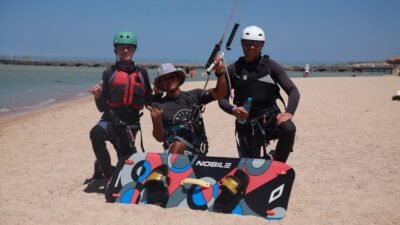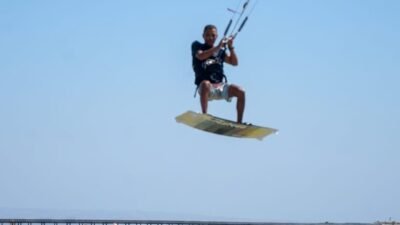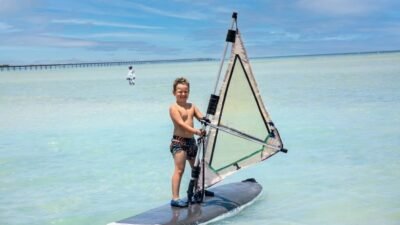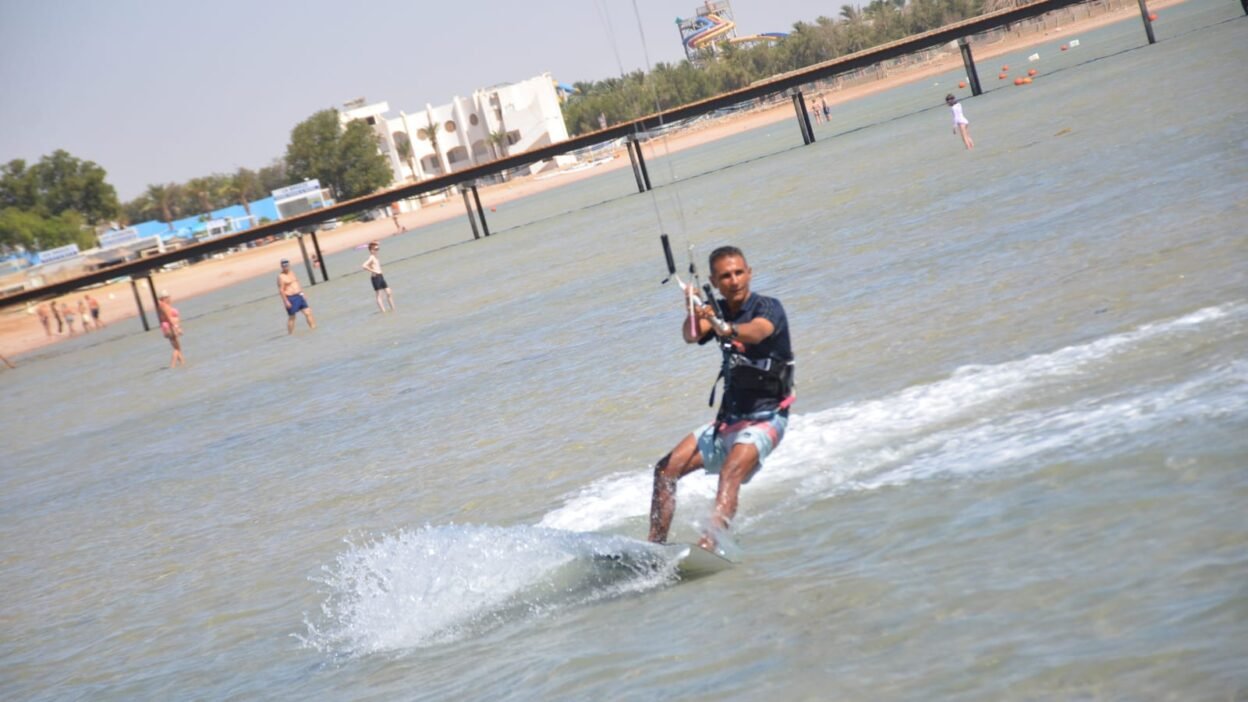
Kitesurfing in Hurghada requires meeting three core categories of requirements: physical preparedness (basic swimming ability and reasonable fitness), equipment and gear (either rented from an IKO-certified school or your own properly sized kite and board), and training and certification (completing a structured course with an IKO-certified instructor). The Red Sea’s consistent 15–25 knot winds and warm waters make Hurghada accessible year-round, with peak conditions from May through October. Beginners need no prior experience—schools provide all necessary equipment and guide you through the IKO certification process. This article answers the most common questions about kitesurfing requirements in Hurghada, helping you prepare for a safe and successful experience.
Hurghada Kitesurfing Requirements: Your Complete Guide to Riding the Red Sea 🏄♂️
- What Are the Basic Physical and Age Requirements for Kitesurfing in Hurghada?
- What Are the Wind and Weather Requirements for Kitesurfing in Hurghada?
- What Equipment Is Required for Kitesurfing in Hurghada?
- What Is IKO Certification and Why Is It Required?
- What Are the Safety Requirements for Kitesurfing in Hurghada?
- What Training and Lesson Requirements Exist for Beginners?
- What Are the Requirements for Advanced and Independent Riding in Hurghada?
- What Are the Seasonal and Weather Preparation Requirements?
- What People Also Ask About Hurghada Kitesurfing Requirements❓
- Key Takeaways & Practical Checklist ✅
What Are the Basic Physical and Age Requirements for Kitesurfing in Hurghada?
The basic physical requirements for kitesurfing in Hurghada are: the ability to swim, reasonable overall fitness, and a minimum age of 12 years for lessons (18 years for instructor certification). No prior kitesurfing experience is necessary for beginner courses.
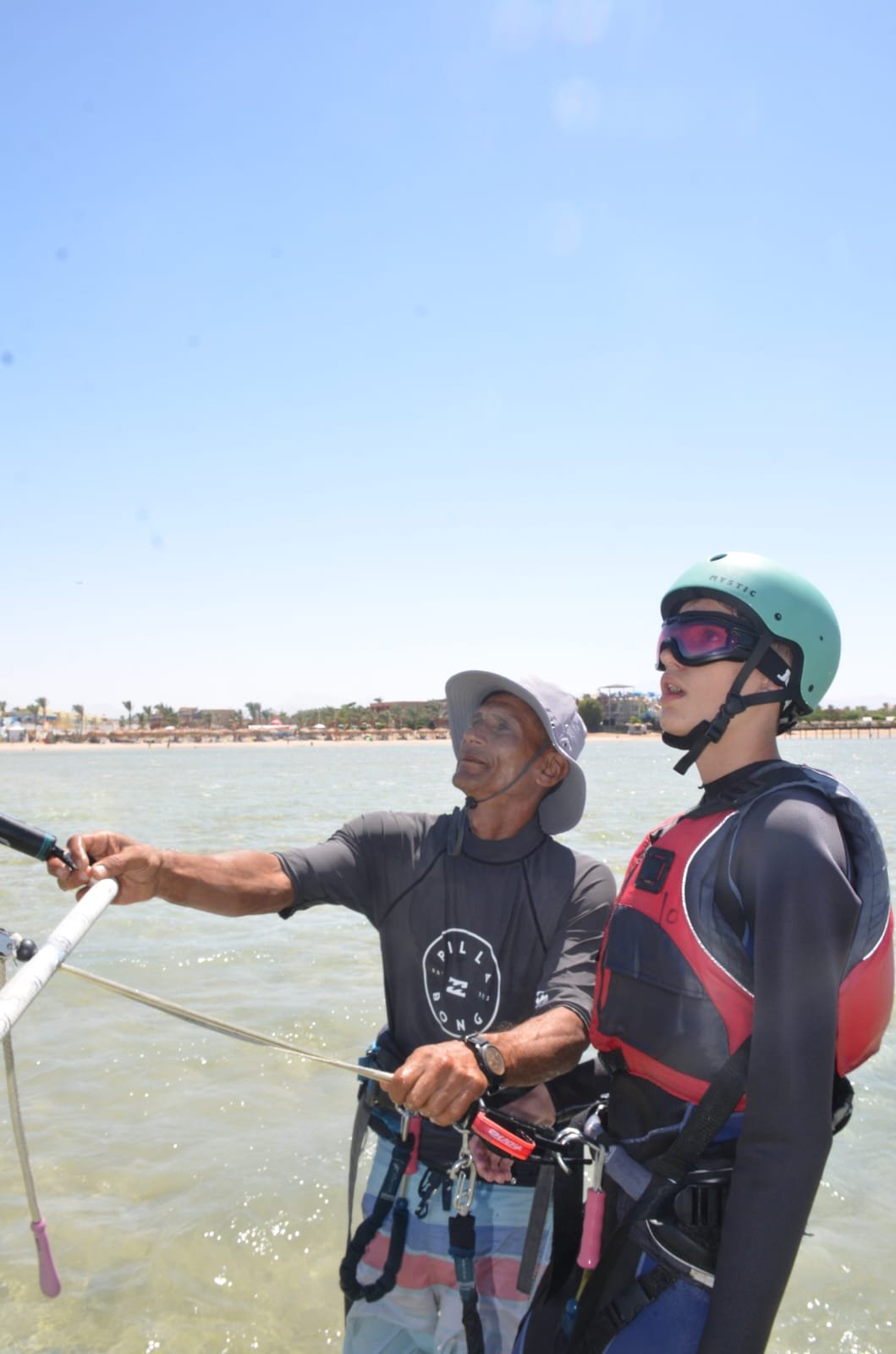
Kitesurfing is a physically engaging sport that demands core strength, balance, and endurance. While you don’t need to be an athlete, you should be comfortable in the water and able to swim confidently. The sport involves prolonged periods of standing, balancing, and controlling the kite—activities that require functional strength and stamina.
Minimum age requirements vary by activity level:
- Beginner lessons: Most schools accept students from age 12, though younger children (around 8–10 years) may be considered if they meet weight requirements of approximately 35–40 kg.
- IKO certification courses: Standard courses are open to all ages with parental consent for minors.
- Instructor training: Candidates must be at least 16 years old for Assistant Instructor status and 18 years old for full Instructor certification.
Health considerations: If you have pre-existing conditions affecting your heart, joints, or balance, consult a doctor before participating. Most schools will ask you to sign a waiver acknowledging the physical demands of the sport. No medical certificate is typically required for standard lessons, but you should honestly assess your own fitness level.
What Are the Wind and Weather Requirements for Kitesurfing in Hurghada?
Kitesurfing in Hurghada requires wind speeds between 8 and 27 knots (approximately 3 to 7 Bft), with the most consistent conditions occurring from May through October when average speeds reach 15–25 knots. The wind direction is predominantly north/northwest, blowing side-onshore—ideal for safe and enjoyable riding.
Hurghada’s wind patterns are what make it a world-class kitesurfing destination. The Red Sea benefits from steady thermal winds generated by the temperature difference between the desert and the sea. This creates reliable conditions that suit all skill levels.
Wind speed requirements by level:
| Level | Minimum Wind | Ideal Wind | Maximum Wind |
|---|---|---|---|
| Beginner | 8–10 knots (3 Bft) | 12–18 knots | 20 knots (5 Bft) |
| Intermediate | 10–12 knots | 15–22 knots | 25 knots (6 Bft) |
| Advanced | 12 knots | 18–25 knots | 27 knots (7 Bft) |
Kitesurfing is possible from 8 to 10 knots up to a maximum of 20–27 knots, depending on kite size and rider experience.
Seasonal wind patterns:
- Peak season (May–October): Strongest and most consistent winds, commonly 15–25 knots. These months offer ideal conditions for both learning and advanced riding.
- Shoulder months (March–April, November): Still kiteable with 12–18 knots, though slightly less consistent.
- Winter (December–February): Lighter and more variable at 12–20 knots, but still offers good kitesurfing days.
Wind direction: The prevailing wind comes from the north or north-northwest, blowing side-onshore—meaning it comes from the sea toward the land at an angle. This is considered the safest and most favorable direction for kitesurfing. Avoid offshore winds (from land toward sea) unless a rescue boat is present.
Daily pattern: Mornings are typically lighter, with wind picking up through late morning and staying strong through the afternoon in peak season.
What Equipment Is Required for Kitesurfing in Hurghada?
The required equipment for kitesurfing in Hurghada includes: a kite (LEI inflatable or foil), a board, a harness, a helmet, a life jacket or impact vest, and appropriate wetsuit or protective clothing. Beginners can rent complete sets from schools, while experienced riders bringing their own gear should pack at least two kite sizes to cover the 15–25 knot wind range.
Essential equipment breakdown:
| Item | Purpose | Beginner | Advanced |
|---|---|---|---|
| Kite (LEI) | Generates power for riding | 7–12m depending on wind | Multiple sizes |
| Board | Floats and rides on water | 133–160cm length | Varies by style |
| Harness | Connects rider to kite | Seat or waist harness | Waist harness |
| Helmet | Head protection | Required | Recommended |
| Impact vest / life jacket | Buoyancy and impact protection | Required | Optional |
| Wetsuit | Thermal protection | Seasonal | Seasonal |
Rental equipment: Most schools provide a full set of necessary equipment—kite, board, wetsuit, helmet, and harness—for the duration of the course. This equipment is included in the course price at IKO-certified schools.
Bringing your own gear: If you plan to bring equipment, pack a minimum of two kite sizes to cover the wind range, which typically pumps between 15–25 knots. For a 75 kg rider, the most used kite size in Hurghada is 9–10m, with a 12m beneficial for lighter wind days (12–16 knots).
Seasonal clothing requirements:
- Summer (May–October): Water temperature 26–30°C—shorts, lycra, or rash guard are sufficient.
- Spring/Fall (April, November): A shorty wetsuit is recommended.
- Winter (November–April): Water temperature drops to around 20°C or below—a long 3/2mm or 4/5mm wetsuit is necessary.
Additional items: Water shoes or booties are strongly recommended due to small rocks and spiky shells on some beaches. Also bring sunscreen (SPF 50+), sunglasses with a strap, and a towel.
What Is IKO Certification and Why Is It Required?
IKO (International Kiteboarding Organization) certification is the globally recognized standard that proves your kitesurfing competency. While not legally mandatory, it is effectively required by most schools worldwide for equipment rental and is automatically included when you complete a course at an IKO-certified school in Hurghada.
What IKO certification does:
- Standardizes kitesurfing instruction globally
- Certifies that you’ve completed structured training covering safety systems, self-rescue, right-of-way rules, and basic meteorology
- Provides an internationally recognized card (digital or physical) that schools worldwide accept as proof of ability
- Helps with travel insurance claims—some insurers require proof of certified instruction for injury coverage
IKO certification levels:
| Level | Name | What You Can Do |
|---|---|---|
| 1 | Discovery | Safety basics, steer kite, bodydrag—no board riding yet |
| 2 | Intermediate | Waterstart and ride on the board (mostly downwind) |
| 3 | Independent | Ride upwind—return to starting point; can rent equipment safely |
| 4 | Advanced | Jump, ride in waves, handle varied conditions |
| 5 | Expert | Mega jumps, tricks, extreme conditions |
How to get certified: IKO certification is automatically included in every course at IKO-certified schools and is typically free. Your instructor evaluates your level at the end of the course, enters it into the IKO system, and you receive an internationally valid digital IKO card. Most students completing an 8-hour Basic course leave with Level 2 or 3, depending on individual progression.
Why Hurghada schools emphasize IKO: All reputable schools in Hurghada employ IKO-certified instructors. This accreditation ensures instructors are aware of all safety precautions and regulations. The IKO system provides a clear path for progression and gives students confidence in the quality of instruction.
What Are the Safety Requirements for Kitesurfing in Hurghada?
Safety requirements for kitesurfing in Hurghada include: taking lessons from IKO-certified instructors, using proper safety equipment (helmet, impact vest, leash), understanding right-of-way rules, practicing self-rescue techniques, and riding only in conditions matching your skill level. Schools provide safety briefings and use walkie-talkies for real-time communication during lessons.
Core safety requirements:
1. Certified instruction: All reputable schools employ IKO-certified instructors who are trained in safety protocols. Never take lessons from uncertified individuals.
2. Safety equipment:
- Helmet (provided by schools)
- Impact vest or life jacket (provided)
- Quick-release safety system on the harness
- Leash to prevent board loss
3. Pre-ride safety briefing: Every course begins with theory covering:
- Equipment setup and handling
- Understanding the wind window
- Safety systems and emergency procedures
- Right-of-way rules
4. Communication: Lessons are conducted via walkie-talkies to instantly relay information on the water.
5. Self-rescue skills: You must learn and demonstrate:
- Self-rescue procedures in deep water
- Body-dragging upwind with and without a board
- Safe starts and landings on the beach
6. Wind and spot safety:
- Beginners should ride in shallow lagoons with sandy bottoms, sheltered from waves
- Avoid offshore winds unless a rescue boat is present
- Stay within designated practice areas, away from other water sports enthusiasts
7. Right-of-way rules: Like road rules for the water, these prevent collisions and are taught during the theory component of your course.
8. Weather awareness: Check wind conditions before each session. Many schools provide live wind data from on-site stations. Never ride in conditions exceeding your ability.
What Training and Lesson Requirements Exist for Beginners?
Beginner kitesurfing requirements in Hurghada typically involve 8 to 15 hours of structured lessons over 2 to 5 days, covering theory, equipment handling, body dragging, water starts, and basic riding. No prior experience is needed—courses are designed for complete beginners and include all equipment and IKO certification.
Course options for beginners:
| Course | Duration | Days | Content | Price Range |
|---|---|---|---|---|
| Beginner I | 8 hours | 2–3 | Theory, safety, equipment setup, body dragging, first water starts | €360–440 |
| Beginner II | 12 hours | 4 | Plus consistent water starts, riding both sides, self-rescue | €480–600 |
| Beginner III | 15 hours | 5 | Plus riding upwind/downwind, transitions, safe beach starts/landings | €540–690 |
Typical lesson progression:
Stage 1 (Day 1, ~2–3 hours) : Theory and land-based training. You’ll learn about safety, equipment setup, kite control, and the wind window. Then you’ll practice flying a small kite on the beach.
Stage 2 (Day 2, ~2–3 hours) : Body dragging in the water. You’ll learn to use the kite’s power to move through the water without a board, an essential skill for retrieving your board and self-rescue.
Stage 3 (Day 3, ~2–3 hours) : Water starts. You’ll attempt to stand on the board and make your first short rides.
Stage 4 (Days 4–5, ~3–6 hours) : Consolidation. You’ll practice consistent water starts, riding on both sides, and (in longer courses) upwind riding and transitions.
What’s included:
- All necessary equipment (kite, board, harness, helmet, life jacket)
- IKO-certified instructor
- Walkie-talkie communication
- IKO certification upon completion
- Insurance for kite equipment
What’s not included: Accommodation, flights, meals, transport to/from the course, and travel insurance.
Can you learn faster? Some people can ride after just 6 hours of lessons, while others may need more. If you have experience in wakeboarding, snowboarding, or windsurfing, you may progress faster. Most schools allow you to add extra hours if needed.
What Are the Requirements for Advanced and Independent Riding in Hurghada?
Advanced and independent riding in Hurghada requires IKO Level 3 certification (or equivalent) to rent equipment and ride without supervision. Advanced riders should bring multiple kite sizes, understand local wind patterns, and respect spot-specific rules. Some areas require rescue boat coverage for offshore wind conditions.
Independent riding requirements:
Certification: To rent equipment in Hurghada (and worldwide), you typically need an IKO card proving Level 3 (Independent) or higher. Without this, most schools won’t rent to you.
Equipment for advanced riders:
- Minimum of two kite sizes to cover the 15–25 knot range
- Board appropriate for your style (freeride, freestyle, wave)
- Harness, helmet, and impact vest (own or rented)
Spot selection: Hurghada offers varied conditions:
- Al Ahyaa Lagoon: Shallow water area ideal for beginners and freestyle, with shallow water up to 1 kilometer out.
- Northern area: Wave spot with waves 0.5–1.5 meters for more excitement.
- AMC Royal: Side on-shore wind, big lagoon, flat and shallow water.
- El Gouna: Side shore wind, shallow water, big area.
- Abu Mungar Island: Side off-shore wind, sand bank, white sand, crystal clear water.
Safety considerations for advanced riders:
- Always check wind forecasts before heading out
- Be aware of offshore wind risks—stay close to shore or ensure a rescue boat is available
- Respect other water users—keep distance from windsurfers and other kiters
- Carry a knife for emergency line cutting
- Know your limits—Hurghada winds can reach 30–35 knots on intense days
Kite safaris: For the ultimate advanced experience, seven-day kite safaris depart from Hurghada Marina, taking riders to remarkable spots along the Red Sea coast. These require solid independent riding skills and usually IKO Level 3 or equivalent.
What Are the Seasonal and Weather Preparation Requirements?
Seasonal preparation requirements for kitesurfing in Hurghada depend on when you visit. From May to October, pack summer gear (shorts, lycra, sunscreen). From November to April, bring a wetsuit (3/2mm to 4/5mm) and consider booties. Year-round, check wind forecasts daily and book lessons in advance during peak season.
Seasonal breakdown:
| Season | Months | Wind | Water Temp | Wetsuit | Best For |
|---|---|---|---|---|---|
| Peak | May–Oct | 15–25 knots, very consistent | 26–30°C | None/shorty | All levels |
| Shoulder | Mar–Apr, Nov | 12–18 knots, less consistent | 21–26°C | Shorty or 3/2mm | All levels |
| Winter | Dec–Feb | 12–20 knots, more variable | ~20°C | 4/5mm | Experienced riders |
What to pack by season:
Summer (May–October) :
- Swimwear, shorts, lycra or rash guard
- High-SPF sunscreen (50+)
- Sunglasses with strap
- Water shoes or booties (recommended)
- Hat and light clothing for beach breaks
Winter (November–April) :
- Long 3/2mm or 4/5mm wetsuit
- Wetsuit boots/booties
- Neoprene gloves (optional)
- Windbreaker for beach
Year-round essentials:
- Sunscreen (reapply frequently)
- Hydration—drink plenty of water
- Towel and change of clothes
- Cash for equipment rental deposits (if renting independently)
Booking requirements: During peak season (May–October), book lessons and equipment rental well in advance as schools fill up. Shoulder and winter months offer more flexibility and often better rates.
Travel requirements: Check airline baggage policies for sports equipment—most airlines charge extra for oversized bags. Many schools offer storage for your equipment at professional centres for a fee.
What People Also Ask About Hurghada Kitesurfing Requirements❓
Yes, confident swimming ability is essential. While you’ll wear a life jacket or impact vest during lessons, you must be comfortable in the water and able to tread water. Schools may ask you to demonstrate basic swimming ability before starting.
No. Reputable schools require lessons for beginners and will not rent equipment without proof of competency (IKO card or equivalent). This is for your safety and the safety of others on the water.
Beginner courses range from €360–690 depending on duration and group size. Private 1-hour lessons cost around $60 USD. Equipment rental for certified riders is available at discounted rates—many schools offer 10% off rental after completing a course.
Lessons are available in multiple languages including English, German, Czech, and Arabic. English is the most common, with most international schools using it as the primary language.
Yes, children from around age 8–10 can start, provided they meet weight requirements (approximately 35–40 kg). Minimum age for most schools is 12. Always check with the specific school for their age policies.
Most schools are flexible and will reschedule your lesson for a windier day. Hurghada has wind approximately 270 days per year, so rescheduling is usually straightforward. Check the school’s cancellation and rescheduling policy before booking.
Yes, strongly recommended. Some travel insurance policies require proof of certified instruction (IKO card) to cover kitesurfing injuries. Check your policy covers water sports and confirm the requirements before traveling.
Key Takeaways & Practical Checklist ✅
Before you go:
- [ ] Assess your swimming ability and fitness level
- [ ] Check your travel insurance covers kitesurfing
- [ ] Book your course in advance (especially May–October)
- [ ] Pack appropriate clothing for the season
- [ ] Bring high-SPF sunscreen and water shoes
At the school:
- [ ] Verify your instructor is IKO-certified
- [ ] Confirm all equipment is included in the price
- [ ] Pay attention during the safety briefing
- [ ] Use the walkie-talkie for communication
- [ ] Ask questions—no question is too small
After your course:
- [ ] Receive your IKO certification
- [ ] Practice independently if you’ve reached Level 3
- [ ] Rent equipment with your IKO card worldwide
- [ ] Plan your next trip—peak season is May–October
Hurghada kitesurfing requirements are straightforward: be physically ready, take lessons from certified instructors, use proper equipment, and respect the wind and water. With over 25 years of local expertise and IKO-certified instructors, Masters Surf School offers world-class kitesurfing experiences in Hurghada’s ideal conditions—shallow lagoons with consistent winds, ensuring safe, fast, and unforgettable progress.