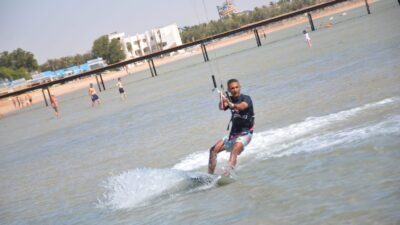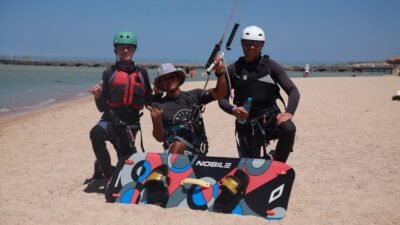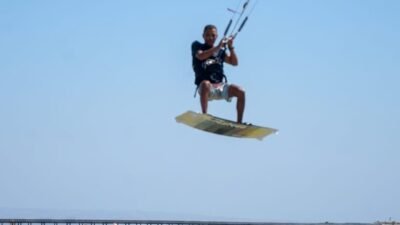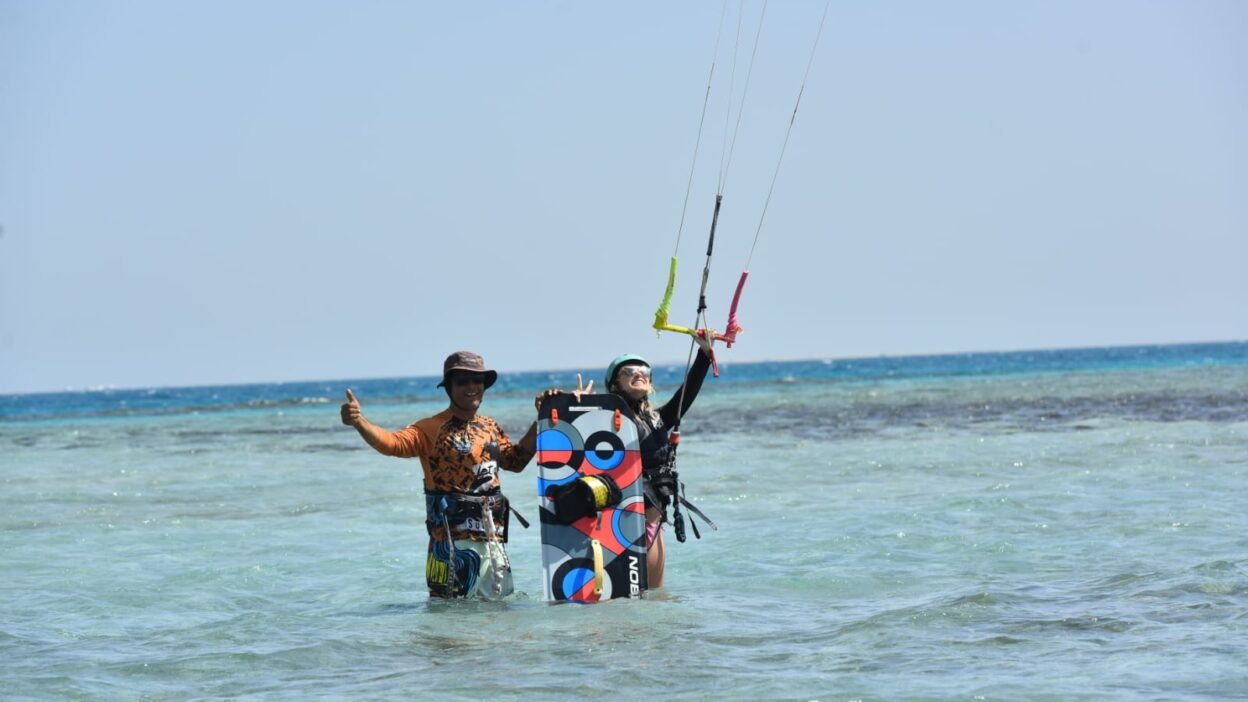
Egypt is one of the world’s premier kitesurfing destinations, with summer (May through October) offering the most reliable wind conditions of the year. During this peak season, the Red Sea delivers consistent north/north-westerly thermal winds at 18–25 knots, air temperatures above 30°C, and water temperatures of 26–30°C—allowing riders to kite in just boardshorts. Hurghada serves as the central hub, with shallow lagoons, IKO-certified schools, and easy access to world-class spots including El Gouna, Soma Bay, and the Geisum Islands. Whether you’re a complete beginner or an advanced rider, Egypt kite surfing in summer offers safe, fast progression in uncrowded, flat-water conditions.
Egypt Kite Surfing in Summer: The Complete Guide to Riding the Red Sea
- What Exactly Is Egypt Kite Surfing, and Why Is Summer the Best Time to Go?
- What Are the Best Egypt Kitesurfing Spots for Summer?
- What Is the Egypt Kitesurfing Season Like in Summer?
- How Much Does Kitesurfing in Egypt Cost? (Egypt Kitesurfing Prices)
- How Do I Start Kitesurfing in Egypt as a Complete Beginner?
- Is Kitesurfing in Egypt Safe? What About IKO Certification?
- What Equipment Do I Need for Egypt Kite Surfing in Summer?
- What Is an Egypt Kitesurfing Safari or Cruise?
- Why Is Hurghada the Best Base for Egypt Kite Surfing in Summer?
- What Should I Pack for an Egypt Kitesurfing Summer Holiday?
- Egypt Kite Surfing in Summer People Also Ask
- Kite Surfing in Egypt Conclusion
- Key Takeaways
What Exactly Is Egypt Kite Surfing, and Why Is Summer the Best Time to Go?
Egypt kite surfing is the sport of riding a small board while being pulled by a large, steerable kite across the Red Sea—and summer is the absolute prime season because the wind blows consistently every single day.
Kitesurfing (also called kiteboarding) blends surfing, windsurfing, paragliding, and wakeboarding into one adrenaline-filled activity. You stand on a board while controlling a large kite in the wind, using a harness and control bar to steer. The sport gained popularity in Egypt in the early 2000s, with training centres appearing along the coast in Hurghada, El Gouna, and Safaga.
Why summer? From May through October, Egypt experiences its prime wind season. The thermal north/north-westerly winds blow at 18–25 knots on average, with historical data showing 80% kiteable wind days during this period. In fact, kitesurf operators often go weeks without a single wind-free day. The wind comes across the sea from the north/northwest with no obstructions, making it some of the cleanest and most consistent wind you will find anywhere.
Summer air temperatures range from 28–35°C, and the Red Sea water warms to a blissful 25–30°C. This means no wetsuit is needed—just boardshorts, a bikini, and a rash vest for sun protection.
What Are the Best Egypt Kitesurfing Spots for Summer?
Egypt offers multiple world-class kitesurfing spots along the Red Sea coast, with Hurghada, El Gouna, Soma Bay, Dahab, and Ras Sudr being the most popular—each catering to different skill levels.
Hurghada
Hurghada is Egypt’s most popular Red Sea resort town and the central hub for kitesurfing. It features expansive beaches, calm lagoons, and a vibrant kiting community. The area has a 100 km stretch of sand with shallow water perfect for beginners and intermediate conditions for more experienced riders. Hurghada International Airport (HRG) is just 10 minutes from most kite schools.
El Gouna
Located just 22 km north of Hurghada (20 minutes by car), El Gouna is widely considered the best spot for beginners. Its kite lagoon is vast and enclosed, with water just 0.6 to 1 metre deep across most of the riding area. The flat, sandy bottom has no current and no waves, meaning you can stand up at any point during your lesson. El Gouna enjoys over 300 windy days per year.
Soma Bay
About 45 km south of Hurghada, Soma Bay offers reliable and consistent wind, especially from May through October. Summer months boast over 80% windy days. The conditions are flat but slightly deeper than El Gouna, making it suitable for intermediate and advanced riders.
Dahab
Located on the Sinai Peninsula’s eastern coast, Dahab offers a completely different experience. The wind funnels down through the Gulf of Aqaba, making it generally windier than other Egyptian destinations. Dahab has open-water, deep-sea conditions with occasional waves—ideal for experienced wave riders. The prime season runs from April through November.
Ras Sudr
Midway between Cairo and Sharm El Sheikh airports, Ras Sudr features flat-water shallow lagoons and white sandy beaches. The summer season offers 28–35°C temperatures with average wind speeds of 16–25 knots, peaking around late August to September with gusts over 30 knots.
What Is the Egypt Kitesurfing Season Like in Summer?
The Egypt kitesurfing season runs from May through October, with summer offering the most reliable wind, warmest water, and best conditions for learning.
The prime wind season for the Red Sea is May through October. During this six-month peak, the wind is perfect—blowing all day, every day.
Here is a month-by-month breakdown:
| Month | Wind Conditions | Air Temperature | Water Temperature | What to Expect |
|---|---|---|---|---|
| May | 15–25 knots, steady | 25–30°C | 24–26°C | Season starts; excellent conditions |
| June | 18–25 knots, very consistent | 28–33°C | 25–27°C | Peak summer begins |
| July | 18–25 knots, strong thermals | 30–35°C | 26–28°C | Hot; ideal for morning/evening sessions |
| August | 18–25 knots, windiest month | 30–35°C | 27–29°C | Peak wind; gusts can exceed 30 knots |
| September | 18–25 knots, slightly cooler | 28–33°C | 26–28°C | Fewer crowds; great balance |
| October | 15–25 knots, still reliable | 25–30°C | 25–27°C | Season winds down; still excellent |
April to June offers steady wind without extreme heat. July and August are very hot, making early morning or late afternoon sessions ideal. September and October have slightly cooler temperatures and fewer crowds but offer a great balance of comfort and performance.
In the off-season (November through April), the wind is very unreliable and the water is cold. Most kite safaris and many schools operate only during the prime season.
How Much Does Kitesurfing in Egypt Cost? (Egypt Kitesurfing Prices)
Kitesurfing in Egypt is surprisingly affordable, with beginner courses starting around €70 for a taster session and €329–€360 for comprehensive multi-day programmes.
Here is a breakdown of typical Egypt kitesurfing prices:
| Service | Typical Price Range | Details |
|---|---|---|
| 2-hour taster lesson | ~$70–$90 | Introduction with basic kite control |
| 8-hour beginner course | €329–€360 | Group course with IKO instructor |
| 9-hour private lesson | ~$325 | Personalized instruction |
| 3-day beginner programme | ~€360 | Includes equipment, certification, instruction |
| Equipment rental (daily) | Varies by gear | Ask schools for current rates |
| Kite safari (7 days) | All-inclusive | Food, drinks, lessons, accommodation on yacht |
Most schools offer all-inclusive packages with transparent pricing. Masters Surf School, for example, combines over 25 years of local expertise with IKO-certified instructors and complimentary hotel transfers.
Additional costs to consider:
- Airport transfers (often included with packages)
- Accommodation (budget to luxury options available)
- Visa on arrival (~$25 USD)
- Sun protection (rash vest, sunscreen, sunglasses)
How Do I Start Kitesurfing in Egypt as a Complete Beginner?
Starting kitesurfing in Egypt as a beginner is straightforward—book a course with an IKO-certified school, learn in shallow lagoons with no waves, and expect to ride independently within 3 days.
Step 1: Choose the Right Location
For beginners, El Gouna is the clear winner. Its shallow lagoon (0.6–1 metre deep) allows you to stand up at any point during your lesson, dramatically reducing fear and accelerating learning. Hurghada and Soma Bay are also excellent options.
Step 2: Book an IKO-Certified School
Look for schools certified by the International Kiteboarding Organization (IKO). IKO-certified instructors follow standardized teaching methods and issue internationally recognized certificates upon completion. Schools like Masters Surf School, Kite Marine, and Paradise Kitesurf Red Sea all employ IKO-certified instructors.
Step 3: Take a Beginner Course
Most beginners start with a 3-day programme (approximately 8–12 hours of instruction). A typical course covers:
- Day 1: Kite setup, safety systems, basic kite control on land
- Day 2: Body dragging in water, power control, water relaunch
- Day 3: Board starts, riding technique, independent riding
The combination of shallow water, warm conditions, and professional instruction means most students progress from zero experience to independent riding within three days.
Step 4: What to Bring
- Swimwear (boardshorts or bikini)
- Rash vest or lycra top (for sun protection)
- Sunglasses with strap
- High-SPF sunscreen
- Towel and change of clothes
Schools provide all kitesurfing equipment, including kites, boards, harnesses, and helmets.
Is Kitesurfing in Egypt Safe? What About IKO Certification?
Yes, kitesurfing in Egypt is very safe when you choose IKO-certified schools and follow proper safety protocols—the shallow lagoons and consistent winds actually make it safer than many other destinations.
IKO Certification: What It Means
IKO (International Kiteboarding Organization) is the global standard for kitesurfing instruction. IKO-certified instructors are trained in:
- Standardized teaching methodologies
- Safety systems and emergency procedures
- Rescue techniques
- Equipment selection and setup
Schools like Kite School Egypt, Kite Marine, and Paradise Kitesurf Red Sea all employ IKO-certified instructors. Many issue IKO certificates upon course completion, which are recognized worldwide.
Safety Features of Egyptian Spots
- Shallow water: Most beginner spots are waist-deep lagoons where you can stand up at any time
- Flat water: No waves or chop to push you around
- Consistent wind: Clean, gust-free wind from the north/northwest
- Uncrowded spots: Many locations have huge areas with virtually no other riders
- Rescue support: Schools have rescue boats and radio communication in helmets for real-time coaching
Safety Tips for Beginners
- Always take lessons from an IKO-certified instructor
- Never kite alone—always have a spotter
- Check your equipment before each session
- Stay within designated kiting areas
- Use proper sun protection (the Egyptian sun is intense)
- Know your limits—don’t push beyond your skill level
What Equipment Do I Need for Egypt Kite Surfing in Summer?
For summer kitesurfing in Egypt, you need minimal equipment—just swimwear, sun protection, and the kite gear provided by your school. No wetsuit is required.
What the School Provides
Professional kite centres offer the latest equipment from top brands like Duotone, Airush, Cabrinha, and F-One. This includes:
- Kites in various sizes (matched to wind conditions and your weight)
- Boards (twin-tip for beginners)
- Harness
- Helmet
- Impact vest (optional but recommended)
What You Should Bring
| Item | Why You Need It |
|---|---|
| Boardshorts or bikini | Water temperature is 25–30°C—no wetsuit needed |
| Rash vest or lycra top | Sun protection; prevents chafing from the harness |
| High-SPF sunscreen | Egyptian sun is intense; reapply frequently |
| Sunglasses with strap | Protects eyes from glare and spray |
| Towel | For drying off after sessions |
| Water shoes (optional) | Protects feet when walking on hot sand or coral |
Do I Need a Wetsuit?
No. During summer (May–October), the Red Sea water temperature ranges from 25–30°C. You can comfortably spend all day in the water wearing nothing more than a pair of shorts and a rashguard. In the cooler shoulder months (April and November), a shorty wetsuit might be recommended.
Can I Bring My Own Equipment?
Yes, but most travellers don’t bother. Kitesurf equipment is bulky and airlines often charge extra for oversized luggage. Renting from professional centres is convenient and ensures you get the right gear for current conditions. If you do bring your own, schools offer secure storage (subject to fees).
What Is an Egypt Kitesurfing Safari or Cruise?
An Egypt kitesurfing safari is a live-aboard yacht adventure that takes you to remote Red Sea islands and lagoons for multiple days of world-class kiting, with all meals, accommodation, and instruction included.
What Is a Kite Safari?
A kite safari is an all-inclusive kitesurfing holiday where you live on a luxury yacht and sail between different spots along the Red Sea. You wake up, kite, eat, relax, and sail to the next location—all while chasing the best wind conditions.
What’s Included?
Typical kite safaris include:
- Accommodation on a luxury yacht with air-conditioned cabins
- All meals and drinks
- Daily kitesurfing sessions at multiple spots
- IKO-certified instruction (all levels)
- Equipment rental
- Snorkelling and swimming with dolphins
- Airport transfers
Popular Safari Destinations
Safaris typically visit the islands north of Hurghada, including:
- Tawila Island – Shallow lagoons, flat water
- Geisum Islands – Multiple flat-water spots and reef-protected lagoons
- Ashrafi Island – Butter-smooth shallows, perfect for learning and freestyle
How Long Do Safaris Last?
Most kite safaris run for 7 days. They operate during the prime wind season (May through October). Some operators offer flexible options to add extra days before or after the voyage.
Who Are Safaris For?
Kite safaris cater to all levels—from complete beginners to advanced riders. Beginners benefit from shallow, uncrowded spots with one-on-one instruction. Advanced riders enjoy exploring multiple spots with varied conditions.
Why Is Hurghada the Best Base for Egypt Kite Surfing in Summer?
Hurghada is the ultimate base for Egypt kite surfing in summer because it offers the closest airport access, the widest range of schools and accommodation, and proximity to the best kiting spots on the Red Sea.
Location Advantages
- Hurghada International Airport (HRG) is just 10 minutes from most kite schools
- El Gouna’s world-class lagoon is only 22 km north (20 minutes by car)
- Soma Bay is 45 km south (about 40 minutes)
- Safari departure points are minutes from the city
School and Instruction Quality
Hurghada has numerous IKO-certified schools with experienced instructors. Schools like Masters Surf School have over 25 years of local expertise. Many offer:
- Complimentary hotel transfers
- Multiple language instruction (English, Russian, Arabic)
- Radio communication in helmets for real-time coaching
Accommodation Options
Hurghada offers everything from budget hostels to all-inclusive luxury resorts. El Gouna, just up the coast, provides resort-style accommodation with direct lagoon access.
Beyond Kitesurfing
When you’re not kiting, Hurghada offers:
- World-class snorkelling and diving on the Red Sea
- Desert excursions and cultural tours
- 80+ bars and restaurants in nearby El Gouna
- Shopping and nightlife
What Should I Pack for an Egypt Kitesurfing Summer Holiday?
Pack light—summer in Egypt means hot days, warm water, and no wetsuit needed. Focus on sun protection, swimwear, and casual clothing.
Essential Packing List
Kitesurfing Gear:
- Boardshorts or bikini (2–3 pairs)
- Rash vest or lycra top (long-sleeve for sun protection)
- Sunglasses with a strap
- High-SPF sunscreen (waterproof, 50+)
- Lip balm with SPF
- Water shoes (optional, for hot sand)
Clothing:
- Light, breathable clothing (cotton or linen)
- Evening wear (smart-casual for dinners)
- Light jacket or sweater (air-conditioning can be cold)
- Hat or cap for sun protection
Other Essentials:
- Passport (with at least 6 months validity)
- Travel insurance (covering kitesurfing)
- Cash (Egyptian pounds or euros/dollars)
- Phone and charger
- Power bank
- Reusable water bottle
What NOT to Pack
- Wetsuit – Not needed in summer (water is 25–30°C)
- Heavy clothing – Temperatures are 30–35°C during the day
- Your own kite gear – Schools provide quality equipment; airlines charge extra for bulky luggage
Egypt Kite Surfing in Summer People Also Ask
Yes, Egypt is one of the world’s best kitesurfing destinations, with consistent winds, warm water, and shallow lagoons perfect for all skill levels.
September is often considered the best month—still great wind, slightly cooler temperatures than July–August, and fewer crowds.
Yes, Hurghada is a major kitesurfing hub with multiple schools, expansive beaches, and calm lagoons.
Most beginners take 6–12 hours of lessons before riding independently. A typical 3-day course (8–12 hours) is usually sufficient.
No—in summer, the water is 25–30°C, so boardshorts and a rash vest are all you need.
Summer winds are consistent north/north-westerly at 18–25 knots, with 80% kiteable days from May to October.
No, Egypt offers affordable kitesurfing compared to Europe—beginner courses start around €70–€360.
A kite safari is a live-aboard yacht adventure visiting multiple Red Sea kiting spots, with all meals, accommodation, and instruction included.
Kite Surfing in Egypt Conclusion
Egypt kite surfing in summer offers an unbeatable combination of consistent wind, warm water, and world-class spots that cater to every skill level. From the shallow lagoons of El Gouna to the wave-riding conditions of Dahab, and from affordable beginner lessons to luxury kite safaris, the Red Sea coast delivers an experience that’s hard to match anywhere else.
The summer season—May through October—provides the most reliable conditions, with 80% kiteable days, 18–25 knot winds, and water temperatures that let you ride in just boardshorts. Hurghada serves as the perfect base, with its international airport, numerous IKO-certified schools like Masters Surf School, and proximity to Egypt’s best kiting locations.
Ready to ride the Red Sea? Book your summer kitesurfing holiday now—spots fill up fast during peak season. Choose an IKO-certified school, pack light, and prepare for an unforgettable experience on Egypt’s crystal-clear waters.
Key Takeaways
- ✅ Best season: May–October with 80% kiteable days and 18–25 knot winds
- ✅ Best spots: El Gouna (beginners), Dahab (waves), Hurghada (hub), Soma Bay (intermediate)
- ✅ No wetsuit needed: Water is 25–30°C in summer—just boardshorts and a rash vest
- ✅ Cost: Beginner courses from ~€70; 3-day programmes ~€360
- ✅ Safety: Choose IKO-certified schools for standardized, safe instruction
- ✅ Unique experiences: Try a kite safari for a week-long yacht adventure
- ✅ Best base: Hurghada offers closest airport, most schools, and best access to spots