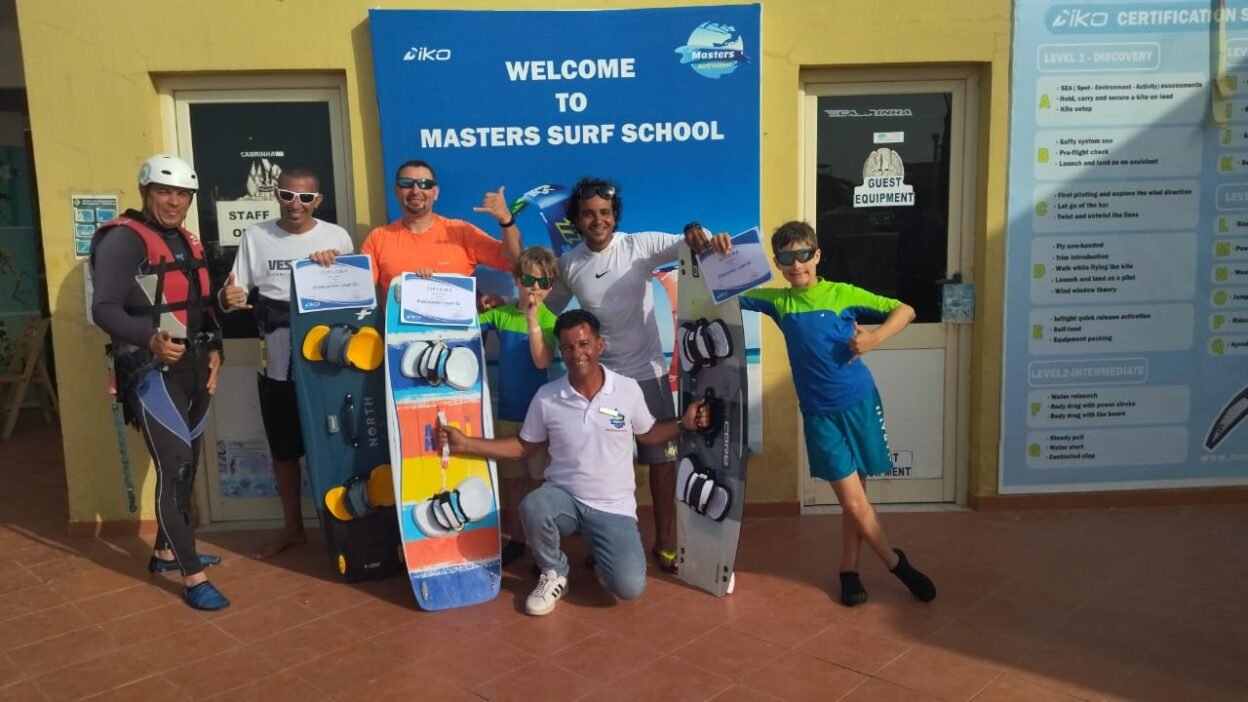
Scuba diving is the undisputed “must-do” activity in hurghada water, offering access to over 1,200 fish species and world-famous wrecks at significantly lower prices than European destinations. Kitesurfing and windsurfing are not just possible here; they are world-class due to the flat, waist-deep lagoons and consistent 22-knot summer winds. Snorkeling offers a “glass-bottom boat” experience without the tank, perfect for families. This guide provides a side-by-side comparison of gear, cost, and required skill to help you pick the perfect Red Sea adventure.
🏆 Best Hurghada Water Sports for Every Type of Traveler
The hurghada waterfront is a vibrant ecosystem of lagoons and coral reefs. The “best” sport depends entirely on what you want to feel: the quiet calm of a controlled breath, the adrenaline of a gust, or the simplicity of a face mask and fins. Below is a weighted ranking table to cut through the noise and match the activity to your specific vacation style.
| Activity | Best For | 🕒 Min Time | 💰 Est. Cost (USD) | 👶 Beginner Friendly |
|---|---|---|---|---|
| Scuba Diving | Wildlife, Wrecks, Zen | 3 Days (Course) | $350+ (PADI Course) | ✅ Yes (Try Dives) |
| Snorkeling | Families, Non-Swimmers | 2-4 Hours | $15 – $30 | ✅ Very High |
| Kitesurfing | Thrill-seekers, Gym-goers | 3-5 Days | $300 – $500 (Course) | ✅ Yes (Lagoons) |
| Windsurfing | Core Workout, Cruisers | 2 Hours | $40 – $80 | ✅ Yes |
| Parasailing | Views, Couples | 15 Mins | $15 – $20 | ✅ Extremely Easy |
Prices are averages for 2026-2027 season and may vary by operator and season.
🩱Scuba Diving in Hurghada – The Undisputed King
Scuba diving hurghada is world-class because it delivers reliable calm seas, visibility often exceeding 30 meters, and access to both vibrant shallow reefs and legendary WWII wrecks at a cost that is roughly half what you would pay in the Caribbean or Mediterranean.
If you do only one thing in hurghada water, make it scuba diving. Hurghada is not just a beach town; it’s the gateway to the northern Red Sea, a body of water renowned as one of the Seven Underwater Wonders of the World.
How to Start: The Path from Tourist to Diver
You do not need to be a certified diver to experience the Red Sea. There is a clear, safe pathway for everyone, including those who have never worn a mask before.
- 🤿 The “Try Dive” (Discovery Dive): This is a half-day experience perfect for “diving tourists.” After a short 30-minute beach briefing on how to clear water from a regulator and equalize ear pressure, an instructor holds you by the tank valve and guides you over a shallow reef (5-8 meters deep). You don’t control the dive; you just breathe and look at the fish. Cost: Approximately €40-50.
- 🌊 PADI Open Water Diver: This is the “gold standard” license for life. It requires three to four days of your holiday. The hurghada water conditions make this one of the best places on earth to complete the course. The training is divided between learning skills in a pool (or confined bay) and four exciting open-water boat dives where you finally understand what is buoyancy. Cost: €300-€350 includes full equipment rental and certification fees.
🌺 Top Dive Sites: Where to Go
The local dive guides select the exact reef each morning based on wind and current, but these are the crown jewels:
- Giftun Island: Perfect for beginners. The coral gardens here are immaculate due to marine park protections. The gentle drift allows you to hover motionless as clouds of orange anthias sweep by.
- Shaab El Erg (Dolphin House): This is a shallow, horseshoe-shaped reef. If you want to see spinner dolphins in the wild on a dive, this is the spot.
- Abu Nuhas Wrecks: A graveyard of ships that hit the reef decades ago. Now, they are artificial reefs covered in soft coral. This is best for divers with the Advanced Open Water certification due to depth and occasional current.
- The Thistlegorm: A WWII cargo ship sunk in 1941. It remains a time capsule holding Bedford trucks, Norton motorcycles, and ammunition boxes. Travel from Hurghada is an early morning journey (4:30 AM departure), but it is widely considered the best wreck dive in the Northern Hemisphere.
🐠 Snorkeling Hurghada – The Affordable Dream
Snorkeling in hurghada water is the most accessible and wallet-friendly way to witness the Red Sea’s renowned marine biodiversity, requiring no training and minimal equipment while providing world-class coral views just inches below the surface.
If claustrophobia or budget keeps you away from scuba tanks, snorkeling still delivers 90% of the Red Sea magic. The coral reefs in Hurghada start immediately at the surface and slope gently down, making them ideal for snorkelers.
🌴 Top Snorkeling Spots (Accessible by Boat)
Unlike some beach towns, the best hurghada water coral is located on offshore islands, making a boat trip essential.
- Giftun Island National Park / Mahmya Island: This is the gold standard for a postcard day. The water is a shade of turquoise that seems photoshopped. You wade in from a sugar-sand beach directly onto a shallow reef wall.
- Abu Ramada Island (“The Aquarium”): Named for a reason. The reef here is so dense with angelfish, parrotfish, and lionfish that it feels like swimming through a fish store display. Visibility usually exceeds 25m.
- Makadi Bay: Located about 30km south of Hurghada, this bay offers “house reef” snorkeling. You can literally walk from your hotel beach straight into the water and be above coral within 50 meters. No boat needed.
- Magawish Island: A quieter alternative to the crowded Giftun tours. It offers protected lagoons with exceptionally clear water and sandy bottoms between coral heads.
⚠️ Snorkeling Safety & Responsible Tourism
The Red Sea is safe, but respect is required. The main danger to snorkelers is the sun, not the fish. A full-day boat trip with no shade or shirt leads to severe sunburn. Wear a reef-safe sunscreen (mineral based without Oxybenzone) or a long-sleeved lycra rash guard. Camouflage and wetsuit coverage are essential in hurghada water sports.
🪁 Kitesurfing – Hurghada’s Windy Playground
Direct Answer: Kitesurf in Hurghada is defined by the Al Ahyaa Lagoon — a waist-deep, flat-water sanctuary separated from the sea by a reef — making it one of the most forgiving and fastest-learning environments globally for a sport that otherwise has a steep difficulty curve.
The question of “where to kitesurf” often comes with fear. “Is it dangerous?” is the first thing beginners ask. The hurghada water geography provides the answer: The Al Ahyaa Lagoon, located north of the city center, is a kitesurfing dream. The coral reef acts as a natural breakwater, killing all waves and wind chop, leaving a massive, glassy pool of warm water (26-30°C from May to October) that rarely exceeds chest height.
💨 The Learning Curve and Cost
Because you can stand up immediately after a crash, you spend 100% of your lesson time riding rather than swimming. Most students progress to riding independently on the board within 3 to 6 days.
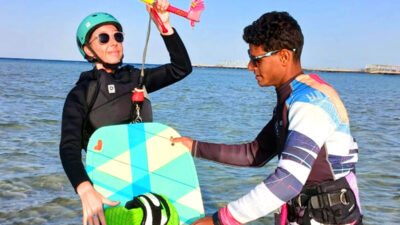
- IKO Certification: Look for an IKO (International Kiteboarding Organization) certified school. This guarantees instructors follow strict safety protocols, including “site assessment, safety systems, and weather theory.”
- Cost: Budget approximately $60-$70 per hour for private instruction or $300-$500 for a 10-12 hour full beginner course (usually spread over 3-5 days).
- Gear Rental: If you don’t own gear, rental packages average €45-€55 per day for a full set (kite, bar, board, harness).
🌬️ Wind Pattern
The wind here is predominantly side-onshore from the North/Northwest. This is crucial: A side-onshore wind blows you gently sideways back towards the beach. It is the safest possible wind direction for beginners and one of the main reasons why kitesurf safety in Hurghada is so highly rated by travel guides.
🏄 Windsurfing – The Classic Red Sea Power Cruise
Windsurfing offers a more linear, intuitive power curve than kitesurfing, making it ideal for those who prefer a connected feel with equipment and a sport that can scale from a gentle beach cruise to high-speed wave jumping with the same gear.
While kitesurf grabs the headlines for its aerial flips, windsurfing remains the soulful, core workout of the Red Sea. The hurghada water near the shore is ideal for windsurfing because the coral reefs flatten the sea.
🎯 Where to Learn: Trusted Centers
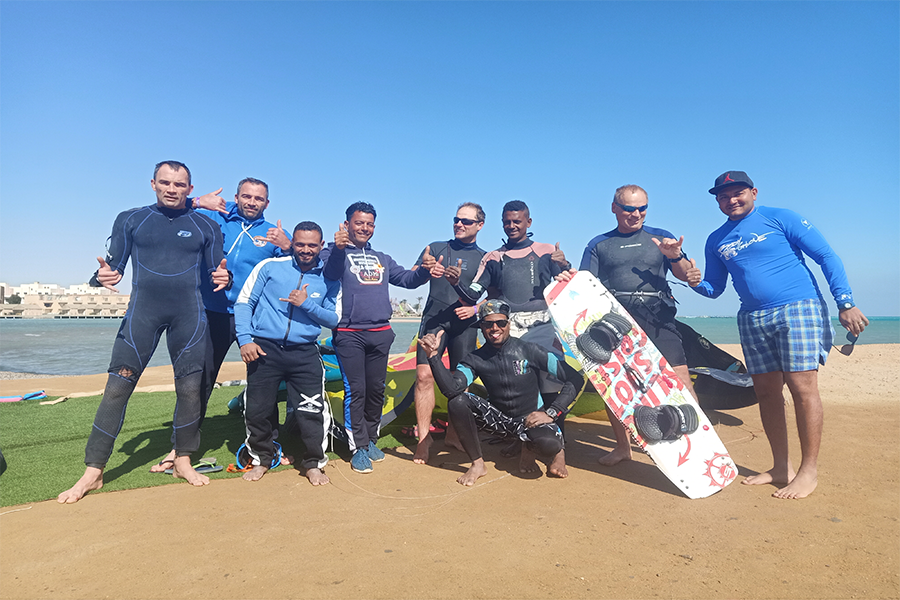
Hurghada has an established windsurfing infrastructure dating back to the 1990s. These centers are staffed by multilingual, certified instructors who know the local shoals and sandbars intimately.
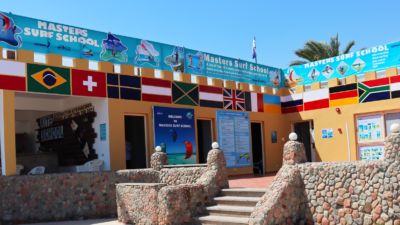
Masters Surf School
Red Sea Governorate,
Secondary phone: +201272284800
Email: masters.surfschool@gmail.com
📊 Windsurfing vs. Kitesurfing in Hurghada (Direct Comparison)
| Criteria | 🏄 Windsurfing | 🪁 Kitesurfing |
|---|---|---|
| Learning Curve | Gentle slope. You can stand and move slowly in 1 hour. | Steep initial curve. Hours of sand kite control before board. |
| Risk Profile | Lower energy release. Let go of the boom, power stops now. | Higher risk of lofting in gusts if kite is mishandled. |
| Physical Demand | Heavy on core, forearms, and back. Great full-body workout. | Heavy on quads and hip flexors. Endurance sport. |
| Hurghada Specific | Deep Water Open Bays. Requires a boat or a swim if you drift. | Shallow Lagoons. You can stand up anywhere in Al Ahyaa. |
| Cost of Gear | Moderate. Durable gear lasts years. | High. Kite bladders and lines need replacement every 1-2 years. |
Verdict: If you want to kitesurf and jump high, commit to Hurghada’s lagoon. If you want to cruise fast and enjoy the open water feel without wearing a harness, windsurfing is your match.
📅 When to Go – Timing Your Hurghada Water Adventure
Direct Answer: The best overall travel window is March–May and September–November for pleasant air temps and warm sea, while June–August delivers maximum wind power for kitesurfers and windsurfers.
Hurghada water temperature dictates the wetsuit thickness you need, while the wind dictates which sport you can do comfortably.
🌡️ The Temperature Table
- 💧 Winter (Dec-Feb): Air 20°C / Water 21-23°C. Calm seas. Best for: Diving & Snorkeling. The visibility is crystal clear due to lack of plankton. You will need a 5mm-7mm wetsuit for diving.
- 🌸 Spring / Autumn (Mar-May / Sep-Nov): Air 25-30°C / Water 23-27°C. Best for: Everything. This is the Goldilocks Zone. The wind starts to pick up consistently in March for board sports (about 15-22 knots), but the water is still warm enough for a shorty wetsuit or swimsuit.
- ☀️ Summer (Jun-Aug): Air 34°C+ / Water 28-30°C. Best for: Kitesurfing & Windsurfing. The wind howls nearly every day from late morning until sunset (average 22 knots). Diving is still excellent, but the topside heat requires constant shade and hydration.
⚠️ The Khamsin Wind Warning
Be aware of the Khamsin winds in Spring (especially March-April). These are dry, hot, dust-laden winds that blow in from the Sahara desert. They can reduce visibility on land to a few hundred meters and cause sandstorms that shut down water sports activities for a day or two. They are rare (maybe 2-3 events per season) but worth knowing about if you see “poor visibility” in the forecast—it’s dust, not fog.
💸Price Comparison and “People Also Ask”
🏷️ Quick Price Reference: Hurghada Water Activities 2025-2026
- Parasailing: $15-20 for a 10-15 min flight (single or tandem)
- Banana Boat / Tube Ride: $5-10 per person for 15 minutes.
- Glass-Bottom Boat Tour: $10-15 for a 45-min tour (great for non-swimmers)
- Snorkeling Day Trip (incl. lunch): $25-35 for a full-day boat with two stops.
- Scuba “Try Dive”: $45-60 for one supervised coastal dive.
- PADI Open Water Course: $300-350 for 3-4 days, full certification.
- Windsurf Rental: $25-40 per hour; 2hr private lesson $60-80 (estimated).
- Kitesurf Course (10-12 hrs): $300-500 for 3-5 days.
❓ Hurghada Water Sports for Tourists Also Ask
Yes. Most reputable boat tours provide mandatory life jackets and have a guide on hand to hold a life ring. The buoyancy of the salty Red Sea also helps you float effortlessly.
For wind sports (kitesurf/windsurf), Hurghada (specifically El Gouna and Al Ahyaa Lagoon) is vastly superior due to flat, shallow lagoons. For diving, both are world-class; Sharm has steeper, iconic walls, while Hurghada offers more accessible, relaxed day-boat reefs.
From May to October, no. The water is 28°C or higher—you can wear swimwear and a lycra rash guard for sun protection. From December to March, you will want a 5mm wetsuit for diving.
There are no dangerous shark incidents in Hurghada dive sites frequented by tourists. The only sharks you might see (very rarely) are oceanic whitetips or reef sharks at “Carless Reef,” and they are completely disinterested in divers or snorkelers.
📋 Final Checklist: Before You Jump In
- [ ] Reef-Safe Sunscreen: Protect your skin AND the fragile coral.
- [ ] Waterproof Phone Pouch: You’ll want pictures of the dolphins.
- [ ] Cash (Small Bills): For tipping the incredible boat crew and guides.
- [ ] Motion Sickness Pills: Boats rock. Don’t let seasickness ruin your dive day.
- [ ] DAN Insurance: If diving, consider cheap short-term dive insurance for peace of mind.
[…] Chamber of Diving and Water Sports (CDWS) is the sole inspection and auditing body for diving and water sports in Egypt, founded by […]