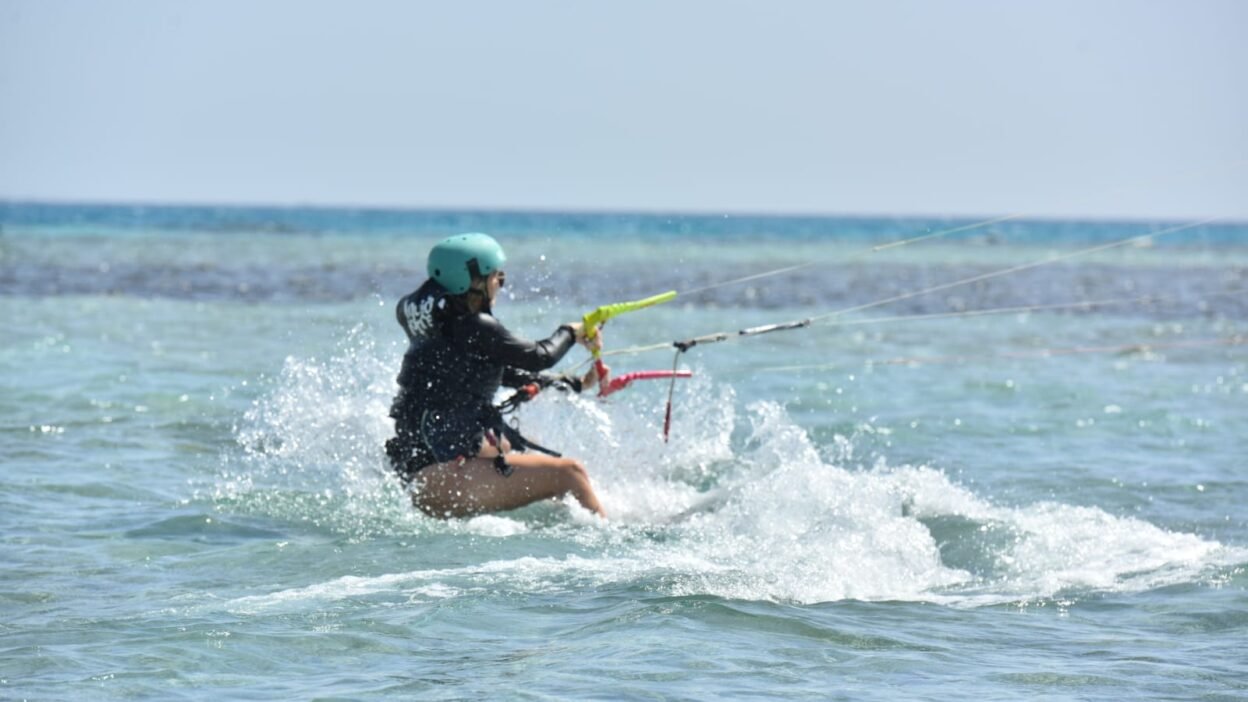
Choosing the correct kitesurfing equipment in Hurghada means matching your quiver to reliable side‑onshore winds of 12–25 knots, shallow lagoons, and water temperatures that rarely drop below 22°C. Most advanced riders bring a 3‑kite quiver centred on a 10m, but local rental fleets stocked with current‑year Core, Duotone, and Naish gear often eliminate the hassle of flying with boards and kites. For those who travel light, dedicated centres such as Masters Surf School provide complimentary transfers, IKO‑certified instruction, and equipment maintained to exacting standards—allowing you to compare options and optimise your sessions without compromise.
Hurghada Kitesurfing Equipment: An Expert’s Guide to Gear, Rentals, and the Right Setup
- What wind conditions determine the right kitesurfing equipment in Hurghada? 🪁
- Is it better to bring my own kitesurfing gear to Hurghada or rent locally? 🔄
- What are the best rental centres for kitesurfing gear in Hurghada? 📍
- Which kite brands and board types dominate the Hurghada market right now? 🏄
- How should an advanced rider build the ideal kite quiver for a Hurghada trip? 🧰
- What essential accessories and protective gear should you bring or check for? ☀️
- How do you maintain and repair kitesurfing equipment in Hurghada’s harsh climate? 🧽
- Where can you store your equipment securely in Hurghada? 🔒
- Case Study: How an advanced rider optimised a 10‑day kite safari in Hurghada 🏝️
- What is the cost difference between buying gear locally and importing it? 💰
What wind conditions determine the right kitesurfing equipment in Hurghada? 🪁
Hurghada’s wind is thermal and trade‑driven, delivering consistent side‑onshore flow of 12 to 25 knots for over 300 days a year. The shallow, flat‑water lagoons at spots like Soma Bay, El Gouna, and Magawish create a forgiving arena where smaller boards and freestyle‑oriented kites thrive.
- Kite sizes: A 7m, 9m, and 12m quiver covers 90% of advanced‑rider needs. Spring and autumn see peak wind (18–25 knots), favouring 7–9m kites. In the lighter summer months, a 12m or a light‑wind specific 14m–15m kite (such as a Core XR or Duotone Evo SLS) keeps you planing.
- Board choice: Because the water surface is almost always flat to light chop, a performance freestyle or freeride twin‑tip around 136–139 cm works perfectly. Dedicated strapless surfboards are popular when rare small swells roll in, but a 5’2”–5’4” surfboard doubles as a light‑wind tool.
- Harness: Hard‑shell waist harnesses dominate for direct bar feel and freedom during unhooked tricks.
This answer‑first breakdown lets you immediately build a travel quiver aligned with the local wind profile.
Is it better to bring my own kitesurfing gear to Hurghada or rent locally? 🔄
For most advanced riders, renting high‑quality local equipment is the superior choice unless you are deeply attached to a custom‑tuned setup or plan a multi‑week safari.
Pros and cons summary:
| Factor | Bring Own Gear | Rent Locally (Premium Center) |
|---|---|---|
| Cost for 7 days | €80–150 excess baggage fees | €180–280 for a full set (kite, board, harness) |
| Equipment condition | Your own, tuned to preference | 2024/2025 models, professionally maintained, replaced every season |
| Convenience | Heavy bags, risk of airline damage | Walk‑in, rigged, ready, no transport stress |
| Quiver flexibility | Limited to what you pack | Swap kites daily as conditions change (included in rental) |
| Storage & cleaning | Must arrange with hotel or centre | Centre provides secure, shaded storage and freshwater rinse |
Verdict: If you’re a rider who values trying the latest gear, avoiding travel weight, or wants access to 3–4 kite sizes on demand, renting from a premium school with a large fleet is the wiser commercial decision. Those competing or training for specific tricks may still prefer their own tuned kites and board.
What are the best rental centres for kitesurfing gear in Hurghada? 📍
Quality, safety, and fleet freshness separate the top operators from budget stalls. The best centres maintain IKO affiliation, use current‑season gear, and offer insurance.
- Masters Surf School – With over 25 years of experience and 4 beachfront locations, they stock Core, Duotone, and Naish kites, replaced yearly. Their package includes complimentary hotel transfers, secured storage, and a test‑before‑you‑rent policy. This “gear agnostic” approach lets you sample the full spectrum of modern kite design.
- Colona Watersports (Magawish) – A large centre offering Core and Cabrinha equipment, with an expansive shallow lagoon. Their fleet suits both beginner clinics and advanced freeride.
- Kite‑Village (El Gouna) – A dedicated kite‑only operation focusing on Core kites and custom boards. Their rental quivers are meticulously maintained, and they provide detailed daily tuning.
- Pro Center Soma Bay – Located in the luxury Soma Bay peninsula, renting Duotone and North gear, with direct access to one of Egypt’s most consistent flat‑water arenas.
For the commercial buyer comparing options, these centres represent the top tier in Hurghada, where a typical 7‑day full‑rental package costs between €200 and €300, far cheaper than damage or depreciation on personal equipment.
Which kite brands and board types dominate the Hurghada market right now? 🏄
The local market is dominated by Core, Duotone, Naish, and Cabrinha, with a growing presence of North and Eleveight. The reason is clear: these brands invest in durable, high‑performance materials that survive the salt, sun, and sandy beach environment.
- Core XR8 / Nexus 3 – The most rented all‑round and freeride kite. Proactive steering and incredible depower make them ideal for gusty thermal winds.
- Duotone Evo SLS / Neo SLS – Popular for freestyle and wave riding; the SLS construction reduces weight without sacrificing stiffness.
- Naish Pivot / Slash – Used by advanced wave and strapless riders; excellent drift stability when a rare swell hits the reef breaks.
- Twin‑tip boards: Majority are 137–140 cm full‑carbon constructions (Duotone Jaime, Core Choice, Cabrinha Ace) offering explosive pop.
- Foilboards: Increasingly available for rent; a 90–110 cm mast with a mid‑aspect wing transforms light‑wind days into high‑speed cruises.
Local rental fleets rotate gear every 12–18 months, meaning what you rent is almost always the current or previous model year, a significant advantage for riders who crave the latest innovations.
How should an advanced rider build the ideal kite quiver for a Hurghada trip? 🧰
Assemble a three‑kite spread centred on your most‑used size, complemented by one twin‑tip and an optional light‑wind board.
- Spring & Autumn (peak wind, 18–25 knots): 7m + 9m + 12m. Your 9m will see 60% of sessions; the 7m handles gusts above 25 knots; the 12m covers early morning or lighter spells.
- Summer (12–18 knots): 10m + 12m + 15m or a foilboard. Many riders replace the 15m with a 12m and a foil setup, which is more responsive and less tiring.
- Winter (15–22 knots, cooler water): Same as autumn, but add a 3/2mm wetsuit and neoprene booties for sessions over 2 hours.
- Harness: A rigid waist harness (Ride Engine, Mystic Majestic X) provides the locked‑in feel required for powered freestyle.
- Board quiver: One 138 cm freestyle twin‑tip, one 5’2” surfboard or a foil. The twin‑tip alone covers 80% of Hurghada conditions, but the foil is your secret weapon for 10‑knot marginal days.
This modular logic allows you to pack light or communicate your needs clearly when pre‑booking rental gear.
What essential accessories and protective gear should you bring or check for? ☀️
Hurghada’s desert‑maritime environment demands a few critical extras beyond kite and board.
- UV protection: Rash guard with SPF 50+, a wide‑brim hat and zinc oxide sunblock that withstands water. The Red Sea sun reflects intensely off the water.
- Impact vest / flotation: A CE‑approved impact vest adds both safety and warmth; many centres provide them, but bringing your own ensures fit.
- Helmet: Not mandatory in flat lagoons, but recommended if you ride near reef edges or crowded launch zones.
- Booties: Reef‑cut booties protect against sharp coral when launching from beaches with hard substrate.
- Line extensions and trimming tools: 3m line extensions for light‑wind days, a no‑stretch trimmer to equalise lines, and a basic repair kit (bladder patches, valve key) are lightweight and invaluable.
- Wetsuit: A 2mm shorty in summer; a 3/2mm full suit from November through March when water dips to 22°C.
- Freshwater rinse equipment: A collapsible bucket and a dedicated spray bottle for post‑session rinses if your accommodation lacks a hose.
Checking these off before departure guarantees uninterrupted sessions and protects both your body and the gear you use.
How do you maintain and repair kitesurfing equipment in Hurghada’s harsh climate? 🧽
Salt, intense UV, and fine sand are relentless. A daily rinse‑and‑dry routine keeps gear performing and extends its lifespan.
- Immediately after each session: Flush kites, lines, and bar with fresh water. Avoid rolling up a kite that has sand in the leading edge bladder sleeve; shake it out carefully.
- Drying: Dry kites completely in the shade before packing. Direct sun degrades canopy coatings within weeks.
- Storage: Keep kites in their bag inside a ventilated area—never leave them in a hot car or on the beach uncovered. Centres like Masters Surf School offer shaded, locked storage racks that eliminate this worry.
- Repair services: Almost every major centre has a repair partner or in‑house technician who can fix bladder leaks, canopy tears, and line damage same‑day. The local provider FixMyKite Egypt operates mobile repair services along the coast. Bladder punctures are the most common issue, and a spare bladder for your primary size is a wise investment.
- Line wear: Check bridle lines and flying lines weekly for abrasion caused by sandy water; replace worn pigtails immediately.
This maintenance discipline ensures your equipment, whether rented or owned, stays in competition‑ready condition.
Where can you store your equipment securely in Hurghada? 🔒
Most beachfront kite schools and hotels provide secure storage, but the quality varies dramatically.
- Dedicated kite centres: Establishments like Masters Surf School, Colona, and Kite‑Village have lockable storage cages or supervised rigging areas. They also include a freshwater hose and compressor for drying kites. For a weekly fee (often included in rental or lesson packages), you gain peace of mind.
- Hotels with kite stations: Properties in Soma Bay and El Gouna (e.g., Kempinski, Mövenpick, Steigenberger) offer private kite storage, sometimes with direct beach access. Confirm availability before booking.
- DIY storage: If you store gear in your room, request a ground‑floor unit or a balcony with shade. Never leave wet kites in a confined space—mould and delamination set in rapidly.
From a commercial perspective, choosing a centre‑based storage solution is the most reliable way to avoid damage and theft, especially for riders who have invested in premium gear.
Case Study: How an advanced rider optimised a 10‑day kite safari in Hurghada 🏝️
A 32‑year‑old professional freerider from Germany, Marco, visited Hurghada in October intent on a 10‑day kite safari covering offshore islands and remote lagoons. He applied the following equipment strategy:
- Quiver: 7m, 9m, 11m Core XR8, all identical bar pressure settings, packed in a lightweight golf bag to avoid excess fees.
- Boards: One 138 cm carbon twin‑tip and a 90 cm foilboard with two front wings (850 cm² for light wind, 650 cm² for high‑wind cruising).
- Support gear: A waterproof 30‑litre bag with a full repair kit, two spare bladders, and a handheld VHF radio for safety on distant downwinders.
- Local partnership: He pre‑booked equipment support and storage with Masters Surf School, which provided a chase boat, daily transfers, and spare kites from their fleet for emergency swaps.
- Outcome: Marco logged 8 sessions over 20 knots and 2 light‑wind foil days. He experienced zero equipment failures and described the ability to switch sizes daily as “the reason I didn’t bring more than three kites.”
This modular, redundant approach is a template for any advanced rider planning a commercial kite holiday where downtime is not an option.
What is the cost difference between buying gear locally and importing it? 💰
Egypt imposes customs duties and VAT that typically add 20–30% to the retail price of imported sports equipment. A new 2025 10m kite that retails for €1,200 in Europe often sells for €1,550–1,700 in Hurghada shops. However, local dealers offer:
- Warranty support handled directly through the shop
- Access to regional demo days and test‑before‑buy
- Second‑hand market with ex‑rental gear sold at 40–50% of new price after one season, which is meticulously serviced
Most visiting experts therefore buy their primary gear at home or online and rely on Hurghada’s premium rental fleets for the latest models. The second‑hand market is particularly attractive: a well‑maintained one‑year‑old kite purchased from a reputable school can cost €500–600 and remain a high‑performer for two more seasons.
Conclusion: Your 5‑Step Gear Checklist for Hurghada 🌊
- Analyse the forecast and pack/bring a 3‑kite quiver centred on a 9–10m.
- Compare rental options using the table above; select a premium centre with current‑year gear and storage.
- Prioritise accessories: UV protection, impact vest, basic repair kit, and appropriate wetsuit.
- Rinse and store correctly after every session—use centre storage to prevent UV damage.
- Test local gear first if you plan to buy on‑site; demo days and ex‑rental purchases offer the best value.
Book your Hurghada kitesurfing adventure with Masters Surf School today. Their 25‑year heritage, four beachfront locations, IKO‑certified coaching, and a fleet of 2025 Core, Duotone, and Naish equipment guarantee that you spend every hour on the water—not worrying about your gear. Secure your rental package and complimentary hotel transfer now; the wind window is open.
[…] categories of requirements: physical preparedness (basic swimming ability and reasonable fitness), equipment and gear (either rented from an IKO-certified school or your own properly sized kite and board), and […]