Kitesurfing Hurghada Vs Dahab: Which Red Sea Spot Actually Fits Your Riding Style?
Kitesurf Hurghada wins on infrastructure, ease, and all-inclusive resort comfort with vast shallow lagoons and quick 20‑minute airport access. Kitesurfing Dahab wins on raw wind reliability (≈300 days/year above 15 kn), authentic budget-friendly living, and a unique lagoon‑plus‑wave setup framed by Sinai mountains. Choose Hurghada if you want a hassle‑free holiday with IKO‑certified schools, hotel transfers, and plenty of non‑kiting diversions. Choose Dahab if you prioritise maximum time on the water, a bohemian vibe, and are comfortable with a slightly rougher logistical edge. Both are world‑class; your call depends on whether you value polish or purity.
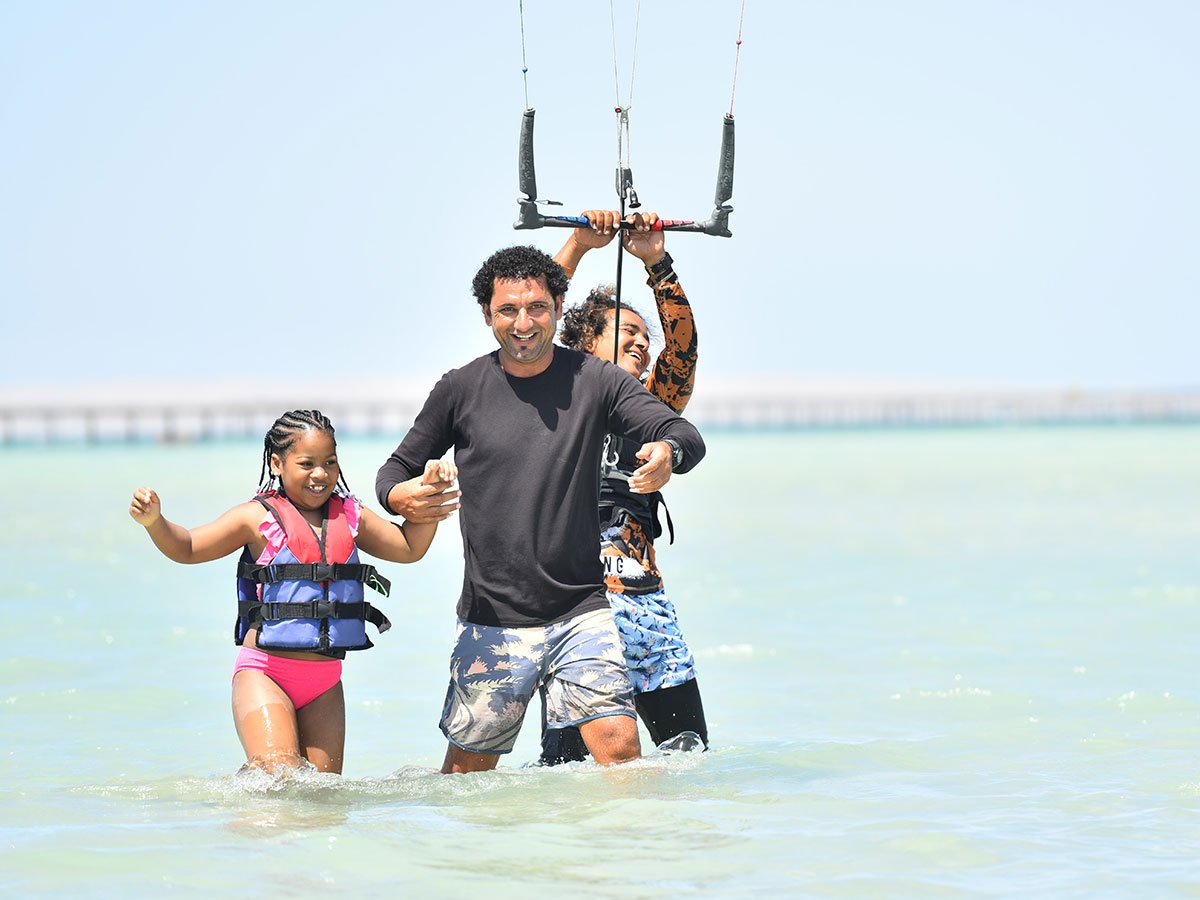
How Do the Wind Conditions Compare Between Hurghada and Dahab?
Dahab delivers more wind days per year than Hurghada — roughly 300 days above 15 knots versus Hurghada’s highly reliable May‑to‑October peak season — but both offer excellent thermal-driven breezes that suit intermediate and advanced kiters equally well.
Dahab benefits from a geographical wind funnel: north‑northwest winds accelerate between the Sinai mountains and the Saudi Arabian coast, generating remarkably consistent airflow year‑round. The Dahab Blue Lagoon, about 10 km north of town, is famously windy, with wind speeds frequently reaching 15–30 kn in the prime April–November window and remaining kiteable even during the cooler December–March months on larger kites (10–13 m). Kitesurftheworld.com notes that “Dahab Blue Lagoon is famously windy, with almost 300 days of wind blowing at 15 knots or more each year.”
Hurghada relies on a classic thermal‑wind engine: intense desert heat pulls cooler air from the Red Sea, creating steady north‑northwest winds that build from late morning through sunset. The peak season — May through October — sees 15–25 kn on the vast majority of days, with an approximately 80% kiteable‑wind probability and often weeks without a single wind‑free day. From November through April, winds drop to the 10–18 kn range, still rideable but less guaranteed.
| Factor | Hurghada | Dahab |
|---|---|---|
| Wind mechanism | Thermal (desert‑sea differential) | Venturi funnel (mountain gap) |
| Peak season | May–October | April–November |
| Wind strength (peak) | 15–25 kn | 15–30 kn |
| Windy days per year | ~70% kiteable probability in peak; less reliable in winter | ~300 days above 15 kn |
| Most‑used kite size (75 kg rider) | 9–10 m (12 m for light days) | 7–10 m (10–13 m in winter) |
Bottom line: Dahab offers more total rideable days, especially outside peak summer, but Hurghada’s summer‑season reliability matches anywhere on the Red Sea. If you’re booking a week in July, both deliver. If you’re a digital nomad spending a month in March, Dahab’s wind edge matters more.
What Are the Water Conditions — Flat Lagoon, Chop, or Waves?
Both locations offer shallow, flat‑water lagoons ideal for learning and freestyle, but they differ sharply in what sits beyond those lagoons. Hurghada provides expansive, sandy‑bottom standing‑depth zones with chop and small wave sections further out. Dahab offers a compact beginner lagoon plus open‑sea wave riding directly outside the bay.
Hurghada’s kite lagoons — Al Ahyaa, El Khayam (Paradise Kitesurf Red Sea), and the Hurghada‑El Gouna corridor — are large, shallow, and protected by offshore barrier reefs. The water is knee‑ to waist‑deep with a sandy bottom, letting beginners stand up and walk back upwind instead of swimming. Further out, advanced riders find deeper chop sections and a northern wave spot producing 0.5–1.5 m swells on stronger days. “Hurghada offers chop‑hop conditions,” writes one established centre operator.
Dahab’s main kite lagoon (sometimes called the “kite puddle”) is a compact, knee‑deep, sand‑bottom pool separated from the open sea by a sand spit — virtually no chop, no waves, and no current. It is uniquely beginner‑friendly. Immediately outside the protected lagoon, advanced riders access the Speedy Zone for high‑speed runs and the Gulf of Aqaba open sea, which delivers clean, rolling swell and genuine wave‑riding conditions. Dahab’s setup means a beginner and an advanced rider can share the same beach and each get exactly the water state they want.
| Water Feature | Hurghada | Dahab |
|---|---|---|
| Beginner lagoon | Large, waist‑deep, sandy | Compact, knee‑deep, completely flat |
| Intermediate zone | Chop, small swell | Speedy Zone (strong wind, flattish) |
| Advanced wave spot | Northern reef break, 0.5–1.5 m | Open Gulf of Aqaba, clean swell |
| Bottom type | Sand | Sand (lagoon), coral/rock outside |
| Tide sensitivity | Low | Moderate (“puddle” can drain at extreme low) |
Bottom line: Both are beginner‑safe. Dahab’s lagoon is flatter and shallower but smaller; Hurghada’s lagoons are vast and forgiving. For wave riding, Dahab’s open‑sea access is superior.
When Is the Best Time to Go — Season Comparison?
Plan Hurghada for May through October. Plan Dahab for April through November. Both are kiteable year‑round, but off‑peak months require bigger kites and more patience.
Hurghada’s undisputed peak is May–October, when thermal winds blow 15–25 kn on most days and water temperatures sit at a balmy 26–30 °C — no wetsuit required. March–April and November are shoulder months with 12–20 kn and a shorty optional. December–February is the least reliable period (10–18 kn) and the only time a 2 mm suit is advisable.
Dahab’s peak stretches April–November, with wind speeds of 15–30 kn and many days hitting 20+. Even winter (December–March) still delivers rideable days, albeit at 12–20 kn and requiring larger kites (10–13 m). The water remains warm enough for board shorts most of the year.
| Period | Hurghada Wind | Dahab Wind | Water Temp (Both) |
|---|---|---|---|
| May–Oct | ★★★★★ 15–25 kn | ★★★★★ 15–30 kn | 26–30 °C |
| Mar–Apr & Nov | ★★★☆☆ 12–20 kn | ★★★★☆ 15–25 kn | 22–25 °C |
| Dec–Feb | ★★☆☆☆ 10–18 kn | ★★★☆☆ 12–20 kn | 20–23 °C |
Bottom line: If you have a fixed holiday window in August, either works. If you’re eyeing a November or March trip, Dahab is the safer bet for wind.
How Do Kitesurfing Schools Compare — IKO Certification, Quality, and Approach?
Both destinations are packed with IKO‑certified schools, but Hurghada’s school density and resort integration are higher, while Dahab’s schools tend to be smaller, more personal, and often beach‑embedded.
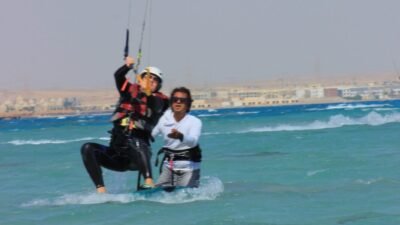
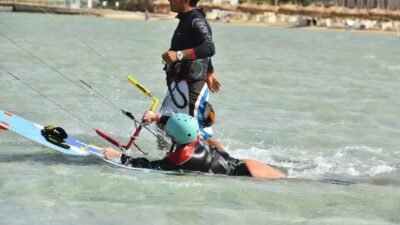
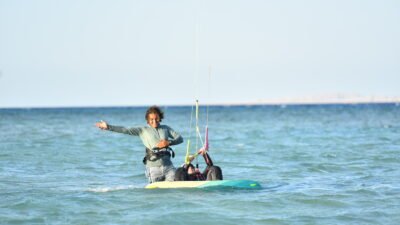
In Hurghada, you’ll find more than a dozen recognised kite stations along the Hurghada–El Gouna corridor. Established names like Masters Surf School, Paradise Kitesurf Red Sea, Harry Nass, Kite School Egypt, and Sultan Kite School all hold IKO accreditation. Masters Surf School, with over 25 years of local expertise, offers IKO‑certified instructors, complimentary hotel transfers, premium equipment from leading brands, and semi‑private lessons (1:1 student‑instructor ratio) — all within a shallow, sandy‑bottom lagoon purpose‑built for fast, safe progression. Most Hurghada schools operate directly from resort beaches with dedicated instruction zones.
In Dahab, schools such as Harry Nass Dahab, 5 Kvadratov, Club Mistral, Planet Windsurfing, and Ibi & Friends cluster around the main kite lagoon. They hold IKO certifications and offer a more laid‑back, walk‑in‑from‑your‑beach‑camp approach. “All instructors at the spot hold IKO certificates and can issue them to students who complete the full course,” notes one local guide. Dahab schools typically provide radio helmets for in‑water coaching and benefit from the compact lagoon setup where beginners learn inside the “puddle” while advanced riders launch nearby.
Key difference: Hurghada schools lean toward all‑inclusive, resort‑style packages with hotel transfers included. Dahab schools are generally more à la carte, allowing you to book individual sessions from a beachfront centre and sort your own accommodation.
What Do Kitesurfing Lessons Cost — Hurghada vs Dahab?
Expect to pay $300–$500 for a complete beginner course (9–12 hours) in Hurghada. Dahab comes in slightly cheaper — approximately €150 (≈$160) for an 8‑hour course — though accommodation is less bundled.
In Hurghada, prices cluster around:
- Beginner course (7–9 hours, 2–3 days): $300–$400
- Full advanced course (12 hours, 3–4 days): $400–$500
- Private lessons: variable, typically included in semi‑private setups at no extra charge at schools like Masters Surf School
These prices often include hotel transfers, equipment, and IKO certification — essentially an all‑in‑one package.
In Dahab, a typical 8‑hour kitesurfing course (swapped from windsurfing packages) costs around €150 per person. Lessons are generally sold as standalone sessions; accommodation and meals are separate. Overall, Dahab offers a lower entry price but requires more self‑organisation.
Bottom line: Dahab is cheaper lesson‑for‑lesson. Hurghada offers greater convenience and package integration — you’re paying partly for the seamlessness.
What’s the Off‑Water Experience — Accommodation, Nightlife, and Vibe?
Hurghada is a large, resort‑driven city with all‑inclusive hotels, buzzing nightlife, and extensive non‑kiting activities. Dahab is a small, bohemian town with budget guesthouses, beachfront cafés, a relaxed backpacker scene, and world‑class diving and desert excursions.
Hurghada operates on the classic Red Sea holiday model: big‑brand resorts, all‑inclusive buffets, marina promenades, and organised excursions. When the wind dies, you can snorkel vibrant reefs, take a boat trip to Giftun Island, or visit the Hurghada Marina for restaurants and bars. The nightlife scene is significantly more developed than Dahab’s, with beach clubs and late‑night venues.
Dahab is a smaller, more authentic settlement with a Bedouin‑backpacker soul. Accommodation ranges from simple beach camps to mid‑range boutique hotels. The seafront promenade is lined with cushion‑filled cafés, shisha lounges, and seafood restaurants where a local beer costs about €1.10–€1.30. Off‑water activities include world‑famous shore diving (Blue Hole, Canyon), desert treks, camel trips, and yoga retreats. Dahab’s digital nomad community is growing; you’ll find freelancers working from beachside cafés between sessions.
| Aspect | Hurghada | Dahab |
|---|---|---|
| Vibe | Resort city, polished | Bohemian, rustic, authentic |
| Accommodation | All‑inclusive hotels, resorts | Guesthouses, beach camps, boutique |
| Nightlife | Bars, clubs, marina | Beach cafés, shisha, live music |
| Non‑kite activities | Snorkelling, boat trips, cable park | Diving, desert treks, yoga |
| Cost of living | Moderate (hotel‑bundled) | Low (local prices) |
How Do Accessibility and Logistics Compare?
Hurghada is significantly easier to reach: fly into Hurghada International Airport (HRG) and you’re at the kite lagoon within 20–40 minutes. Dahab requires flying into Sharm El Sheikh (SSH) and transferring approximately 1‑1.5 hours by road.
Hurghada International Airport (HRG) is served by direct flights from most European hubs and is only a short drive from the main kite stations in Al Ahyaa and El Gouna. Masters Surf School and other centres include complimentary hotel transfers from anywhere in Hurghada, so you step off the plane and straight into a ready‑organised kite holiday.
Dahab requires flying into Sharm El Sheikh International Airport, then a road transfer of about an hour. The Blue Lagoon — Dahab’s premier spot — is a further 10 km north of town, accessed by 4×4, boat, or even camel. This extra journey is part of the adventure but adds logistical complexity.
Bottom line: Hurghada wins on door‑to‑door convenience. Dahab’s extra travel is manageable but suits travellers comfortable with less streamlined logistics.
Which Spot Is Better for Beginners, and Which for Advanced Riders?
Beginners get a safer, more spacious learning environment in Hurghada. Advanced riders get more varied terrain — genuine waves, speed zones, and downwinders — in Dahab.
Hurghada’s wide, shallow, sandy‑bottom lagoons give beginners room to make mistakes without consequence. The water is deep enough to relaunch but shallow enough to stand, and dedicated instruction zones keep learners separated from faster traffic. Multiple schools operating in the same lagoon mean plenty of choice and competitive pricing.
Dahab’s “kite puddle” is even flatter and shallower — excellent for first water‑starts — but it is compact and can become crowded in peak season. Tides occasionally expose rocks and coral at extreme lows.
For advanced riders, Dahab offers the Speedy Zone (strong, clean wind for boosting), Baby Bay (flat water with stronger wind outside the protected lagoon), and genuine wave spots in the Gulf of Aqaba. Hurghada’s advanced offering — wave sections at the northern reef and kite safaris to offshore islands — is solid but less immediately accessible than Dahab’s “walk out and ride waves” setup.
Head‑to‑Head Verdict: Hurghada or Dahab — Which Should You Choose?
| Criteria | Winner | Why |
|---|---|---|
| Wind reliability (year‑round) | 🏆 Dahab | ~300 windy days vs Hurghada’s seasonal peak |
| Beginner‑friendliness | 🏆 Hurghada | Larger, deeper, sand‑only lagoons |
| Advanced wave riding | 🏆 Dahab | Open‑sea swell right outside the lagoon |
| School infrastructure | 🏆 Hurghada | More IKO‑certified centres, resort‑integrated |
| Cost (lessons + living) | 🏆 Dahab | Cheaper lessons and local prices |
| Ease of travel | 🏆 Hurghada | 20‑min airport transfer vs 1‑hour road trip |
| Nightlife & dining | 🏆 Hurghada | Marina bars, clubs, all‑inclusive dining |
| Authenticity & vibe | 🏆 Dahab | Bedouin culture, backpacker soul, mountain scenery |
Choose kitesurfing in Hurghada if: you want a stress‑free, all‑inclusive kite holiday with quick airport access, resort amenities, and a large beginner‑safe lagoon — especially if you’re travelling with a non‑kiting partner or family who value hotel comforts.
Choose kitesurfing Dahab if: you prioritise maximum wind days, love a raw, authentic atmosphere, want wave riding and flat water from the same beach, and are happy arranging logistics yourself in exchange for lower costs and a memorable desert‑and‑sea backdrop.
Both deliver outstanding Red Sea conditions. Your choice comes down to whether you value polish (Hurghada) or purity (Dahab).
📋 Key Takeaways — Quick Checklist
- ✅ Peak season for both: May–October; Dahab extends reliably into November.
- ✅ Beginners: Hurghada’s large, sandy lagoons offer more space and safety margin.
- ✅ Advanced: Dahab delivers walk‑out wave riding that Hurghada cannot match.
- ✅ Schools: Both destinations are well‑served by IKO‑certified schools; Hurghada has higher density and resort integration.
- ✅ Cost: Dahab is cheaper overall (lessons from ~€150); Hurghada packages offer better convenience.
- ✅ Travel: Hurghada (HRG) is a 20‑minute drive to the kite lagoon; Dahab requires a 1‑hour transfer from Sharm El Sheikh (SSH).
- ✅ Vibe: Hurghada = resort city; Dahab = bohemian beach town.
- ✅ Gear: Pack 9–10 m as your go‑to kite for either destination; bring a 12 m for light‑wind days and a 7 m for nuking Dahab afternoons.