No university offers a full bachelor’s degree exclusively in “surfing.” However, formal higher-education pathways do exist. The FdSc Surf Science degree (a 2‑year foundation degree) is the most established academic program, blending sport science, oceanography, and surf-industry business skills. Alongside university options, internationally recognized instructor certifications (IKO, ISA) provide vocational routes. In parallel, dedicated training centers such as a hurghada surfing school deliver hands-on coaching for all levels — from complete beginners to advanced riders — in optimal learning conditions.
Is there a degree in surfing?
No single “Bachelor of Surfing” exists at accredited universities, but structured academic programs and professional certifications provide equivalent or greater career value.
Surfing is a physical skill, not a traditional academic discipline. However, higher education institutions — especially in the United Kingdom — have developed degrees that place surfing at the center of a scientific and business-oriented curriculum. The most prominent example is the FdSc Surf Science, a foundation degree taught in Newquay, Cornwall. A foundation degree (FdSc) is a Level 5 qualification, equivalent to the first two years of a bachelor’s degree, and can be topped up to a full BSc with an additional year of study.
Outside the UK, standalone surfing degrees are even rarer. Southern Oregon University offers surfing as a credit-bearing activity class (OAL 186), but only as an elective within broader outdoor leadership programs. Portuguese universities include surfing specializations within physical education degrees, not as independent majors. The academic world treats surfing as a subject to be studied around, not as the degree itself.
Why it matters: Understanding this distinction helps you choose between academic and vocational paths. If your goal is to teach, coach, or run a surf business, a combination of a relevant degree plus an internationally recognized instructor certification is often the most powerful route.
What exactly is a degree in surfing?
A “degree in surfing” is an academic program — most commonly the FdSc Surf Science — that examines the scientific, environmental, cultural, and business dimensions of surfing. It does not teach you how to surf.
The Cornwall College program defines itself as “a unique surf science degree combining sport science, environment, media, and industry skills”. Importantly, the course description states: “Although practical surfing is not part of the course, this surf rich location provides plenty of opportunities to practise your surfing on some of the best beaches in Europe”.
This separation is intentional. A degree’s purpose is to deliver transferable knowledge, not to replace a surf instructor. The curriculum covers:
| Theme | What You Study |
|---|---|
| Sport Science | Anatomy, physiology, biomechanics, performance psychology |
| Ocean & Environment | Wave mechanics, coastal processes, ecology, sustainability |
| Industry & Business | Surf culture, media, events, product design, marketing |
| Technical Craft | Surfboard anatomy, design, and hands-on shaping workshops |
Graduates leave with both academic credentials and subsidized industry “tickets” such as ISA surf coaching or lifesaving awards. This dual approach prepares you for employment in coaching, media, product development, or surf-tourism management.
Think of it this way: A surf science degree is to surfing what a sports management degree is to football — you study the ecosystem around the sport, not the sport itself.
Which universities offer a degree in surfing?
Direct answer: Cornwall College (Newquay University Centre) is the primary institution offering a dedicated surf science degree. A small number of other universities embed surfing within broader outdoor or sports programs.
The definitive list of current programs includes:
- Cornwall College — FdSc Surf Science (2 years, full-time). Classroom instruction takes place on Fistral Beach, Europe’s most iconic surf break. Industry guest lecturers include figures from Skindog Surfboards, FCS, and the International Surf Therapy Organisation.
- Cornwall College — Cert HE Surf Science (1 year). A shorter certificate that feeds directly into Year 2 of the FdSc.
- Cornwall College — Surf Science with Science Gateway (3 years, including foundation year). Designed for students who lack the standard science-entry qualifications.
- Southern Oregon University — Surfing (OAL 186, 2 credits). An elective activity class repeatable for up to 12 credits.
- Portuguese Institutions — Surfing specializations within Physical Education degrees. Universidade Lusófona offers a surfing-coaching specialization focused on pedagogical practice.
No university outside these examples currently awards a named degree with “surfing” or “surf” in the title at the bachelor’s level or above.
What do you learn in a Surf Science degree program?
You learn the science behind waves, the biomechanics of human movement on a board, the media landscape of the surf industry, and the business skills to build a career in the sector.
The FdSc Surf Science curriculum is interdisciplinary by design. The program covers “myriad themes such as Surf Culture, Anatomy and Physiology, Biomechanics, Coaching, Wave Mechanics, Coastal Processes, Surfboard Anatomy, Design and Manufacture, Surf Media, Performance Psychology, Ecology and Coastal Protection, Business, Industry and Sustainability, Events and the Value of Surfing to Society”.
Practical highlights include:
- 🏄 Shape your own surfboard: Students design and build a bespoke board from concept to finished product with a professional shaper.
- 📸 Produce surf media: Photography and videography training tailored to the surf content industry.
- 🌍 International field trip: Annual excursion to the Basque Country to surf breaks in northern Spain and southern France.
- 🎫 Earn industry tickets: Subsidized pathways to ISA Level 1 & 2 coaching, judging, or lifesaving certifications.
Entry requirements: You don’t need to be a competent surfer to apply — a “healthy interest” in surfing is sufficient. Standard UCAS points apply (typically 48–63 for the Cert HE pathway).
What careers can a degree in surfing lead to?
Graduates enter surf coaching, product design, media production, event management, surf tourism, sustainability consulting, and broader sports-industry roles.
The surf industry is valued at several billion dollars globally and continues to grow. A formal qualification signals to employers that you understand both the sport’s culture and its commercial realities. Typical career paths include:
| Career Path | What You Do |
|---|---|
| Surf Coach / Instructor | Teach beginners to advanced surfers; work at schools like a surfing school in hurghada or independently |
| Surfboard Designer / Shaper | Combine craftsmanship with materials science to create high-performance boards |
| Surf Media Producer | Create content for magazines, brands, and digital platforms |
| Event Manager | Organize competitions and festivals for organizations like the WSL |
| Surf Tourism Operator | Run surf camps, retreats, or travel agencies |
| Sustainability Consultant | Advise brands and coastal communities on environmental practices |
Graduates of the FdSc program are described as “well prepared for graduate level employment within the surfing industry”. The program’s strong industry links — including input from Ben Skinner, Dr. Sam Bleakely, and Brad Rochfort — provide direct networking opportunities.
Do you need a degree to teach surfing or work in the industry?
No. The surf industry values hands-on certifications, demonstrable experience, and personal reputation at least as highly as academic qualifications.
Many of the most successful professionals in surfing never attended university for the subject. What matters more is:
- Internationally recognized instructor certification. The International Kiteboarding Organisation (IKO) certifies over 5,000 instructors across 350 affiliated centers in 60 countries. An IKO qualification is widely accepted by any hurghada surfing school and similar centers worldwide.
- First Aid and water safety credentials. A valid First Aid certificate is mandatory for IKO instructor training.
- Real-world experience. Hours logged teaching, competing, or working in surf operations often outweigh a degree.
The traditional surfing instructor credential is the International Surfing Association (ISA) coaching certification, awarded at Level 1 and Level 2. These “tickets” can be earned through degree programs or independently at authorized training centers.
Key distinction: A degree provides broad knowledge of the surf ecosystem. A certification proves you can safely teach practical skills. The combination of both is a powerful differentiator in the job market.
How does a surf science degree compare to training at a surfing school in Hurghada?
Direct answer: These are complementary, not competing, pathways. A degree builds theoretical and business knowledge over two to three years, while a surfing school delivers practical skill acquisition in days or weeks.
| Factor | FdSc Surf Science Degree | Surfing School in Hurghada |
|---|---|---|
| Duration | 1–3 years (full-time) | 1–14 days (courses) |
| Focus | Theory, science, industry | Practical skill, technique |
| Location | Classroom + beach (UK) | Lagoon + open water (Red Sea) |
| Outcome | Academic qualification | Riding ability; optional cert. |
| Cost | University tuition fees | Per-hour or per-course pricing |
| Best for | Career entry, business roles | Personal progression, holidays |
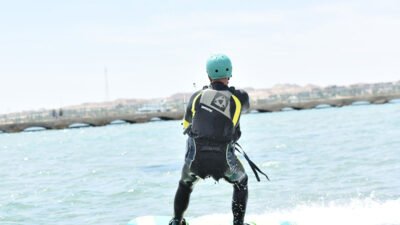
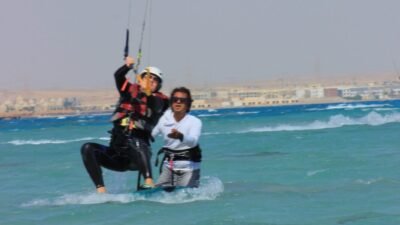
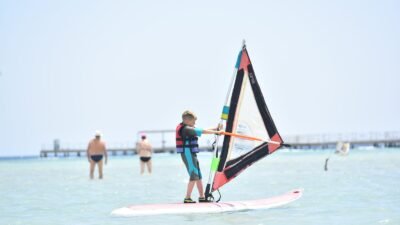
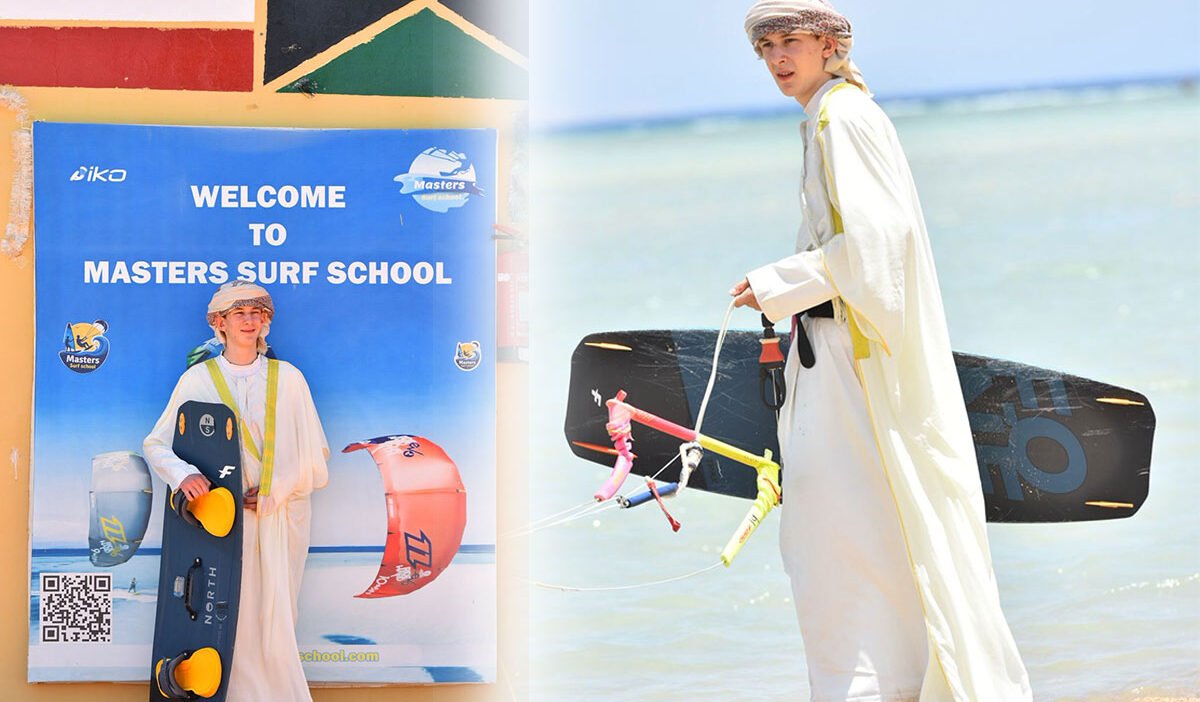
A hurghada surfing school such as Masters Surf School offers ideal conditions for rapid progression: shallow lagoons, consistent winds, and internationally certified IKO instructors. These schools operate from multiple Red Sea locations and provide complimentary hotel transfers, making them accessible for travelers【provided】.
In contrast, a degree program like the FdSc Surf Science is an investment in long-term career development. The two pathways can work in sequence: earn a degree first, then sharpen your practical teaching skills at a specialist surf school — or vice versa.
What is the best surfing school in Hurghada for beginners?
Several high-quality surf schools operate in Hurghada. The best choice depends on your sport preference (kitesurfing vs. windsurfing), teaching language, and desired certification.
Hurghada’s Red Sea coast offers unique advantages for learners:
- 🌊 Shallow, flat-water lagoons — safe for first attempts at standing on a board.
- 💨 Consistent year-round winds — reliable conditions for progression.
- 🌡️ Warm water — no wetsuit needed most months; comfortable learning environment.
Leading Hurghada surf schools include:
Masters Surf School — Over 25 years of experience, operating from more than four Red Sea locations. Internationally certified (IKO) instructors. Caters to all levels from beginner to advanced, plus kite safaris. Complimentary hotel transfers included .
Masters Surf School
Red Sea Governorate,
Secondary phone: +201272284800
Email: masters.surfschool@gmail.com
How to choose: Look for IKO or ISA certification, English-speaking instructors, safety record, and shallow-water access. Reviews consistently emphasize that a surfing school in hurghada with patient, certified coaches accelerates your learning dramatically.
What qualifications do surf instructors need at a Hurghada surfing school?
Direct answer: Reputable schools require instructors to hold internationally recognized certifications, primarily from the International Kiteboarding Organisation (IKO) or the International Surfing Association (ISA).
The IKO instructor pathway involves three stages:
- Assistant Training Course (ATC): A foundational program for independent kitesurfers. Covers fundamentals of teaching and safety. Requires IKO Level 4 riding ability (jump with grab, jump transition, toeside riding, upwind riding, self-rescue).
- Instructor Training Course (ITC): A 5-day intensive program converting Assistant Instructors into fully certified Instructors. Includes theory and practical examination by an IKO Examiner.
- IKO Plus Membership: Annual membership providing professional and recreational liability insurance — required for employment at any IKO-affiliated center.
Additional mandatory requirements include a valid First Aid certificate and minimum age of 18 years.
The ISA coaching certification (Level 1 and Level 2) serves a similar purpose for surf (wave) instructors, focusing on teaching methodology, water safety, and skill progression in ocean-wave environments.
Masters Surf School in Hurghada is an IKO-affiliated center staffed by internationally certified coaches — meaning every instructor has completed the rigorous training pathway described above【provided】. When you book with a certified school, you are learning from a professional whose qualifications are recognized in over 60 countries.
What does it cost to learn surfing, and is a degree worth the investment?
Surf school courses cost hundreds of dollars for short programs; a degree costs thousands per year. Each investment serves a different purpose, and the return depends entirely on your career goal.
A degree is worth the investment if you intend to build a long-term career in the surf industry’s business, media, product, or sustainability sectors. The formal credential opens doors that experience alone may not. However, if your goal is to become an instructor at a hurghada surfing school, an IKO or ISA certification is quicker, cheaper, and more directly relevant.
The most cost-effective hybrid approach: Complete a 1-year Cert HE Surf Science for foundational knowledge, earn your IKO instructor ticket separately, then apply for positions at IKO-affiliated centers like Masters Surf School in Hurghada.
🏁 Conclusion: Your Surfing Pathway — Degree, School, or Both?
The answer to “Is there a degree in surfing?” is nuanced. A dedicated degree in surfing exists in the form of the FdSc Surf Science — a unique academic program that studies surfing from every angle except the riding itself. It is not a prerequisite for industry success, but it provides a structured, credible entry point. For practical skills, nothing replaces immersive training at a quality surfing school in hurghada like Masters Surf School, with its 25-year track record, IKO-certified coaches, and world-class Red Sea conditions.
🎯 Key Takeaways Checklist:
- ☑️ No traditional bachelor’s degree in surfing exists — the FdSc Surf Science is the closest equivalent.
- ☑️ A surf science degree teaches theory, business, and environmental science — not practical riding.
- ☑️ Cornwall College is the primary provider; other institutions offer surfing only as elective modules.
- ☑️ IKO and ISA certifications are the industry standard for teaching roles.
- ☑️ Hurghada surf schools offer ideal learning conditions: shallow lagoons, consistent wind, certified instructors.
- ☑️ Degrees and certifications are complementary: combine them for maximum career flexibility.
- ☑️ Masters Surf School offers over 25 years of expertise, IKO certification, and complimentary transfers.
- ☑️ The smartest path depends on your goal — academic career entry, practical skill, or both.
Ready to start your surfing journey? 🌊 Whether you are exploring a degree in surfing or want immediate, hands-on training from a premier hurghada surfing school, take the next step today. Visit Masters Surf School — Hurghada’s most experienced, fully certified kitesurfing and windsurfing center — and book your first session with a professional IKO instructor. Your Red Sea adventure starts now.