Kitesurfing Hurghada for Beginners: The Complete Guide to Riding the Red Sea
If you are dreaming of gliding across turquoise water with the wind in your harness and a smile on your face, kitesurfing Hurghada offers the perfect starting point. This Red Sea resort town has become a global magnet for beginners because it combines shallow, flat-water lagoons with reliable thermal winds and year-round sunshine. For first-timers, the key to success lies in choosing the right spot and, more importantly, the right school. With over two decades of diving and kitesurfing experience in Egypt, I can tell you that Masters Surf School stands out as the premier choice for learning safely, quickly, and with genuine local expertise.
Why Hurghada Is a Kitesurfing Paradise for Beginners
The Perfect Natural Conditions
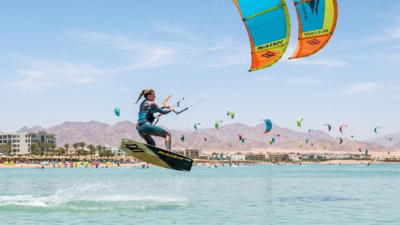
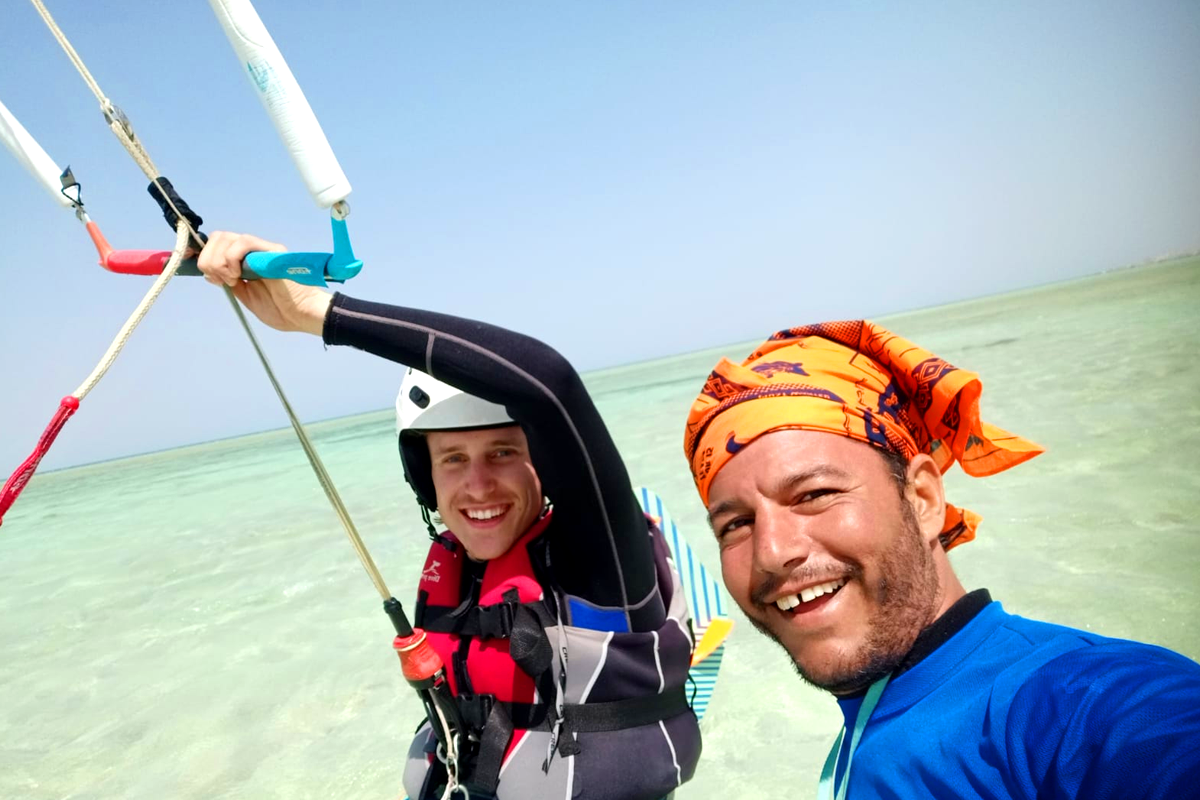
Hurghada’s geography creates an almost unfair advantage for those new to the sport. The Red Sea coast here is dotted with protected bays and lagoons where the water remains shallow and calm for hundreds of meters out . You can stand up easily, which eliminates the fear of deep water and allows you to focus entirely on kite control.
The wind is what truly sets this destination apart. From April through October, thermal winds blow consistently from the north-west at 18 to 25 knots—the sweet spot for learning . Unlike gusty conditions found elsewhere, these winds are remarkably stable, building gradually through the morning and peaking in the afternoon. This predictability means your lesson time gets used efficiently rather than spent waiting for the wind to cooperate.
Year-Round Accessibility
While the peak season delivers optimal conditions, you can learn here almost any month. Winter months from December to February see lighter winds of 12 to 18 knots and water temperatures around 20-22°C, which simply means wearing a 4/3mm wetsuit instead of board shorts . The Red Sea never gets truly cold, and the air temperature remains pleasant throughout the year.
What Makes Masters Surf School the Best Choice
When searching for kitesurfing Hurghada instruction, you will encounter numerous options. Here is why Masters Surf School rises above the competition.
IKO-Certified Expertise
Masters Surf School employs instructors certified by the International Kiteboarding Organization (IKO), the gold standard in kitesurfing education worldwide . This matters enormously for beginners. IKO certification ensures your instructor follows proven teaching progressions, understands safety protocols thoroughly, and can issue internationally recognized certification upon course completion.
The Lagoon Advantage
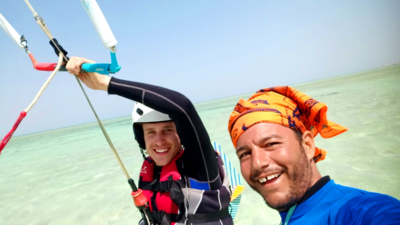
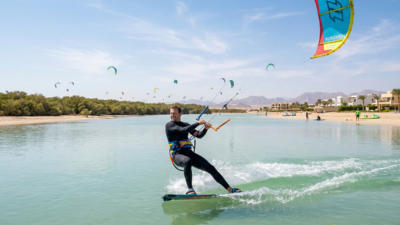
The school operates from one of Hurghada’s premier kite spots—a expansive lagoon with waist-deep, crystal-clear water and a sandy bottom . For a beginner, this environment is transformative. You walk into the water rather than wading nervously into unknown depths. When you inevitably lose the board or drop the kite, you simply stand up and reset. No swimming after runaway gear, no exhausting treading water.
Small Class Sizes and Personal Attention
Where many schools pack students together, Masters Surf School maintains strict student-to-instructor ratios. Beginners receive one-on-one instruction during critical early stages. This personalized approach accelerates progress dramatically and, more importantly, keeps safety front and center .
Multilingual Instruction
Egypt attracts visitors from across Europe and beyond, and Masters Surf School meets this diversity with instructors fluent in English, German, Russian, and Czech . Clear communication during kite control and safety drills leaves no room for misunderstanding.
Your Step-by-Step Journey to Becoming a Kitesurfer
Learning to kitesurf follows a logical progression. Masters Surf School structures lessons around these stages, ensuring you master each before moving forward.
Phase 1: Theory and Safety Briefing
Your first session begins on the beach, not in the water. You will learn about wind windows, safety systems, equipment components, and most importantly, how to release power instantly if needed . This theoretical foundation takes about an hour but forms the bedrock of everything that follows.
Phase 2: Kite Control on Land
Before touching the water, you practice flying a smaller trainer kite. This lets you develop muscle memory for steering, understanding power zones, and launching and landing safely . You will crash the kite repeatedly—this is normal and expected.
Phase 3: Body Dragging in the Water
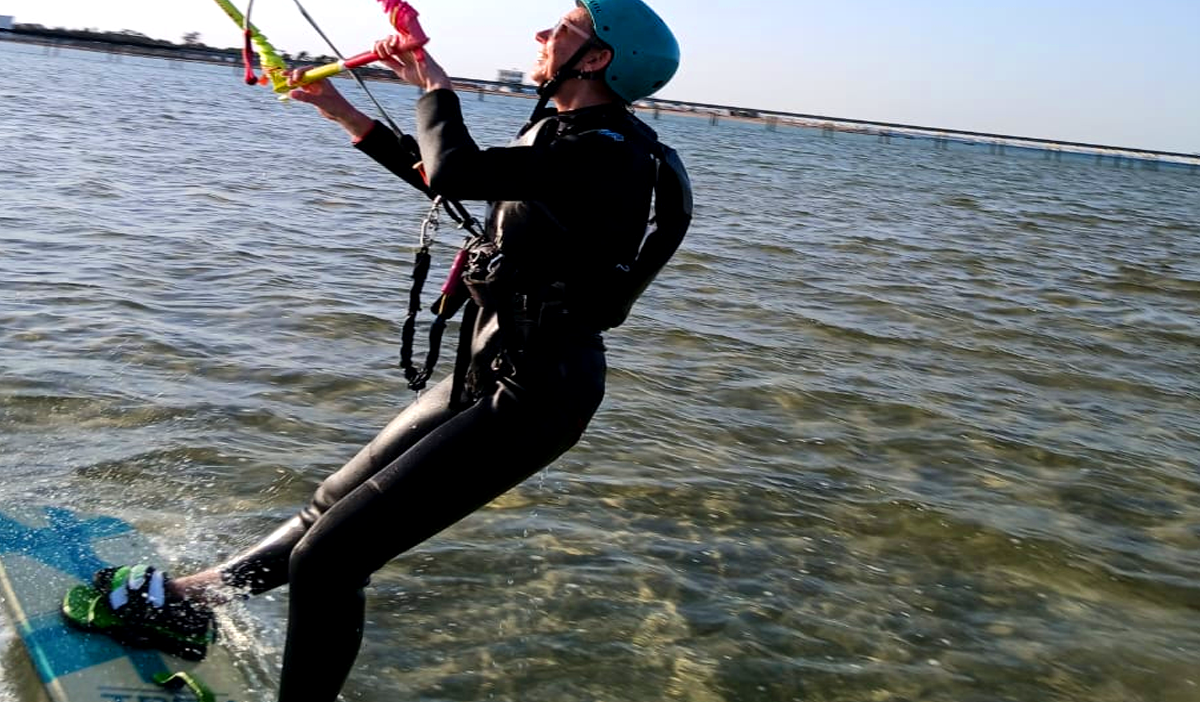
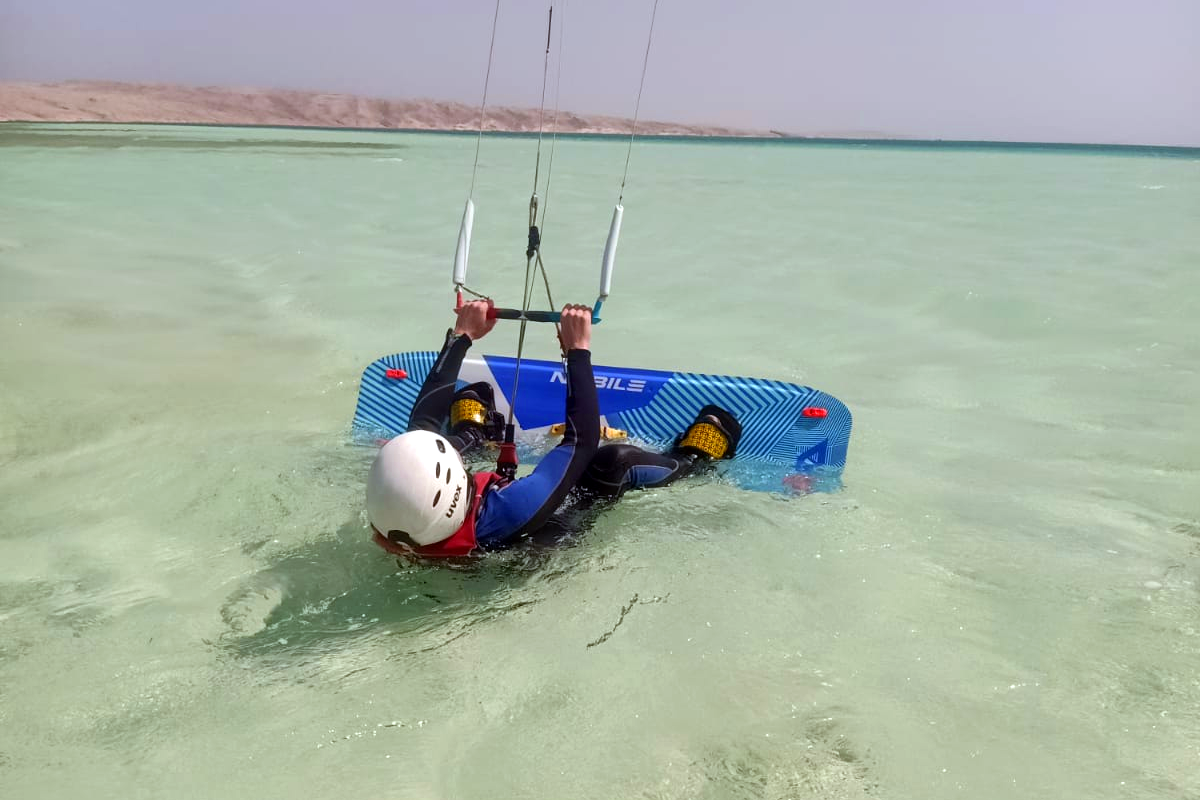
With the kite under control, you enter the shallow lagoon. Here you learn body dragging—using the kite’s power to move through the water without a board . This skill proves essential for retrieving lost boards and navigating back to shore independently.
Phase 4: Water Starts
Now comes the moment everyone anticipates. With the board on your feet and the kite positioned correctly, you learn to rise from sitting to standing while the kite pulls you forward. Most students achieve their first short rides within 6 to 10 hours of instruction .
Phase 5: First Rides and Edging
Once you can stand and ride for short distances, the focus shifts to controlling speed, stopping intentionally, and riding upwind. The flat-water conditions make practicing these techniques far easier than in choppy or wavy locations .
How Long Does It Take to Learn?
This is the question every beginner asks. The honest answer depends on several factors, but here is a realistic breakdown:
| Course Duration | Typical Outcome |
|---|---|
| 3-4 hours (taster) | Basic kite control, body dragging |
| 6-8 hours (weekend) | Water starts, short rides |
| 10-12 hours (standard course) | Independent riding both directions |
| 15+ hours | Upwind riding, full independence |
A standard beginner course at Masters Surf School typically spans 3 to 5 days, with 2 to 3 hours of instruction daily. This schedule allows your muscles to rest and your brain to process each new skill .
What to Expect During Your Lessons
Equipment Provided
Masters Surf School supplies everything you need: kites in various sizes matched to wind conditions, twin-tip boards, harnesses, helmets, and impact vests . The gear comes from reputable brands like Duotone, Cabrinha, and Airush, maintained meticulously for safety and performance .
Lesson Structure
Each lesson follows a rhythm: beach briefing and equipment setup, supervised kite flying, water entry with instructor support, and post-session debrief. Instructors communicate via headset or hand signals, providing real-time corrections while you ride .
Safety Protocols
Safety receives constant attention. Rescue boats patrol the lagoon during sessions. Instructors carry knives to cut lines in emergencies. And every student practices self-rescue techniques before venturing beyond standing depth .
When to Book Your Kitesurfing Hurghada Experience
Peak Season: April through October
These months deliver the strongest and most consistent winds. Water temperatures range from 26°C to 30°C, making wetsuits optional . The trade-off comes in crowds—popular spots see more traffic, though Masters Surf School manages this by using less congested sections of the lagoon.
Shoulder Seasons: March and November
Wind remains reliable at 15 to 22 knots, water temperatures cool slightly to 22-26°C, and the beaches feel noticeably less crowded . Many experienced visitors consider these months the hidden gems for learning.
Winter: December through February
Lighter winds and cooler water (20-22°C) mean slower progress but still viable learning conditions. The major advantage comes from empty beaches and lower accommodation prices.
What to Bring and How to Prepare
Essential Gear
- Sun protection: Reef-safe sunscreen, polarized sunglasses with retention strap, and a wide-brimmed hat
- Clothing: Rash guard or shorty wetsuit for summer, 4/3mm full wetsuit for winter months
- Footwear: Neoprene booties protect against hot sand and occasional rocky areas
- Hydration: Bring your own water bottle—the dry desert air and physical exertion create significant fluid loss
Physical Preparation
While kitesurfing does not require exceptional fitness, some preparation helps. Core strength aids board control. Swimming comfort reduces anxiety. And general endurance allows longer, more productive sessions .
Common Beginner Mistakes to Avoid
Choosing the Wrong School
The most expensive mistake involves selecting a school based on price alone. Proper instruction prevents injury, accelerates progress, and builds correct habits from day one. IKO certification and small class sizes justify higher rates .
Skipping Theory
Students eager to get wet sometimes rush through safety briefings. This compromises both personal safety and the safety of others on the water. Every minute spent understanding wind windows, right-of-way rules, and release systems pays dividends later.
Oversizing the Kite
Beginners often overestimate their ability to handle larger kites, believing bigger equals faster progress. The opposite proves true. Starting with appropriately sized kites for your weight and wind conditions builds confidence and control .
Looking at the Board
Your body follows your eyes. Staring down at the board guarantees falls. Looking where you want to go—toward the horizon—creates proper posture and balance.
Beyond Beginners: Your Kitesurfing Progression Path
After completing your initial course, Hurghada offers endless opportunities to advance. Masters Surf School provides intermediate and advanced coaching focusing on upwind riding, transitions, jumping, and even foiling .
Many graduates return for kite safaris—liveaboard trips that explore the Red Sea’s remote islands and sandbars. These adventures combine world-class conditions with unforgettable experiences .
Hurghada Kitesurfing for Beginners Frequently Asked Questions
Kitesurfing requires dedication but remains accessible to most people with basic fitness and swimming ability. With quality instruction, most students ride independently within 10 to 12 hours of lessons .
You should feel comfortable in water and able to swim. However, during lessons you remain in shallow areas or wear an impact vest for buoyancy. The kite also provides flotation .
Children from 12 years old who weigh at least 40 kg can learn safely with appropriate equipment and instruction . Adults of any age learn regularly, with many students in their 50s and 60s.
Your instructor selects appropriate kites based on your weight and daily conditions. A typical quiver for Hurghada includes 9m and 12m kites for most riders .
From June through October, board shorts and a rash guard suffice. November through May, a 3/2mm or 4/3mm wetsuit keeps you comfortable .
Absolutely. A week allows 12 to 15 hours of instruction, sufficient for most students to ride independently in both directions .
Reputable schools do not conduct lessons in unsafe conditions. They reschedule or refund unused time. Masters Surf School monitors forecasts closely and communicates proactively.
With proper instruction and equipment, kitesurfing carries manageable risks. The focus on safety systems, rescue coverage, and supervised learning minimizes hazards significantly .
Practical Checklist for Your Kitesurfing Trip to Hurghada
- Choose your dates: April through October for peak conditions, March or November for lighter crowds
- Book accommodation: Stay near the kite lagoon to minimize travel time
- Reserve your course: Contact Masters Surf School directly to secure preferred dates
- Arrange transfers: Airport pickup simplifies arrival logistics
- Pack appropriately: Sun protection, appropriate wetsuit, hydration supplies
- Arrive rested: Kitesurfing demands physical and mental energy
- Stay hydrated: Begin drinking water before your first session
- Trust your instructor: Follow guidance even when it feels counterintuitive
- Embrace the process: Learning curves include crashes and frustration—every kitesurfer experienced them
- Celebrate progress: The first successful ride creates an unforgettable moment
Kitesurfing Hurghada for Beginners Conclusion
Kitesurfing Hurghada represents one of the world’s most beginner-friendly experiences. The combination of warm, shallow water, reliable wind, and professional instruction creates conditions where newcomers thrive. Masters Surf School exemplifies everything a beginner needs: certified instructors, prime lagoon access, small class sizes, and genuine commitment to safety and progression.
Whether you spend three days acquiring basic skills or a week building toward independent riding, the Red Sea delivers an environment that accelerates learning while surrounding you with breathtaking scenery. The sport rewards patience and persistence with a freedom few activities can match.
Your journey starts with that first lesson. And in Hurghada, with the right school beside you, that first ride comes sooner than you think.