What is Kitesurf? The Ultimate Guide to Riding Wind and Waves
Executive Summary: Kitesurfing (also known as kiteboarding) is a thrilling water sport that combines elements of wakeboarding, surfing, paragliding, and sailing. Using a large controllable kite to harness the wind’s power, the rider stands on a board and glides across the water’s surface. The sport offers incredible freedom—the ability to jump, ride waves, and explore coastlines. For beginners and seasoned riders alike, kitesurf Hurghada has become a global hotspot, with kitesurf hurghada egypt offering some of the most consistent conditions on the planet. Whether you’re looking to learn at a hurghada kitesurf school or simply understand what this sport is all about, this guide covers everything from basic principles to advanced techniques and destination advice.
Understanding Kitesurfing: The Basics
Kitesurfing is essentially wind-powered propulsion on water. The kite, typically ranging from 5 to 17 square meters, catches the wind and generates pull. This pull transfers through lines (usually 20-25 metres long) to a control bar held by the rider. The rider wears a harness that attaches to the bar, transferring the kite’s force from the arms to the whole body, reducing fatigue .
The board acts as a steering mechanism and a platform. By edging the board against the water, the rider controls speed and direction. When the kite is positioned correctly, the combination of wind force and board edge allows the rider to travel upwind—a fundamental skill that distinguishes kitesurfing from many other wind-powered sports.
A Brief History
While kites have propelled boats since the 1400s in China , modern kitesurfing emerged in the late 1990s. French brothers Bruno and Dominique Legaignoux developed the inflatable kite design that made the sport practical. Today, equipment has evolved dramatically, with safer quick-release systems, more stable kite designs, and boards for every style.
Why Kitesurfing Has Exploded in Popularity
The sport’s growth is no accident. Unlike sailing, you don’t need a boat. Unlike surfing, you don’t need waves. A flat lagoon with consistent wind offers endless fun. The learning curve, while steep initially, rewards persistence with a sense of freedom few sports can match.
For those searching kitesurf Hurghada, the appeal is obvious: warm water, reliable wind, and shallow lagoons. Egypt’s Red Sea coast has become a pilgrimage site for kitesurfers worldwide.
The Essential Equipment
Understanding the gear is crucial before stepping onto the beach. Let’s break down what you’ll need.
Kites: The Engine
Modern kites come in several categories. For beginners, freeride kites are ideal—they’re forgiving, easy to relaunch from water, and offer predictable power delivery . More advanced riders might choose:
- Freestyle kites: Designed for big air and rotations, often with five struts for stability during jumps
- Wave kites: Built for surf, with depower that lets the kite “drift” with minimal pull while riding waves
- Lightwind kites: Larger surface area for marginal conditions, though more delicate
Kite sizes vary based on rider weight and wind strength. A 75kg rider in typical kitesurf hurghada egypt conditions (18-25 knots) would likely use a 9m or 10m kite .
Control Bar and Lines
The bar connects you to the kite. Modern bars include a quick-release safety system—pull this and the kite depowers completely. Lines are usually pre-stretched polyethylene, colour-coded to simplify untangling. A chicken loop attaches the bar to your harness.
Harnesses: Waist or Seat?
This is personal preference. Seat harnesses sit lower, supporting the lower back—popular with beginners and those with back concerns. Waist harnesses offer more freedom of movement for rotations and tricks .
Boards: Your Connection to the Water
Beginners typically start with larger boards (around 140-150cm length, 40cm width) for extra float and easier planing . As skills progress, riders downsize for manoeuvrability. Board types include twin-tips (symmetrical for riding both directions), directional surfboards, and foil boards that lift above the water.
Safety Gear
- Leash: Attaches the kite to your body; short leashes are safest for beginners
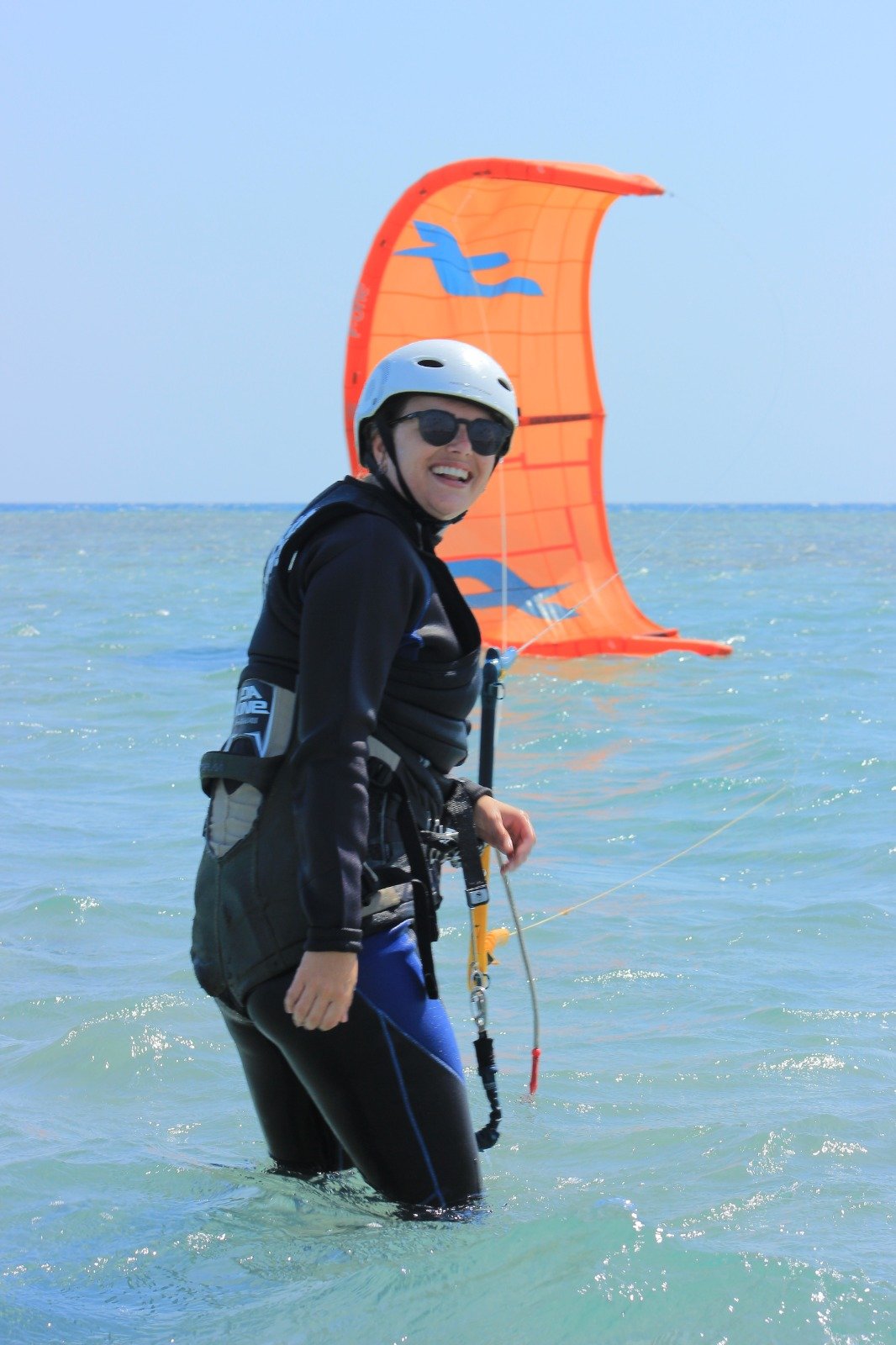
- Helmet and impact vest: Protects from board strikes and impact with water
- Wetsuit or rash guard: Dependent on water temperature—in kitesurf hurghada, summer requires only shorts and lycra
Learning to Kitesurf: What to Expect
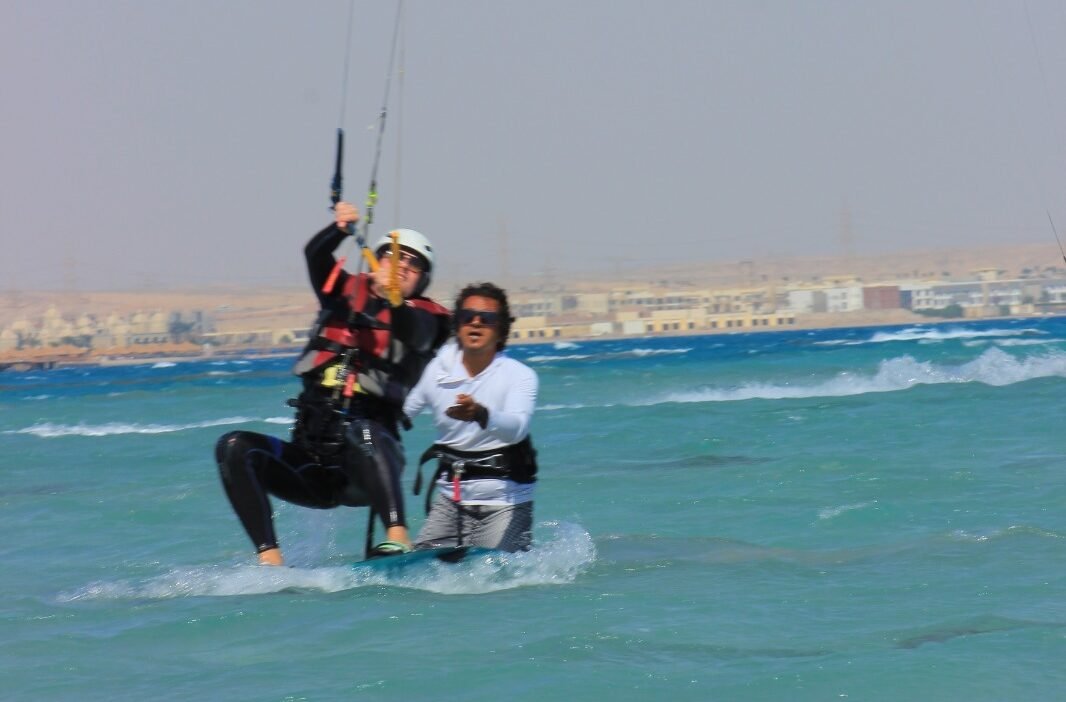
Attempting to self-teach is dangerous—to yourself and others. Professional lessons are non-negotiable . A certified instructor teaches the critical safety systems and muscle memory required.
The Lesson Progression
Most hurghada kitesurf school programs follow International Kiteboarding Organization (IKO) standards:
Level 1: Introduction
- Wind theory and site assessment
- Equipment setup and safety checks
- Pilot training on land with small trainer kites
- Understanding the wind window
Level 2: Water Skills
- Body dragging (using the kite to pull you through water without a board)
- Relaunching the kite from water
- Water starts (getting the board on and riding)
- Riding in one direction, then both
Level 3: Independent Riding
- Upwind riding (crucial for returning to start point)
- Speed control and edging
- Self-rescue techniques
- Basic turns and transitions
Most students need 10-12 hours of lessons to ride independently . A reputable hurghada kitesurf school can achieve this faster due to ideal conditions.
Common Challenges Beginners Face
- Kite control: The natural tendency to overcorrect—small inputs work best
- Board starts: Finding the balance between kite pull and board angle
- Confidence in wind: Trusting the equipment and your training
- Reading conditions: Understanding wind direction and water state
Kitesurfing Styles: Find Your Flow
Once riding consistently, riders often specialise:
Freeride: Cruising, carving, small jumps. The most common style—pure enjoyment on the water .
Freestyle: Technical tricks, board-offs, rotations. Requires precise kite control and often specific equipment.
Big Air: Massive jumps and hangtime. Riders seek boosting conditions with kites designed for lift.
Wave Riding: Using the kite to catch and ride ocean waves. Popular in spots with swell.
Hydrofoil: A foil extends beneath the board, lifting it above chop for an ethereal, efficient ride.
Kitesurf Hurghada: The Ultimate Destination
Now let’s focus on why kitesurf hurghada egypt appears in so many searches. The Red Sea offers unique advantages.
Why Hurghada?
Hurghada’s main kitesurfing zone is the Al Ahyaa Lagoon, north of the city centre . This area features:
- Flat water: Shallow, sheltered lagoons perfect for learning and freestyle
- Consistent wind: Thermal winds from May through October deliver 18-25 knots daily
- Warm water: Summer water temps reach 30°C—no wetsuit needed
- Infrastructure: Dozens of kite centres, beachside cafes, and equipment rental
Wind and Season
The kitesurf hurghada season runs year-round, though quality varies:
| Season | Months | Wind Speed | Water Temp | Crowds |
|---|---|---|---|---|
| Peak | April-October | 18-25 knots | 26-30°C | Busy |
| Shoulder | March, November | 15-22 knots | 22-26°C | Moderate |
| Winter | December-February | 12-18 knots | 20-22°C | Quiet |
Thermal winds dominate summer—the desert heat pulls air from the north, creating predictable afternoon breezes. Winter sees frontal systems, less consistent but still kiteable .
Water Conditions
The lagoon offers a wide riding area with shallow sections perfect for beginners. Walk out waist-deep and practice without depth anxiety. Further out, the water deepens gradually, and the northern area develops small waves (0.5-1.5m) when wind strengthens .
Choosing a Hurghada Kitesurf School
Selecting the right school matters. Look for:
- IKO or VDWS certification: Ensures international standards
- Experienced instructors: Many schools employ long-term professionals
- Modern equipment: 2020 or newer gear with reliable safety systems
- Location: Schools on the lagoon offer direct water access
Kite School Egypt receives consistent praise for patient instruction and professional organisation . Sultan Kite School Hurghada also earns excellent reviews, with Russian-speaking staff available—helpful given the large Russian kitesurf community in Egypt .
What Students Say
“Perfect place to learn kite surfing. The water is low, no high waves—ideal for beginners. Erik the instructor is patient and a good teacher.” — TripAdvisor review, Kite School Egypt
“A wonderful kite spot, clean, with a wonderful kite school. Palm trees, shade, sun beds, fresh water. The guys are all decent, friendly, Russian-speaking.” — TripAdvisor review, Sultan Kite School
Beyond Lessons: Kite Safaris
For advanced riders, kite safaris offer the ultimate experience. Liveaboard boats cruise the Red Sea, stopping at remote reefs and islands. You launch directly from the boat deck and ride in pristine conditions. Several Hurghada schools offer these expeditions .
Safety First: Essential Guidelines
Kitesurfing involves real risks, but proper preparation minimises them.
Pre-Session Checks
- Inspect equipment: Check lines for fraying, canopy for tears, and safety systems for smooth operation
- Check forecast: Understand wind strength and direction. Never kite in offshore wind (blowing from land to sea) unless supported by rescue
- Assess the site: Identify hazards—rocks, reefs, swimmers, other kiters
On-Water Safety
- Keep distance: Maintain at least 50-100m downwind from others
- Right of way: The kiter with right hand forward has priority. The other yields downwind
- Kite height: When passing, the upwind rider raises their kite; the downwind rider lowers theirs
- Self-rescue: Know how to wind your lines and use your kite as a float to drift to shore
Emergency Numbers
In Egypt, save local emergency contacts. Many schools provide direct lines. Globally, carry a fully charged phone in a waterproof case .
Environmental Responsibility
Kitesurfers share the ocean with marine life and other users.
- Avoid kiting near swimmers, anglers, or wildlife like dolphins and seals
- Never drag kites over fragile dune vegetation
- Pack out all rubbish—the ocean deserves respect
The NSRI in South Africa notes that shark encounters for kiters are extremely rare—the noise and activity tend to deter them . Still, remain aware of local advice.
Advanced Techniques and Progression
Once riding confidently upwind, the real fun begins.
Jumping
The classic boost involves edging hard, steering the kite to 12 o’clock, then redirecting aggressively as you leave the water. Timing is everything.
Transitions
Turning without stopping—either a toe-side turn (riding backward briefly) or a helitack (spinning the kite to maintain momentum).
Riding Waves
Take your directional board to the break. Position the kite high, paddle into the wave, and use the kite’s pull to match wave speed. It’s surfing with a turbo boost.
Kitesurfing vs. Other Water Sports
How does it compare?
| Sport | Learning Curve | Equipment Cost | Portability | Wind Needed |
|---|---|---|---|---|
| Kitesurfing | Steep initial | Medium-high | Moderate | 12-35 knots |
| Windsurfing | Gradual | High | Bulky | 8-40 knots |
| Wakeboarding | Moderate | Medium | Easy | No (boat) |
| Surfing | Very steep | Low | Easy | No (waves) |
Kitesurfing offers the best combination of portability and thrill—your kite packs into a backpack.
Hurghada Kitesurf Cost Considerations
Lessons
Group lessons range €50-80 per hour; packages reduce rates. A complete beginner course (10-12 hours) typically costs €500-800.
Equipment
New complete setups (kite, bar, board, harness) run €2000-3500. Second-hand gear from 2020 onwards can halve this, but have it checked by a professional .
Travel
Kitesurf hurghada egypt packages offer value. Flights, accommodation, and lessons bundled often cost less than European summer holidays.
The Culture and Community
Kitesurfers are a tribe. At any hurghada kitesurf school, you’ll meet riders from across Europe, Russia, and beyond. The shared passion transcends language. Sunset sessions, beach barbecues, and story-swapping create friendships that last.
Practical Checklist for Your First Kitesurf Trip
Before you book that ticket to kitesurf hurghada, use this checklist:
Pre-Trip
- [ ] Research IKO-certified schools
- [ ] Book lessons in advance (peak season fills quickly)
- [ ] Arrange travel insurance covering kitesurfing (essential)
- [ ] Pack: rash guards, boardshorts, sunscreen, polarized sunglasses with strap
- [ ] Download wind forecast apps (Windy, Windguru)
On Arrival
- [ ] Visit your chosen school to meet instructors
- [ ] Assess the lagoon at different tide levels
- [ ] Watch other riders to understand local etiquette
- [ ] Stay hydrated—Red Sea sun is intense
During Lessons
- [ ] Ask questions until safety systems are clear
- [ ] Practice body dragging thoroughly—it’s your rescue skill
- [ ] Be patient with water starts; everyone struggles initially
- [ ] Celebrate small wins—first ride, first turn, first upwind
Kitesurf Conclusion
Kitesurfing transforms wind from a weather phenomenon into a personal propulsion system. It’s challenging, addictive, and deeply rewarding. Whether you’re drawn by the freedom of riding, the athletic challenge, or the global travel opportunities, the sport delivers.
For those considering where to start, kitesurf hurghada offers the ideal classroom. Warm, shallow water and daily thermal winds create conditions that accelerate learning. A quality hurghada kitesurf school provides the structure and safety needed to progress quickly.
The wind is always blowing somewhere. Your only decision is whether to answer its call.
Kitesurf Frequently Asked Questions
Like any adventure sport, risks exist. However, modern equipment with reliable safety systems and proper instruction makes it manageable. The RNLI launched to kitesurfers 41 times in UK waters in 2024—a small number relative to participation . Most incidents involve judgment errors, not equipment failure.
Most students ride independently after 10-12 hours of lessons . In perfect conditions like kitesurf hurghada, progress can be faster. Mastery takes years—that’s part of the appeal.
General fitness helps, but extreme strength isn’t required. The harness transfers kite pull, so technique matters more than muscle. Core stability and swimming ability are valuable.
For beginners, 12-20 knots is ideal. Too light and the kite won’t fly steadily; too strong and control becomes difficult. Schools match kite sizes to conditions.
Absolutely not. Self-teaching endangers you and others. Professional lessons teach safety systems, reading conditions, and proper technique. Many spots require certification proof before allowing independent riding.
Most schools accept students from 12 years upward, depending on weight and maturity. Adults in their 50s and 60s learn successfully—it’s never too late.
Initially, no. Schools provide everything. Once riding independently, many rent gear at their local spot before investing. Hurghada kitesurf school rental rates are reasonable.
Winter offers lighter winds but smaller crowds. In kitesurf hurghada egypt, December through February averages 12-18 knots—rideable with larger kites. Water temperatures require a 3/2mm wetsuit .
Wing foiling uses a handheld wing rather than kite lines. It’s newer, easier to self-launch, but slower in marginal wind. Both sports complement each other.
You must be comfortable in deep water. Lessons include body dragging—being pulled through water by the kite. Confidence in water is non-negotiable.
Practical Checklist: Your First Kitesurf Adventure
Before You Go
- [ ] Research and book an IKO-certified hurghada kitesurf school
- [ ] Purchase comprehensive travel insurance with kitesurf cover
- [ ] Check passport validity and visa requirements for Egypt
- [ ] Book accommodation near the lagoon (Al Ahyaa area recommended)
- [ ] Download wind apps and learn basic terms (knots, gust, lull)
Packing Essentials
- [ ] Rash guards or light long-sleeve shirts (sun protection)
- [ ] Boardshorts or swimwear
- [ ] Polarized sunglasses with secure strap
- [ ] High-SPF reef-safe sunscreen
- [ ] Flip-flops or water shoes
- [ ] Small dry bag for phone/valuables
- [ ] Basic first aid kit (blister plasters, antiseptic)
First Day at School
- [ ] Arrive 15 minutes early for paperwork
- [ ] Watch the safety briefing carefully
- [ ] Practice quick-release on land until automatic
- [ ] Start with trainer kite—master the wind window
- [ ] Stay hydrated throughout the session
During Your Stay
- [ ] Take photos/videos of your progress
- [ ] Connect with other students for practice sessions
- [ ] Respect local customs and dress codes off the beach
- [ ] Tip instructors if service exceeds expectations
- [ ] Log your session times and conditions for future reference
Returning Home
- [ ] Identify local spots and schools for continued practice
- [ ] Consider buying beginner-friendly used equipment
- [ ] Join online kitesurf communities for advice
- [ ] Plan your next trip—you will want one