Kitesurfing VS Windsurfing: Which Sport Should You Choose in Hurghada?
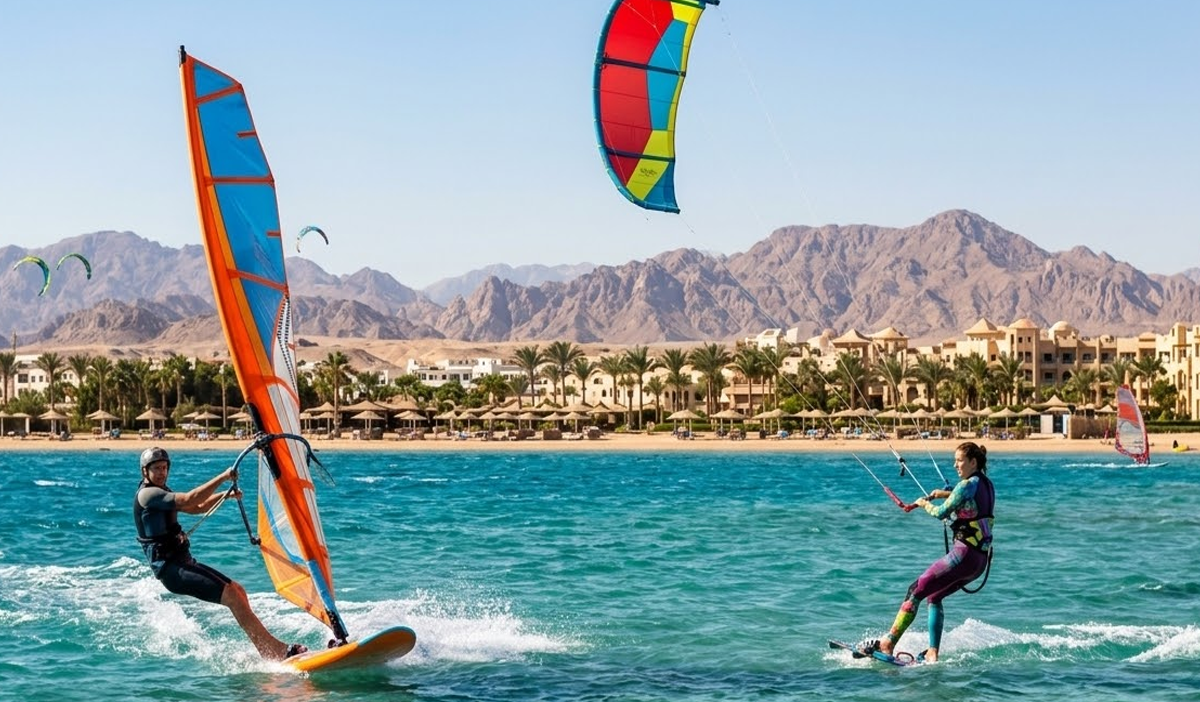
If you are standing on the beach in Hurghada, watching colorful kites soar through the sky while windsurfers slice across the waves, you are likely asking yourself one question: which sport should I learn? The short answer is that kitesurfing offers a steeper initial learning curve but gets you riding independently faster, while windsurfing is more intuitive to start but takes significantly longer to master.
Both sports thrive in Hurghada’s perfect conditions, and your choice ultimately depends on your fitness level, patience, and the kind of thrill you seek.
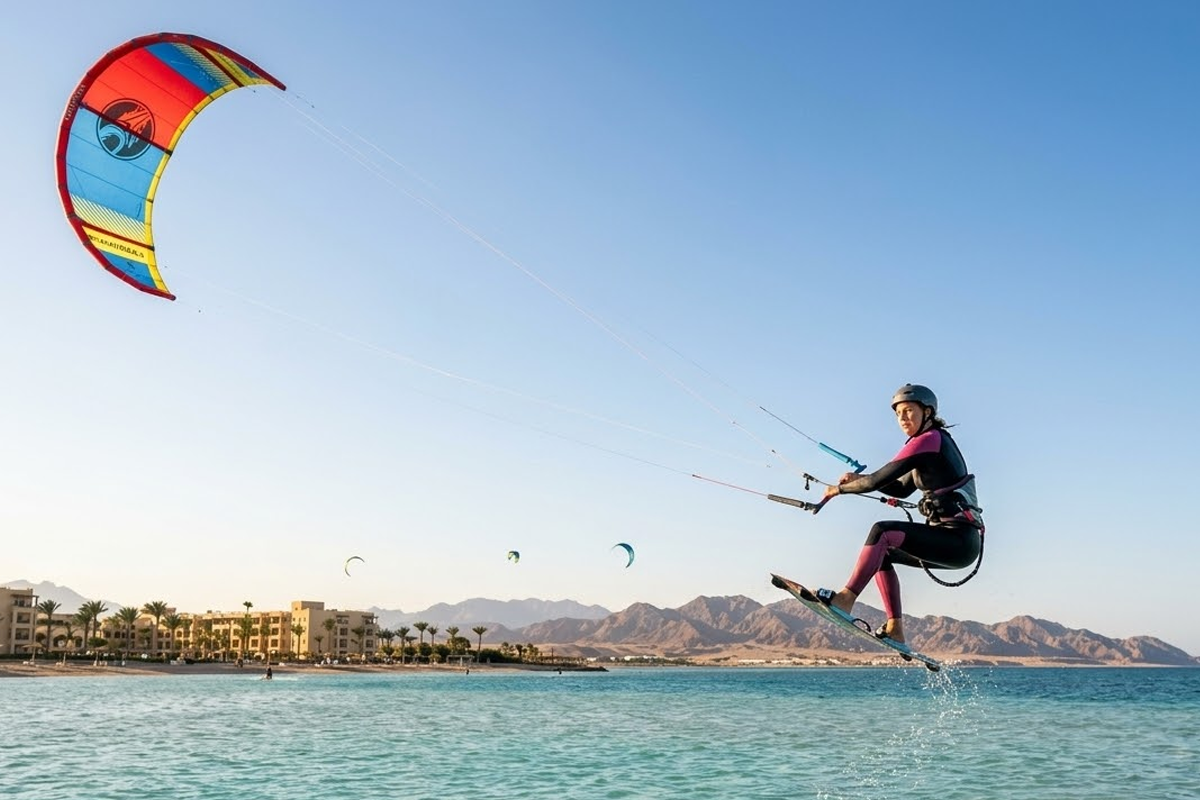
Hurghada Kitesurfing or Windsurfing Summary
Kitesurfing in Hurghada has exploded in popularity over the past decade. The Red Sea’s consistent thermal winds, shallow flat-water lagoons, and warm temperatures create an ideal playground for both beginners and advanced riders. Windsurfing Hurghada remains a classic choice with a loyal following, offering a more direct connection to the wind and a gradual learning path.
| Aspect | Kitesurfing | Windsurfing |
|---|---|---|
| Learning Curve | Steep start, faster progression | Gentle start, longer mastery |
| Physical Demand | Core, legs, harness reduces arm fatigue | Upper body, back, shoulders |
| Equipment | Kite, control bar, harness, board | Sail, mast, boom, board |
| Best for | Adrenaline seekers, jumpers | Technical sailors, cruisers |
| Safety | Higher risk in gusts, requires kite kill system | Safer in gusts, sail drops easily |
| Wind Range | 12-25+ knots | 10-25+ knots |
Why Hurghada Is a World-Class Destination for Both Sports
The Wind Factor: Consistent and Reliable
Hurghada enjoys wind nearly year-round. The peak season runs from March through October, when thermal winds blow consistently at 18-25 knots . During summer months, the afternoon wind kicks in like clockwork, making it possible to plan sessions days in advance.
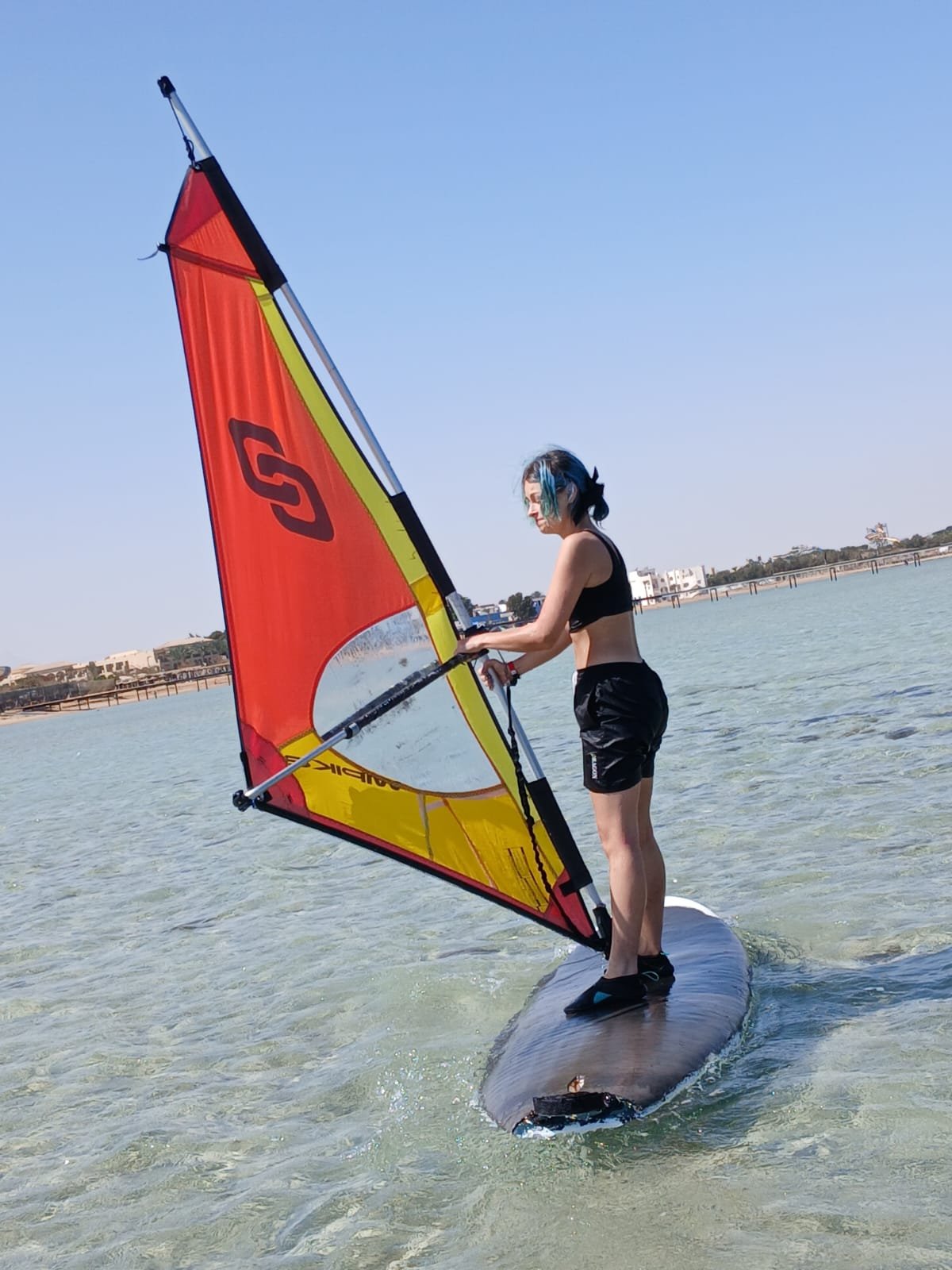
The wind direction is predominantly northern, hitting the coast at a 45-degree angle . This creates side-shore conditions that are safer and more predictable for learners. Winter months from December to February offer lighter winds around 12-18 knots, still sufficient for riding with larger kites or sails.
Water Conditions: A Natural Training Ground
The Red Sea along Hurghada’s coastline features something rare: shallow, flat-water lagoons extending 150-200 meters from shore . This is a game-changer for beginners. You can stand up, walk your gear, and practice water starts without fighting deep water.
Beyond the shallow areas, conditions vary from flat water to light chop, with some spots offering small waves near outer reefs . The water temperature ranges from 20°C in winter to 30°C in summer. A shorty wetsuit suffices in cooler months, while summer requires only board shorts and a rash guard.
Learning Curve: Which Sport Gets You Riding Faster?
Kitesurfing: The Steep Hill with a Fast Reward
When you start kitesurfing, you begin with a trainer kite on the beach. Within a few hours, you move to a larger kite, learning to control its power zone. The first 3-6 hours feel chaotic. You will crash the kite, tangle lines, and drag through the sand .
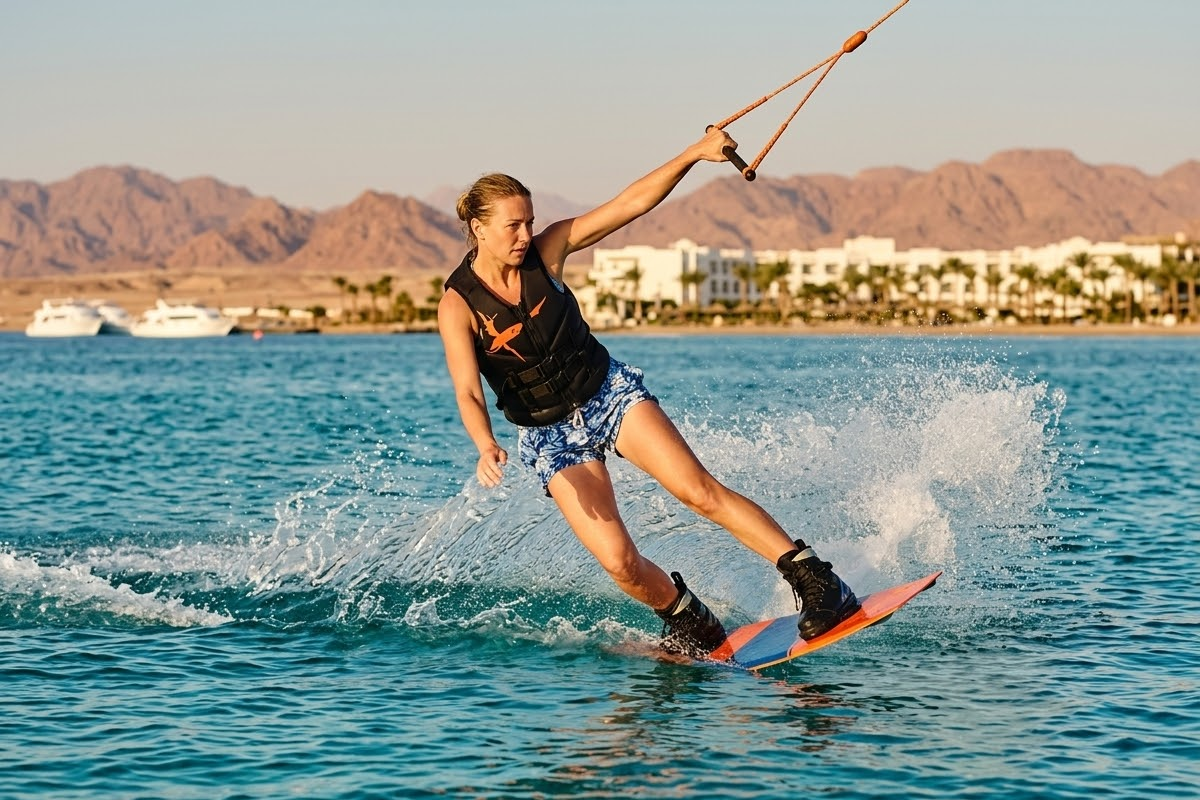
But here is the turning point: once you master kite control (typically by hour 8-12), you move to the water and experience planing speed immediately. The harness transfers the kite’s pull to your core, freeing your arms. Students at schools like Kite-Active in Hurghada often ride independently after a 6-day basic course (18 hours) .
Reviews from the school show beginners progressing from zero to “cruising solo” by the final day . The fast progression to planing speed keeps motivation high, even when the initial learning feels frustrating.
Windsurfing: The Long but Stable Road
Windsurfing takes a different approach. You start on a large, stable board with a small sail. The first lessons focus on balance, steering, and understanding wind direction. You will not be planing for weeks or months . Instead, you learn in “displacement mode,” where the board sits in the water rather than skimming across it.
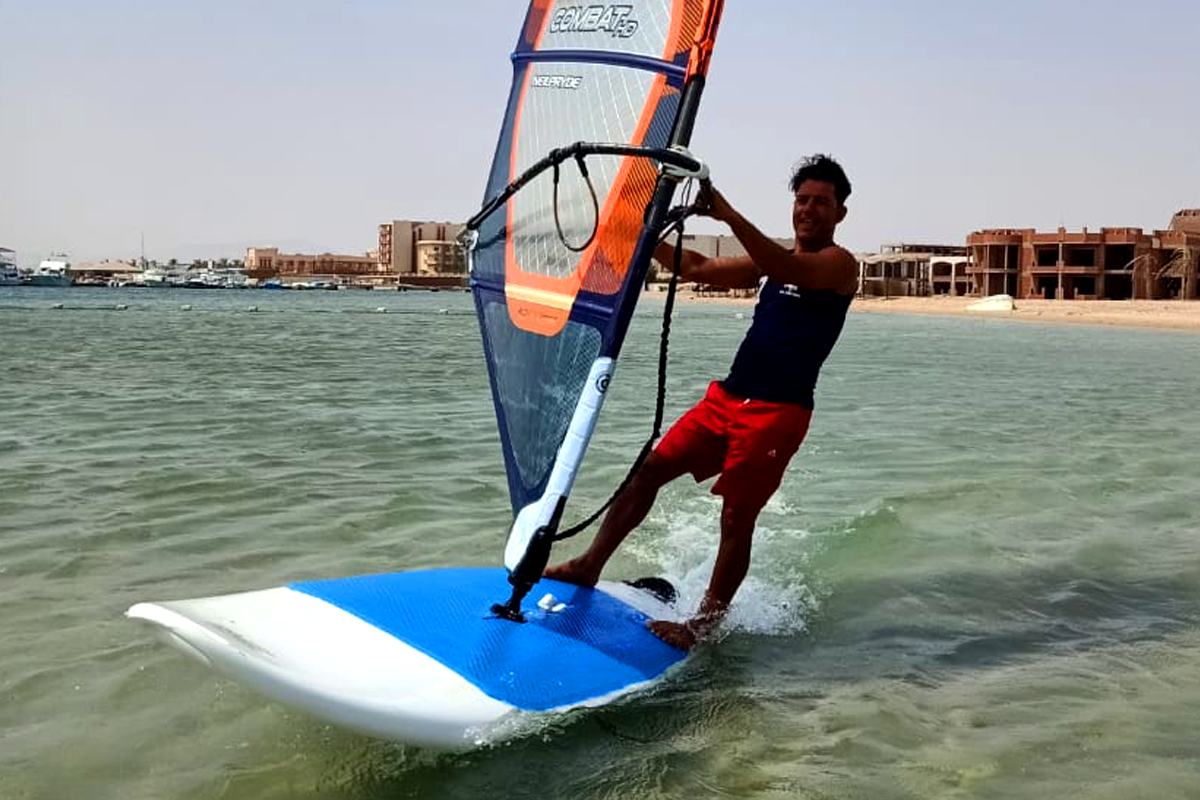
The learning curve is less steep but longer. You need to master uphauling the sail, tacking, gybing, and harnessing wind power before reaching planing speeds. Some learners take a full season to ride comfortably in foot straps.
However, the stability of the large beginner board makes early sessions less physically intimidating. You are less likely to experience the dramatic crashes that kitesurfing beginners sometimes face.
Verdict: Kitesurfing gets you riding fast but demands tolerance for initial frustration. Windsurfing offers a gentler start but requires patience for the long haul.
Equipment Breakdown: What You Will Carry
Kitesurfing Gear
Kitesurfing equipment is compact and portable once packed but requires setup time. A typical kit includes:
- Kite: Inflatable, ranging from 5 to 17 square meters depending on wind and rider weight
- Control bar with 20-25 meter lines
- Harness: Seat or waist style connecting rider to kite
- Board: Twin-tip (most common) measuring 130-150 cm
- Safety leash and kite pump
Setup takes about 10-15 minutes per session. Schools handle this during lessons, but independent riders must master inflation, line untangling, and pre-flight checks.
Windsurfing Gear
Windsurfing equipment is bulkier and more physically demanding to transport:
- Board: Longer (220-280 cm for beginners) with a daggerboard for stability
- Sail with mast, boom, and mast extension
- Universal joint connecting sail to board
- Foot straps and fin
Rigging a windsurf sail takes 15-20 minutes. The mast and boom are rigid, making transport and storage more challenging than kitesurfing gear.
Verdict: Kitesurfing gear packs smaller but requires more careful setup. Windsurfing gear is bulkier but simpler to rig once you know the system.
Physical Demands: What Your Body Will Feel
Kitesurfing Fitness Profile
Kitesurfing leverages the harness to transfer pulling force to your core. Your arms do not bear constant load, but your legs, core, and hips work hard to edge the board against the kite’s pull . Long sessions fatigue the quads and lower back.
Crashes involve falling from height if you are jumping, but the water impact is usually manageable. The sport rewards good core strength and endurance rather than pure upper-body power.
Windsurfing Fitness Profile
Windsurfing demands significant upper-body and back strength, especially in higher winds. You constantly pull the sail in, adjust the boom, and lean back against the wind. The lower back bears particular strain during planing sessions.
However, modern rigs and harnesses reduce some of this load. Beginners on small sails find it manageable, but progressing to larger sails in strong wind requires conditioning.
Verdict: Kitesurfing works the lower body and core. Windsurfing stresses the upper body and back. Choose based on your natural strengths and any existing injuries.
Disciplines and Riding Styles
Kitesurfing Variety
Kitesurfing offers a broad range of disciplines, keeping the sport fresh for years:
- Freestyle: Technical tricks, rotations, and board-offs
- Big Air: Massive jumps with hang time, popular in Hurghada’s steady winds
- Wave riding: Using smaller “surfino” boards to ride waves like a surfer with kite power
- Race: Course racing with directional boards and large kites
- Foilboarding: Hydrofoil boards lift above water, reducing drag for light-wind days
Windsurfing Specialties
Windsurfing disciplines include:
- Slalom: High-speed buoy racing
- Wave sailing: Riding ocean swells with a sail
- Freestyle: Technical moves on flat water
- Speed sailing: Straight-line speed records
The Olympic class has evolved from RS:X to the iQFoil, a foiling windsurf board that lifts above water, revitalizing the sport for competitive sailors .
Verdict: Kitesurfing offers more variety for those seeking aerial tricks. Windsurfing excels in racing and wave riding heritage.
Safety Considerations: Which Is Safer?
Kitesurfing Risks
Kitesurfing carries inherent risks related to the kite’s power. In uncontrolled gusts, the kite can drag a rider across water, sand, or even into obstacles . Modern kites have multiple safety systems:
- Quick release on the chicken loop
- Safety leash that flags the kite out
- Fifth line systems for complete depower
The key is learning to use these systems instinctively. Proper instruction emphasizes safety protocols, including self-rescue techniques.
Windsurfing Risks
Windsurfing is generally considered safer because the sail drops instantly when released. In a strong gust, letting go of the boom kills all power immediately . The board remains buoyant and can be used as a flotation device.
The main risks involve collisions with the mast or boom during falls and the physical strain of recovering a dropped sail in rough water.
Verdict: Windsurfing has fewer catastrophic failure modes. Kitesurfing requires more disciplined safety practice but is manageable with proper training.
Cost Comparison: Lessons and Gear
Lesson Costs in Hurghada
A typical kitesurfing course in Hurghada runs €350-500 for a 12-18 hour package spread over 3-6 days. Schools like Kite-Active and High Surf & Kite school offer flexible packages with hotel transfers included .
Windsurfing lessons cost slightly less per hour, often €30-40 per hour, but require more total hours to reach independent riding.
Equipment Costs
New kitesurfing setups range from €1,200-2,500 depending on brand and kite sizes. Windsurfing gear ranges from €1,000-3,000 for a complete rig and board.
Rental rates in Hurghada run €30-50 per day for kitesurfing gear and €25-40 for windsurfing.
Verdict: Both sports require significant investment. Many riders rent for their first year before purchasing.
Practical Checklist for Choosing Your Sport
Ask Yourself These Questions
- What is your fitness background?
- Strong core and legs → Kitesurfing suits you
- Strong upper body and back → Windsurfing fits
- How much patience do you have for the learning process?
- Want fast progression despite initial frustration → Kitesurfing
- Prefer gradual, steady progress → Windsurfing
- What kind of thrill excites you?
- Jumping high and aerial tricks → Kitesurfing
- Speed and technical sailing → Windsurfing
- Where will you ride most?
- Flat water lagoons → Both work, kitesurfing easier
- Waves → Windsurfing has deeper wave heritage
Step-by-Step: How to Start
- Visit a spot in Hurghada first. Watch both sports in action. Talk to riders on the beach.
- Take a discovery lesson. Most schools offer 2-3 hour intro sessions for €50-80. Try both if you are undecided.
- Consider your travel companions. If friends already kite or windsurf, learning their sport accelerates progress.
- Choose a school with certified instructors. Look for IKO (kitesurfing) or VDWS (windsurfing) certifications.
- Commit to a full course. Do not judge either sport by a single introductory lesson. Give each at least 6-10 hours before deciding.
Kitesurfing VS Windsurfing Frequently Asked Questions
Kitesurfing has a steeper initial learning curve because you must master kite control before riding. However, you reach planing speed faster. Windsurfing starts easier but takes longer to master. The answer depends on your definition of “hard.”
Most beginners ride independently after 12-18 hours of lessons, typically spread over 3-6 days. Hurghada’s consistent wind and flat water accelerate this timeline compared to less reliable locations .
Both sports require reasonable fitness, but neither demands elite conditioning. Kitesurfing works your core and legs; windsurfing uses upper body and back. Beginners progress faster if they have basic strength and endurance.
Windsurfing is generally considered safer because the sail loses power instantly when released. Kitesurfing involves more risk during gusts, but proper instruction and safety systems make it safe for committed learners .
March through October offers the most consistent winds, with peak conditions from April to August. Summer winds reach 18-25 knots daily. Winter months still work but require larger kites and a wetsuit .
Yes. Many schools in Hurghada offer both disciplines. Start with one, get comfortable, then try the other. Cross-training improves your overall wind awareness and water skills.
No. Schools provide all gear during lessons. Rental gear is available after you become independent. Many riders rent for their first year before purchasing.
Conclusion: Which Sport Should You Choose Kitesurfing or Windsurfing?
Both kitesurfing and windsurfing offer incredible experiences on Hurghada’s stunning Red Sea coast. The choice comes down to your personality and goals.
Choose kitesurfing in Hurghada if you:
- Want to ride independently within one week
- Thrive on adrenaline and aerial tricks
- Prefer compact gear for travel
- Have strong core and leg strength
Choose windsurfing Hurghada if you:
- Enjoy technical, gradual skill development
- Prefer a direct connection to the wind
- Have upper body strength or back conditioning
- Want a sport with decades of heritage
The best advice? Try both. Hurghada’s windsurfing schools and kite centers often sit side by side on the same beaches. Take an introductory lesson in each sport. Feel the difference between flying a kite and trimming a sail. Your body and instincts will tell you which path to follow.
Whatever you choose, you are picking up a sport that will keep you coming back to the Red Sea year after year. The wind waits for no one. Go ride.