Wing Foil vs Kitesurf: Which Water Sport Should You Choose?
The choice between wing foiling and kitesurfing ultimately depends on your personality, local conditions, and what you seek from a water sport. Kitesurfing delivers raw power, spectacular jumps, and faster progression once you master kite control—ideal for adrenaline seekers with access to open beaches and consistent wind. Wing foiling offers a more accessible entry point, simpler logistics, and the magical sensation of silent flight above the water—perfect for those who value freedom, travel convenience, and want to ride in diverse locations including lakes and tight spots. Neither is objectively better; they complement each other beautifully, and many experienced riders eventually embrace both.
Introduction: Two Sports, One Passion for Flight
Walk along any windy coastline today, and you will notice something remarkable. Alongside the familiar sight of kitesurfers soaring through the air, a new breed of rider glides silently just above the water’s surface, holding what looks like a small inflatable sail. This is wing foiling, and it has taken the water sports world by storm .
If you are standing on the beach wondering whether to invest your time and money in wing foil vs kitesurf, you are not alone. The question echoes through surf shops, online forums, and holiday planning conversations worldwide. Both sports harness the wind’s power. Both offer that addictive sensation of gliding across water. But they deliver entirely different experiences .
This guide draws on two decades of water sports experience to help you decide. We will compare every aspect—gear, learning curves, physical demands, costs, safety, and the sheer fun factor—so you can make an informed choice that matches your lifestyle and aspirations.
What Exactly Are We Comparing?
Understanding Kitesurfing
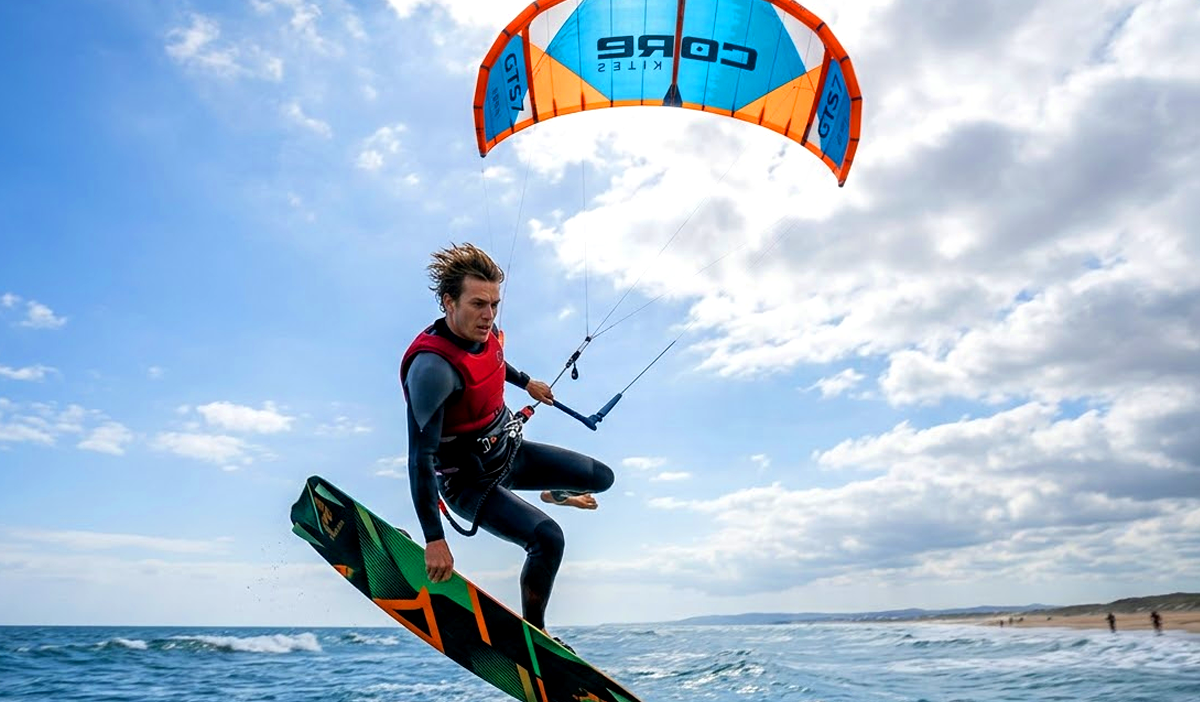
Kitesurfing (or kiteboarding) uses a large inflatable kite, typically between 5 and 17 square meters, flown 20 to 30 meters above the water. The kite connects to the rider through lines and a control bar. A harness transfers the pulling force to your body, allowing arms to relax while you steer .
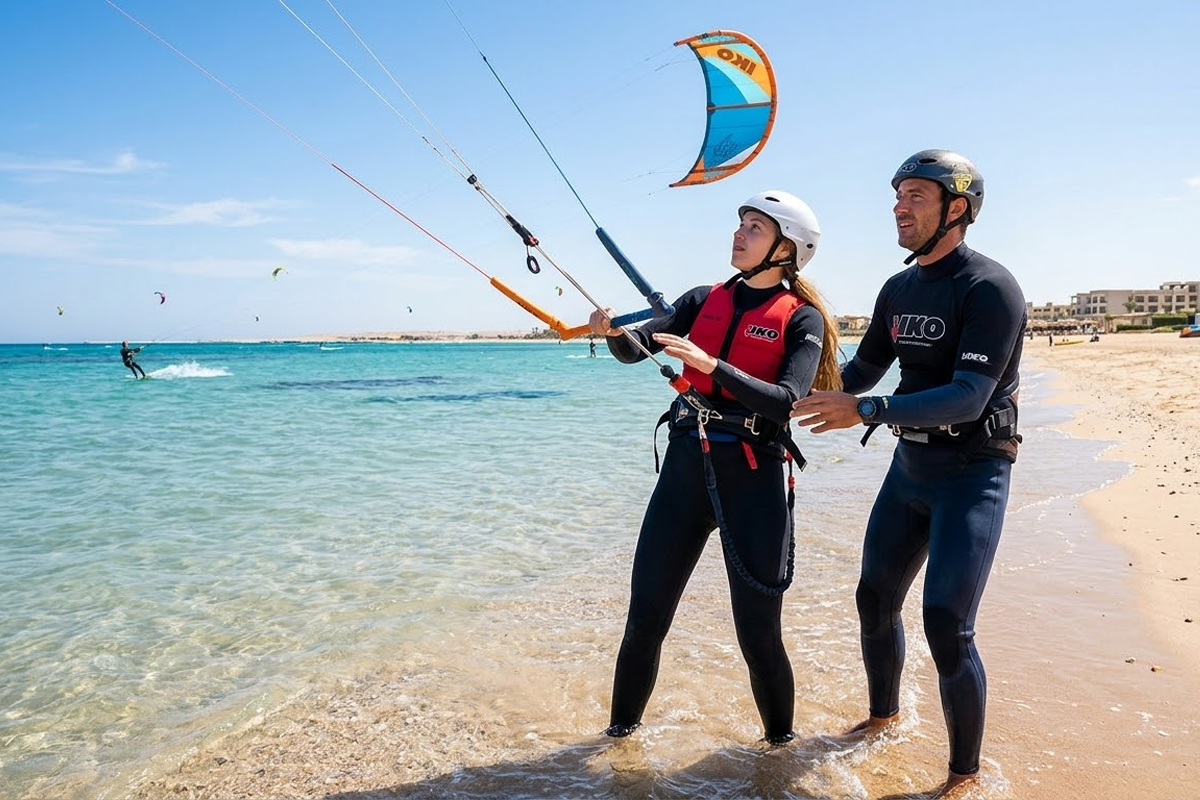
The board beneath your feet can be a twin-tip (symmetrical, riding in both directions), a directional surfboard, or a hydrofoil for advanced riders. The kite provides relentless power. Skilled kitesurfers launch themselves 15 meters into the air, perform complex rotations, or carve down wave faces with the kite’s assistance .
Understanding Wing Foiling
Wing foiling is the new kid on the block. You hold a small inflatable wing—typically 3 to 8 square meters—directly in your hands. No lines, no harness, no complicated rigging. The board features a hydrofoil: a mast with wings beneath the water that generates lift as speed increases .
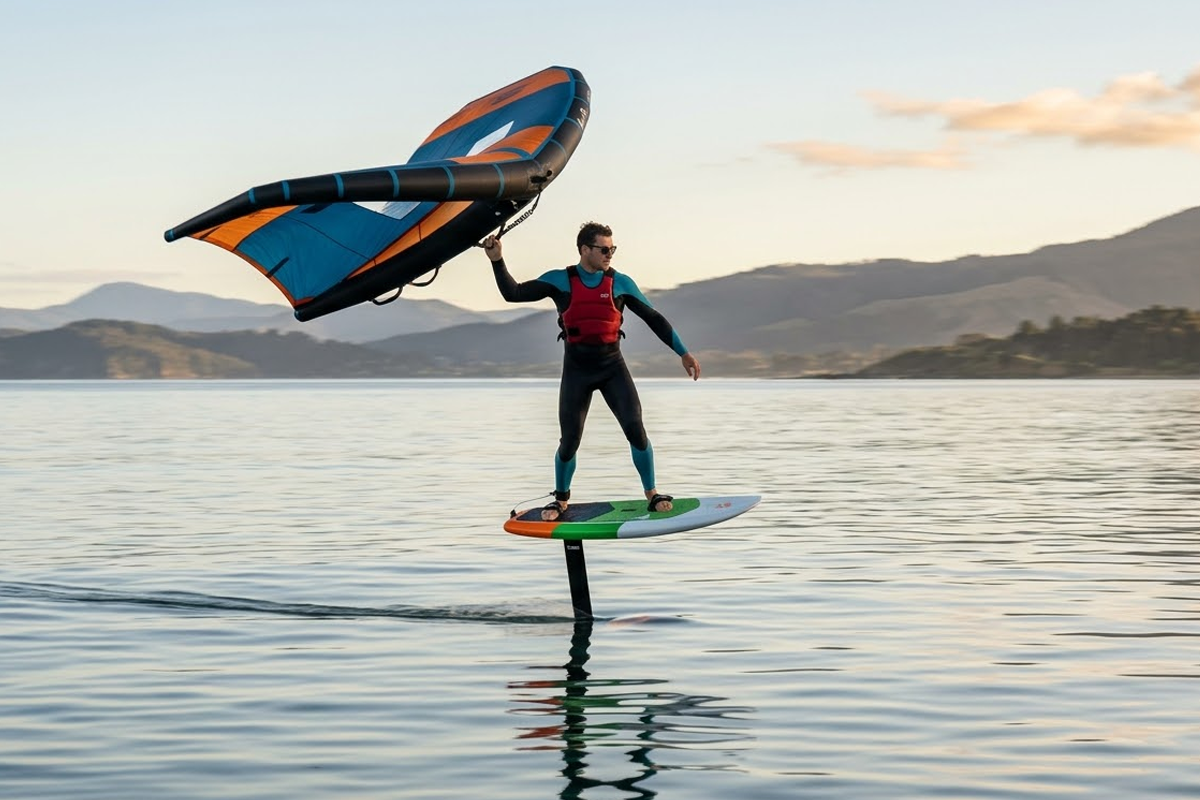
Once moving fast enough, the foil lifts the board completely out of the water. You ride on the foil alone, experiencing near-total silence and minimal drag. The sensation has been described as flying just above the water. Unlike kitesurfing, wing foiling is exclusively a foiling sport; the foil is essential to the experience .
Gear and Equipment: What You Will Actually Buy
Kitesurfing Equipment
The kitesurfing setup requires several components:
| Item | Typical Cost | Notes |
|---|---|---|
| Kites (2-3) | $900–$1,800 each | Different sizes for wind ranges |
| Control bar and lines | $300–$600 | Wear item, needs periodic replacement |
| Harness | $150–$250 | Seat or waist harness |
| Board | $400–$800 | Twin-tip, surfboard, or foil board |
| Pump | $50–$80 | Included with most kite purchases |
| Total beginner setup | $2,200–$3,500+ | Often more with multiple kites |
Kitesurfing gear is bulky but packs relatively well. The real logistical challenge lies in the number of items. Most riders eventually own two or three kites to cover winds from 12 to 30 knots .
Wing Foiling Equipment
Wing foiling gear is refreshingly minimalist:
| Item | Typical Cost | Notes |
|---|---|---|
| Wing | $600–$1,200 | One wing covers wide wind range |
| Foil board | $1,000–$2,000 | Includes mast, fuselage, front and rear wings |
| Pump | $50–$80 | For inflating the wing |
| Leash | $30–$50 | Wrist or waist leash |
| Total beginner setup | $1,600–$3,200+ | One-time purchase for most conditions |
A single wing typically covers winds from 10 to 25 knots, especially when paired with an appropriate foil size. Some riders add a second wing for extreme light or strong winds, but many enjoy years of riding with just one wing and one foil setup .
Winner for gear simplicity and cost: Wing foiling, with fewer components and lower long-term maintenance expenses.
Learning Curve: Which Sport Gets You Riding Faster?
The Kitesurfing Learning Path
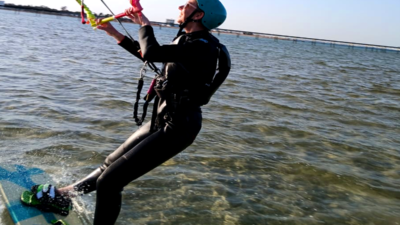
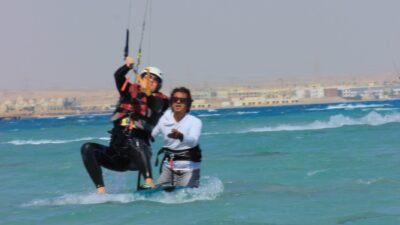
Kitesurfing has a steep initial learning curve. Your first lessons focus entirely on kite control—flying the kite on land, understanding the wind window, and learning safety systems. You will spend hours body dragging through the water without a board, simply learning how the kite pulls and how to relaunch it .
Most schools estimate 6 to 12 hours of instruction before you make your first successful water start and ride a short distance. Reaching independent riding status—where you can go upwind, return to your launch point, and manage yourself safely—typically requires 9 to 12 hours of structured lessons spread over several days .
The frustration point comes early. You will crash the kite. will tangle lines. You will swim back to your board repeatedly. But once kite control clicks, progression accelerates dramatically. Riders often go from first water start to consistent upwind riding within a single holiday .
The Wing Foiling Learning Path
Wing foiling offers a gentler entry. Your first session involves handling the wing on land and in shallow water, learning how to generate power and depower by simply letting go. Most beginners stand on a large, stable board and practice controlling the wing within their first hour .
The challenge emerges when you add the foil. Learning to balance on a hydrofoil requires patience and persistence. The foil behaves like a seesaw beneath your feet. Shift weight forward, and you dive. Shift back, and you stall. Finding that sweet spot where the foil lifts smoothly takes most beginners several sessions .
Total beginners with no wind sport background typically need 5 to 10 sessions before they ride consistently on the foil. Those coming from kitesurfing, windsurfing, or SUP often progress much faster—sometimes flying within 2 to 3 sessions .
Comparison at a Glance
| Aspect | Kitesurfing | Wing Foiling |
|---|---|---|
| First session | Learning kite control, body dragging | Standing on board, handling wing |
| Hours to first ride | 6–12 hours | 2–5 hours (without foil) |
| Hours to independent riding | 9–12 hours | 5–10 sessions (varies widely) |
| Frustration peak | Early (kite control) | Mid-stage (foil balance) |
| Progression after breakthrough | Fast | Steady but rewarding |
Winner for easier start: Wing foiling. The immediate accessibility and lack of complicated rigging make it less intimidating for absolute beginners .
Physical Demands: What Your Body Will Experience
Kitesurfing Physical Requirements
Kitesurfing demands surprisingly little upper body strength once you learn proper technique. The harness transfers most pulling forces to your core and legs. Your arms simply steer the bar. This makes kitesurfing accessible to a wide range of body types and fitness levels .
However, beginners experience significant physical strain. You will swim repeatedly to retrieve your board. You will crash and relaunch the kite in choppy water. Your legs will work hard to edge against the kite’s pull. Sessions often end from exhaustion rather than boredom.
Wing Foiling Physical Requirements
Wing foiling works your upper body continuously. You hold the wing at arm’s length, managing gusts and lulls without a harness to share the load. Shoulders, forearms, and grip strength develop quickly as you progress .
The foil stage introduces balance demands. Your core stabilizes the board while your feet make micro-adjustments to control pitch. Once flying, the physical load drops dramatically. Riding becomes smooth and almost effortless—until you fall and start again.
Winner for lower physical barrier: Kitesurfing, once past the beginner stage. The harness makes longer sessions more sustainable for most riders.
Wind and Water Conditions: Where Can You Ride?
Kitesurfing Location Requirements
Kitesurfing needs space. You require a wide, clear beach for launching and landing. Trees, buildings, power lines, and crowded swimming areas create genuine hazards. Most schools and local regulations enforce strict launching zones .
Wind conditions matter enormously. Kitesurfing works best in steady, side-onshore winds between 12 and 25 knots. Gusty conditions make kite control difficult and dangerous. Offshore winds require rescue support. Many coastal areas restrict or ban kitesurfing during summer months when beaches become crowded .
Wing Foiling Location Requirements
Wing foiling opens possibilities that kitesurfers can only envy. You can launch from tiny beaches, rocky shorelines, docks, or anywhere you can wade into deep enough water. No cleared beach area is required .
Wind tolerance is broader. Wing foiling works in lighter winds—sometimes as low as 8 to 10 knots with appropriate gear. Gusty conditions remain manageable because you can instantly depower by letting the wing flag out. Lakes, rivers, harbors, and urban waterfronts become viable riding spots .
Winner for spot flexibility: Wing foiling, hands down. The ability to ride in locations where kitesurfing is impractical or prohibited transforms how and where you enjoy the sport.
Safety: Understanding the Risks
Kitesurfing Safety Considerations
Kitesurfing carries higher inherent risks due to the kite’s power and the presence of lines. A kite caught in a gust can drag a rider across the beach or water before the safety system deploys. Line tangles create entanglement risks. Launching and landing require assistance or well-practiced self-launch techniques .
Modern safety systems have improved dramatically. Quick releases dump all power instantly. Leashes keep you attached to your board. But the learning period remains critical—this is why certified instruction is not just recommended but essential .
Wing Foiling Safety Considerations
Wing foiling presents different risks. The foil itself is the primary hazard. Foil wings are sharp. Masts are rigid. Falls onto the foil can cause serious cuts or impact injuries. Helmets and impact vests are strongly recommended, especially during learning .
The wing carries minimal risk. It contains no lines to tangle. You can drop it instantly. If conditions become uncomfortable, you can deflate the wing partially and paddle back on your board. The sport’s inherent safety has made it attractive for riders seeking a less intimidating entry to wind sports .
Winner for beginner safety: Wing foiling, due to simpler equipment, instant depower, and ability to self-rescue easily.
The Adrenaline Factor: Sensations and Thrills
Kitesurfing: Power and Performance
Kitesurfing delivers pure adrenaline. The kite pulls relentlessly. Advanced riders boost 10 to 20 meters above the water, spinning and looping the kite for dramatic effect. Speeds exceed 30 knots. The feeling of being harnessed to something so powerful creates an addictive rush .
Freestyle, wave riding, and foiling sub-disciplines offer endless variety. Kitesurfing has a mature competitive scene with events like the Red Bull King of the Air showcasing the sport’s extreme potential .
Wing Foiling: Grace and Flight
Wing foiling offers a different kind of thrill—more meditative than manic. The sensation of rising above the water on the foil feels magical. The silence amplifies your connection to wind and water. Carving turns, gliding over flat sections, and riding small waves become fluid, graceful experiences .
Jumps exist in wing foiling, but they remain modest compared to kitesurfing. The sport prioritizes flow over amplitude. Many riders describe it as closer to snowboarding in powder than to kitesurfing’s powered intensity.
Winner for adrenaline seekers: Kitesurfing. If you dream of big air and high-speed power, this is your sport. Winner for meditative flight: Wing foiling.
Costs: Short-Term Investment and Long-Term Ownership
Initial Investment
Both sports require significant upfront investment. Kitesurfing’s complete setup typically runs $2,200 to $3,500. Wing foiling ranges from $1,600 to $3,200. The difference lies in what you get .
Long-Term Costs
Kitesurfing incurs ongoing expenses. Kites wear out from sun exposure and crashes. Lines stretch and fray. Bars need replacement every few years. You may want multiple kite sizes for different wind ranges .
Wing foiling has fewer consumable parts. Foils last indefinitely if not crashed. Wings experience wear but less than kites. Most riders use one wing for all conditions, reducing the urge to buy multiple sizes .
Winner for long-term affordability: Wing foiling, due to simpler gear and less frequent replacement needs.
Progression Pathways: How Far Can You Go?
Kitesurfing Progression Arc
Kitesurfing offers clear progression milestones. First water start. 50-meter ride. First successful upwind return. Then the world opens: transitions, jumping, kiteloops, unhooked tricks, wave riding, foiling. Each milestone feels earned and satisfying .
The sport’s maturity means abundant coaching resources, competitions, and communities exist worldwide. You can chase performance goals for years without reaching limits.
Wing Foiling Progression Arc
Wing foiling progression focuses on foil mastery. First flights last seconds. Then you extend to sustained riding. Transitions require new skills. Pumping the wing to stay up in lulls becomes an art. Downwind riding and wave carving represent advanced goals .
The sport evolves rapidly. New disciplines like wingfoil racing and downwind events emerge yearly. The community grows as gear improves and techniques develop.
Winner for established progression structure: Kitesurfing. Winner for evolving frontier: Wing foiling.
Travel and Logistics: Taking Your Sport on Holiday
Traveling with Kitesurf Gear
Kitesurf gear packs into large bags. Most airlines accept kite bags as sports equipment, though excess fees apply. A full quiver (two kites, bar, board, harness, pump) weighs 20 to 30 kilograms and occupies significant space .
Setting up takes time. You must inflate kites, connect lines, and check all connections. Launching requires suitable beach conditions and often a partner’s assistance.
Traveling with Wing Foil Gear
Wing foiling gear travels beautifully. The wing packs small—often fitting in carry-on luggage. Foil boards are bulky but modern designs split into manageable pieces. A complete setup fits in one board bag plus a small wing bag .
Setup takes minutes. Inflate the wing. Assemble the foil. Attach the leash. Walk into the water. No assistance needed. This simplicity transforms travel experiences—you can ride during short stops without logistical hassle.
Winner for travel-friendly: Wing foiling, especially for spontaneous sessions during trips.
Can You Learn Both Sports Simultaneously?
The question appears frequently: should I learn wing foil and kitesurf at the same time? The short answer is no. Each sport demands dedicated focus during early stages. Mixing them creates interference that slows progression in both .
Kitesurfing requires mastering kite control, line management, and safety systems. Wing foiling demands foil balance and wing handling. The skills do not transfer during early learning—your hands learn contradictory movements. Students who split their time between both sports consistently progress slower than those who commit to one first .
The better approach is sequential. Master one sport completely, then add the second. The wind-reading skills developed in kitesurfing transfer perfectly to wing foiling. Kitesurfers often pick up winging in two to three days because they already understand wind, conditions, and board balance .
Decision Guide: Which Sport Suits Your Profile?
Choose Kitesurfing If:
- You crave adrenaline, big jumps, and high speeds
- You live near or can travel to open beaches with consistent wind
- You prefer structured progression with clear milestones
- You enjoy the social aspect of a established community
- You want to eventually ride waves with kite power
Wing Foiling If:
- You value simplicity, compact gear, and solo sessions
- You want to ride in diverse locations including lakes and tight spots
- You seek the meditative sensation of silent flight
- You travel frequently and want gear that packs easily
- You prefer a gentler learning curve with lower initial risks
Choose Both (Eventually) If:
- You want to ride in all wind conditions (strong winds for kite, light winds for wing)
- You enjoy mastering different technical challenges
- You travel to destinations with varying spot restrictions
- You simply love wind sports and want to experience everything
Real-World Experiences: What Riders Say
Experienced water sports enthusiasts often embrace both disciplines. A kitesurfer with 15 years of experience explains: “I keep my kites for strong wind days when I want to boost and ride waves. My wing setup comes out for light wind sessions, when I want to explore new spots, or when I just want to feel that magical foil sensation without the kite’s intensity” .
Another rider notes: “Wing foiling is easier on the body after years of kiting. I can ride for hours without the harness pressure, and I launch from spots where kite launching would be impossible. But nothing replaces the power and freedom of a good kite session in 25 knots” .
The consensus among multi-sport riders is clear: these sports complement rather than compete with each other.
Wing Foil or Kitesurf Frequently Asked Questions
Wing foiling offers a gentler start. You can handle the wing and stand on a board within your first session. However, mastering the foil takes patience. Kitesurfing has a steeper initial curve but faster progression once kite control clicks .
Absolutely. Many schools now offer wing foiling specifically for beginners. The sport’s simplicity and safety make it accessible even without prior experience .
Kitesurfing carries higher risks from the kite’s power and lines. Wing foiling’s primary risks come from the foil itself. Both sports are safe when learned with proper instruction and respect for conditions .
Wing foiling excels in light wind. With appropriate gear, you can ride in 8 to 10 knots. Kitesurfing typically requires 12 knots minimum for comfortable riding .
Not necessarily. Kitesurfing relies on technique and harness support. Wing foiling works your upper body initially but becomes less demanding once flying. Both sports accommodate a wide range of fitness levels .
Both excel in waves but differently. Kitesurfing provides power to punch through whitewater and ride out of sections. Wing foiling offers freedom to ride waves without kite lines and easier positioning on the wave face .
It is not recommended. Each sport requires focused attention during early stages. Mastering one first, then adding the second on a separate trip, yields better results .
Wing foiling tends to suit older riders well. The foil absorbs chop, reducing impact on joints. No harness pressure means less strain on the back. Many riders in their 50s, 60s, and beyond enjoy wing foiling .
Practical Checklist: Making Your Decision
Follow this step-by-step process to choose your sport:
- Assess your local conditions
- Do you have open beaches with consistent wind? Kitesurfing works well.
- Are you limited to lakes, harbors, or restricted spots? Wing foiling wins.
- Consider your budget
- Can you invest $2,500–$3,500 upfront? Both sports require similar initial investment.
- Are you concerned about ongoing costs? Wing foiling has lower long-term expenses.
- Evaluate your goals
- Do you dream of big jumps and high speeds? Choose kitesurfing.
- Do you seek graceful flight and exploration? Choose wing foiling.
- Try before you buy
- Book a lesson in each sport before purchasing gear.
- Many schools offer introductory sessions that let you experience both .
- Commit fully
- Once you choose, dedicate 5 to 10 sessions to that sport exclusively.
- Resist the urge to switch until you achieve basic competence.
- Plan for both
- Recognize that many riders eventually enjoy both sports.
- Consider which to learn first based on local conditions and your immediate goals.
Wing Foil and Kitesurf Conclusion: The Right Sport for You
The choice between wing foiling and kitesurfing ultimately reflects your personality, your local environment, and what you seek from time on the water.
Kitesurfing remains the adrenaline sport of choice. It delivers unmatched power, spectacular aerial displays, and a well-established global community. If you thrive on intensity and have access to open beaches with reliable wind, kitesurfing will reward your commitment with years of progression and excitement.
Wing foiling represents a new paradigm. It offers freedom, simplicity, and access to spots that other wind sports cannot reach. The sensation of silent flight above the water creates an almost meditative experience. If you value independence, travel convenience, and a gentler relationship with wind power, wing foiling will open doors to places and conditions you never considered rideable.
Neither sport is objectively better. They complement each other beautifully. Many experienced riders maintain quivers for both, choosing based on conditions, mood, and location. The best approach is to start with whichever aligns with your current circumstances, commit fully to learning it properly, and then—when the time is right—explore what the other has to offer.
The water is waiting. Choose your path, take that first lesson, and discover why millions worldwide have fallen in love with wind-powered flight.